
How to Remove Rust Stains from Toilet Bowls, Sinks, and Bathtubs
Rust stains can be removed with mild acid and gentle abrasion, but the best method depends on the stain’s age, the fixture’s surface material, and whether the rust has penetrated the glaze. Start by identifying the stain type, then work through the methods below in order. Stop as soon as the stain is gone—over-scrubbing or using the wrong acid can damage the finish permanently.
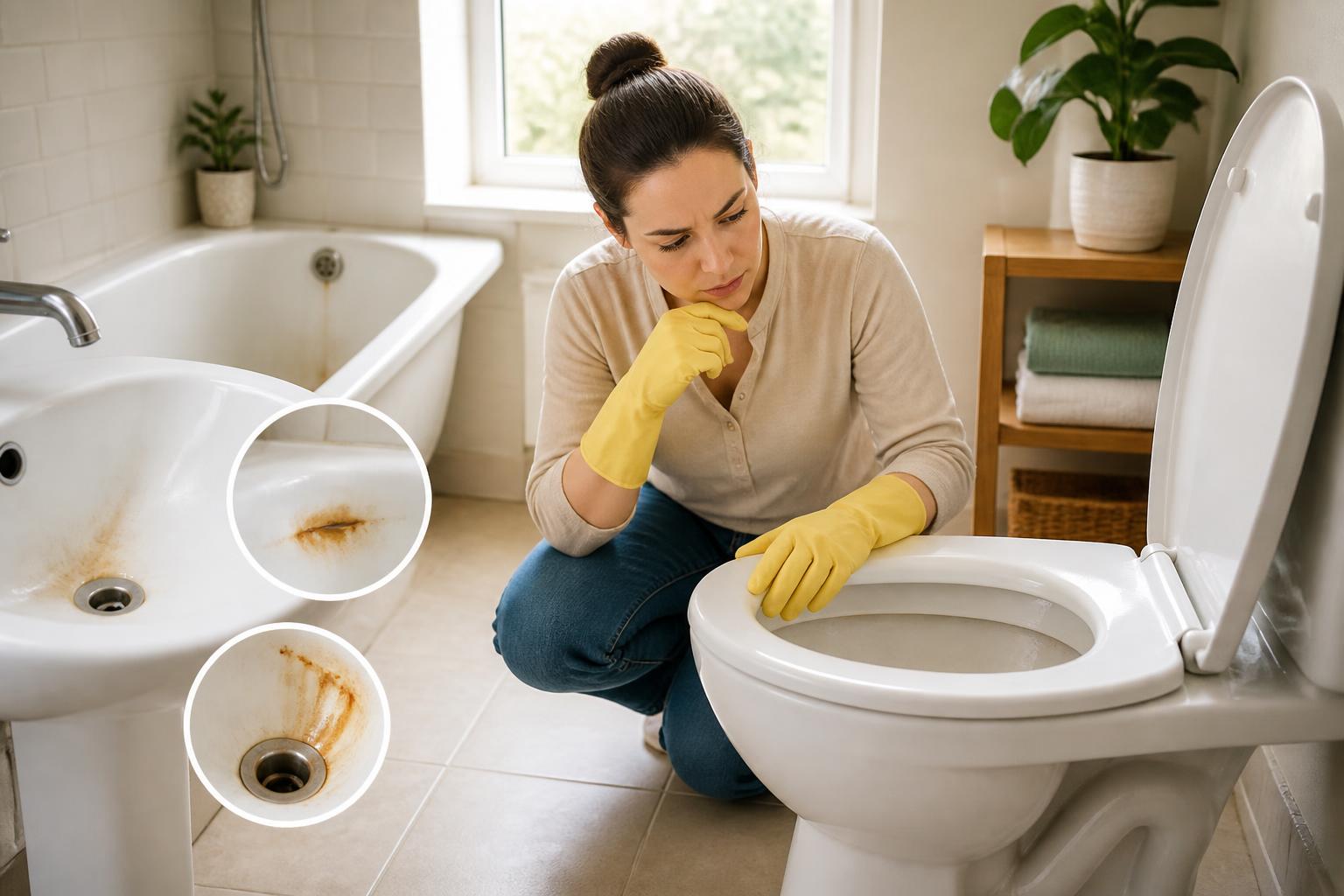
Is It Rust or Hard Water Scale?
Many orange-brown stains homeowners call “rust” are actually iron-rich hard water scale. Using a pumice stone or commercial rust remover on scale wastes time and can scratch the glaze. Run two quick checks before you grab any cleaner.
Fizz test
Sprinkle a few drops of white vinegar on the stain. If it bubbles and fizzes for several seconds, you’re dealing with calcium or lime scale, not rust. A 30-minute vinegar soak (fill the bowl or basin so the stain is submerged) will typically clear those deposits. If the stain lightens noticeably within 15 minutes, it was scale.
Scrape test
Gently scrape a small area with a plastic knife or an old credit card. A powdery or crusty layer that flakes off means scale. Rust bonds directly to the porcelain surface and won’t scrape away—it feels smooth and integrated with the glaze.
Real-world example: A homeowner with well water might see orange-brown rings form in the toilet bowl within a week. That’s often iron bacteria or dissolved iron in the water, not scale from hard water. The fizz test will produce little to no bubbles, confirming it’s rust.
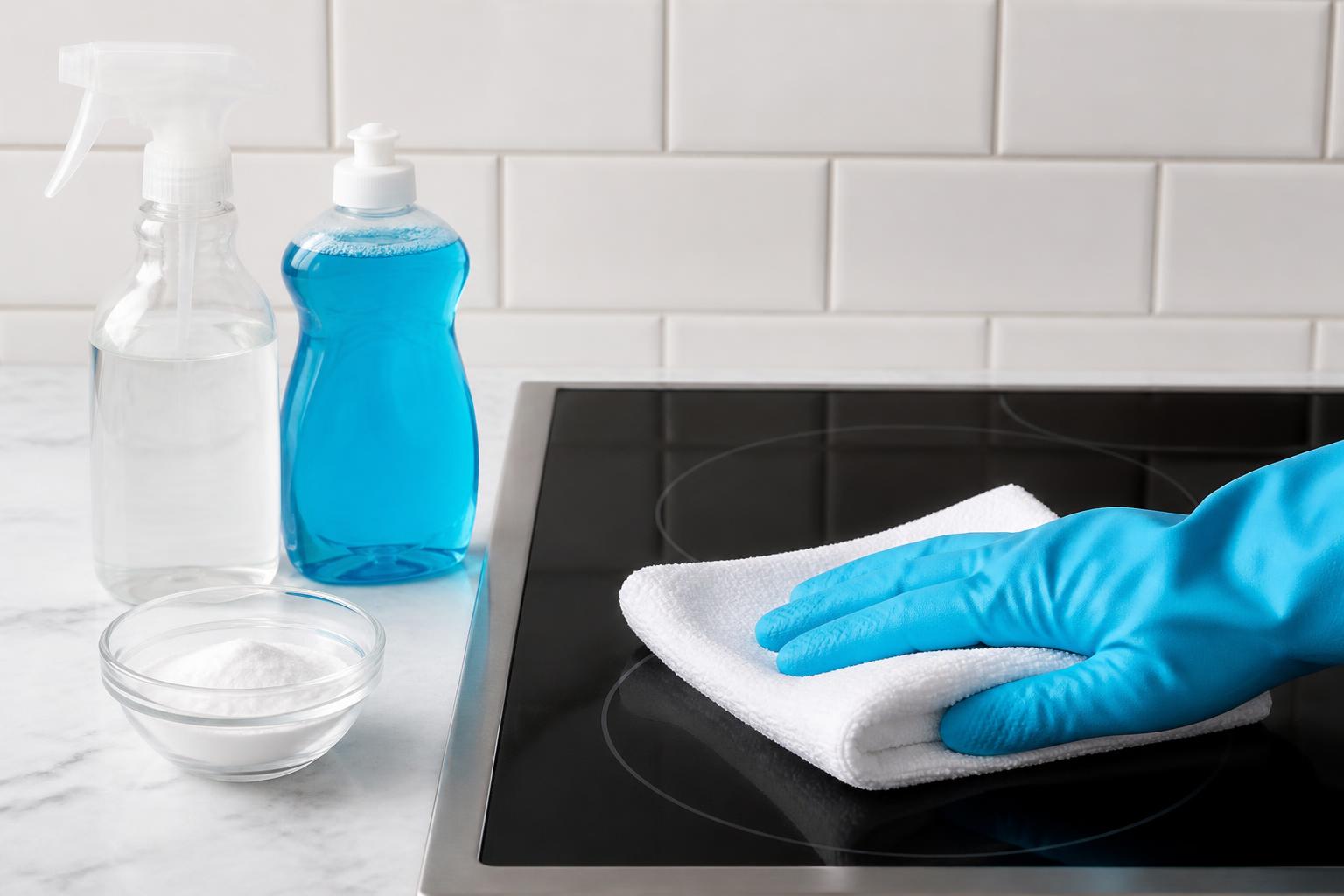
If the test points to scale, skip the methods below and use a straight vinegar soak or a citric acid rinse. If it’s definitely rust, move to the preparation steps.
What You’ll Need to Get Started
Gather these items before you begin. Using the wrong tool is the most common mistake that leads to scratched fixtures.
- Baking soda – fine abrasive for light stains, safe on all surfaces
- White vinegar – mild acid for scale and very light rust
- Citric acid powder – sold with canning supplies or online; dissolves iron oxide faster than vinegar and is gentler than commercial acids
- Pumice stone – for porcelain only; do not use on fiberglass, acrylic, or enameled steel
- Rubber gloves – rust removers can irritate skin, especially commercial formulas
- Spray bottle – for applying vinegar or diluted citric acid
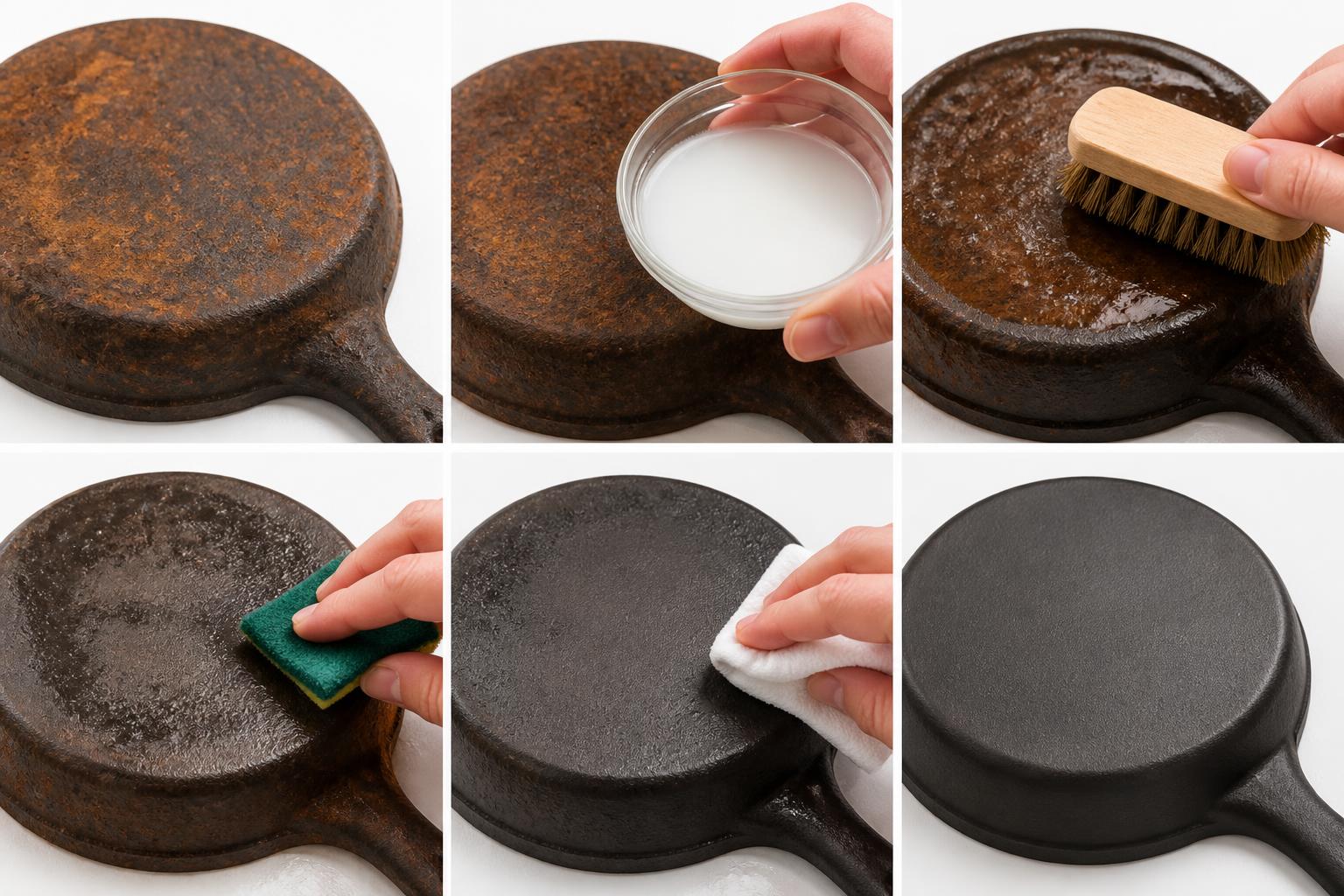
- Plastic scrub brush or old toothbrush – never metal bristles
- Commercial rust remover – only if DIY methods fail; choose one labeled for rust removal (Iron Out, CLR, Whink)
Surface warning: Pumice stone is safe on glazed porcelain (most standard toilets and sinks), but it will scratch fiberglass, acrylic, and painted finishes. Always test on a hidden spot first—under the toilet rim, behind the sink pedestal, or on the underside of the tub lip.
Step-by-Step Rust Removal Methods
Work through these methods in order. Each one builds on the last. Stop as soon as the stain is gone—over-scrubbing can damage the glaze.
Method 1: Baking Soda Paste – For Light Stains
Best for faint orange rings or spots that appeared recently (within a few days to a week). This method is safe on all fixture materials.
- Mix 3 tablespoons baking soda with enough water to form a thick paste—like toothpaste consistency.
- Apply the paste directly to the stain and let it sit for 10 minutes. For vertical surfaces, press it on firmly so it sticks.
- Scrub with a plastic brush or damp sponge. For toilet bowls, use a toilet brush and focus on the stained area.
- Flush or rinse thoroughly with water.
Checkpoint: Inspect the area under good light—it should look uniform and stain-free. If a faint discoloration remains, repeat once.
Likely cause if this fails: The rust has penetrated the glaze or has been there for longer than a week. Move to the citric acid soak.
Method 2: Citric Acid Soak – For Moderate Stains
Citric acid dissolves iron oxide faster than vinegar and is gentle enough for most colored fixtures when used correctly. This is the go-to method for established rust stains.
- For toilets: Turn off the water supply at the shut-off valve behind the toilet. Flush to empty the bowl. Add ½ cup citric acid powder directly to the standing water at the bottom of the bowl. Let it sit 2–3 hours. Scrub with a toilet brush, flush, and verify the stain is gone.
- For sinks and tubs: Mix 1 tablespoon citric acid per 1 cup warm water. Fill the basin or tub so the stain is submerged. Let soak 1–2 hours. For vertical surfaces (sink sides, tub walls), make a paste by mixing 3 tablespoons powder with a few drops of water and a drop of dish soap to help it stick. Leave the paste on 30 minutes.
Pseudo-code for stain evaluation before cleaning:

if fizz_test(vinegar) returns bubbles:
 stain_type = "hard water scale"
 use vinegar soak or citric acid rinse
elif scrape_test(plastic_knife) returns powder:
 stain_type = "hard water scale"
 use scale remover
else:
 stain_type = "rust"
 proceed to rust removal methods
 if stain_persists_after_three_methods:
 check for penetration (roughness, halo effect)
 if penetration_detected:
 stop DIY → call professional refinisher
 else:
 try commercial rust remover
Checkpoint: After rinsing, the surface should feel smooth and show no orange or brown patches. If a stubborn spot remains but has faded significantly, repeat the soak once. If it hasn’t changed at all, move to Method 3.
Friction point: If you have hard water AND rust, the citric acid soak may leave a white residue after the rust dissolves. That’s the scale being lifted—rinse with vinegar, then flush or rinse again.
Method 3: Pumice Stone Technique – For Stubborn Spots on Porcelain
Only use this on glazed porcelain. Pumice stone is basically abrasive rock—it physically grinds rust off the surface. Used correctly, it removes rust without scratching. Used wrong, it gouges the glaze.
- Wet the pumice stone and the stain area thoroughly. Never use a dry stone.
- Rub the stone gently over the rust spot using light pressure—imagine you’re erasing pencil marks, not sanding wood.
- Rinse the stone and the surface every 10–15 seconds to check progress.
- Stop the moment the rust is gone. Do not rub the same spot repeatedly after the stain disappears.
Checkpoint: If the stain is gone and the surface feels smooth, you’re done. If you feel a rough patch or see a dull area, you’ve rubbed through the glaze—stop immediately.
When to skip this method: If the rust is in a textured or patterned area of the toilet or sink where the glaze is thinner, or if you have a colored fixture you haven’t tested, use citric acid instead.
Method 4: Commercial Rust Remover – For Heavy or Old Stains
When DIY methods fail and the stain has been there for months or years, use a product specifically labeled for rust removal (Iron Out, CLR, Whink). These use stronger acids (oxalic, sulfamic, or hydrofluoric) that can damage surfaces if misused.
- Apply the product according to the label—usually as a paste or liquid directly on the stain.
- Let sit 5–15 minutes. Do not exceed the maximum dwell time stated on the bottle.
- Scrub with a non-metal brush.
- Rinse thoroughly with water. Flush the toilet or drain the sink/tub completely.
Verify: The stain should be completely gone. If it isn’t, or if the surface feels rough or pitted, stop and move to the next section.
Caution: Wear gloves and ventilate the room. Never mix with bleach or other cleaners—toxic fumes can result. Test on an inconspicuous area first, especially on colored fixtures. Never use on marble, granite, limestone, or stone surfaces.
The Failure Mode Nobody Talks About: Rust Has Penetrated the Glaze
Here’s the failure mode that trips up most homeowners: a rust stain that looks like it’s on the surface but has actually seeped into microscopic cracks in the glaze or into the porous ceramic body underneath. You can scrub all day and the stain won’t budge—or it will fade briefly and return within hours.
How to detect it early:
– After cleaning, the area feels rough or dull instead of smooth and glossy.
– The stain looks darker at the edges (a halo effect) as if it’s bleeding out from the porcelain.
– The stain returns within 24–48 hours after a thorough cleaning.
If you detect any of these signs, stop scrubbing immediately. Further abrasion will only widen the cracks in the glaze and make the stain permanent. This is not a DIY-fixable problem—the fixture needs professional refinishing or replacement.
When to Stop and Call a Pro
If none of the methods work—or if the stain feels rough and pitted—the rust has likely penetrated the glaze. Scrubbing further will only damage the finish. Look for these signs:
- A dull, rough patch that catches your fingernail
- Visible erosion of the glaze (it looks like the shine is gone)
- The stain returning quickly after cleaning (within 24 hours)
- A scratch or groove from previous attempts with pumice stone or metal tools
In these cases, DIY removal cannot fix the damage. The fixture may need replacement or professional refinishing. Continuing to scrub will create permanent scratches and make the problem worse.
Quick Decision Aid
Before you start, run through this check:
- [ ] Did you test with vinegar to rule out hard water scale before using any abrasive?
- [ ] Is the surface porcelain (safe for pumice stone) or fiberglass/acrylic (use only baking soda or citric acid)?
- [ ] Are you wearing rubber gloves?
- [ ] Did you spot-test your chosen method on a hidden area first?
- [ ] Is the room ventilated (especially for commercial rust removers)?
- [ ] Have you turned off the toilet water supply if you’re using a soak method?
- [ ] Do you have a plastic brush or toothbrush on hand (never metal bristles)?
- [ ] Are you prepared to stop and call a pro if the stain doesn’t budge after three methods?
FAQ
Can I use bleach to remove rust from a toilet bowl?
No. Bleach does not dissolve iron oxide and can actually set rust stains deeper into porous surfaces. Stick to acids (citric acid, vinegar) or a dedicated rust remover.
Will CLR damage my colored toilet or sink?
CLR (calcium-lime-rust remover) is safe on fully glazed porcelain when used as directed. Avoid extended soaking—5–10 minutes is enough. Do not use it on fiberglass, acrylic, or painted surfaces, and always test on a hidden area of a colored fixture first.
Is pumice stone safe on colored toilets and sinks?
Only if the surface is fully glazed porcelain. Colored fixtures are typically glazed the same way as white ones, but test on an unseen area (under the rim or behind the bowl) first. If the stone leaves a visible scratch, stop immediately and switch to citric acid.
How long should I let citric acid sit on a rust stain?
For a toilet bowl, 2–3 hours is usually enough for moderate stains. For heavy or old stains, you can let it sit up to 4 hours, but check at the 2-hour mark. For sinks and tubs, 1–2 hours is typical. The stain should fade noticeably within the first hour. If it hasn’t, either the rust has penetrated the glaze or you need a commercial remover.
Can I use a metal scouring pad on rust?
No. Metal pads (steel wool, wire brushes) will scratch glazed porcelain and leave tiny metal particles that rust and create new stains. Use only plastic brushes, sponges, or pumice stone on porcelain.
Will a rust remover void my fixture’s warranty?
Some manufacturers consider chemical treatments that damage the finish a void of warranty. Check your fixture’s care manual before using commercial rust removers. Baking soda and citric acid are generally considered safe for glazed porcelain.
What if the stain is under the toilet rim where I can’t reach?
Use a mirror and a flashlight to inspect the area. For stains under the rim, apply a citric acid paste with a small brush (an old toothbrush works well) and let it sit for 30 minutes. The paste won’t drip as easily as liquid. If that doesn’t work, a commercial rust remover applied with a cotton ball or folded paper towel pressed against the stain can help, but be patient.
Explore This Topic
– How to Remove Rust Stains from Clothing and Fabric
– How to Remove Hard Water Stains and Limescale from Glass, Tiles, and Fixtures
– How to Remove Sunscreen Stains from Clothes and Swimwear

Sir Cleans a Lot is a professional home cleaning specialist with over 10 years of hands-on experience. He has helped thousands of homeowners tackle stubborn stains, eliminate mold, and keep their homes spotless using practical, science-backed methods. When he’s not testing the latest cleaning products or researching stain removal techniques, he’s sharing his expertise to make cleaning easier for everyone.