
Essential Seasonal Cleaning Supplies: What to Stock for Every Season
The most efficient way to stock seasonal cleaning supplies is to start a running list of what actually ran out or underperformed last season, then buy replacements before the next deep clean begins. Without that history, most people overbuy all-purpose sprays they don’t need and skip the targeted products that save real scrubbing time. Below is the specific supply list for each season followed by a process to keep your inventory accurate.
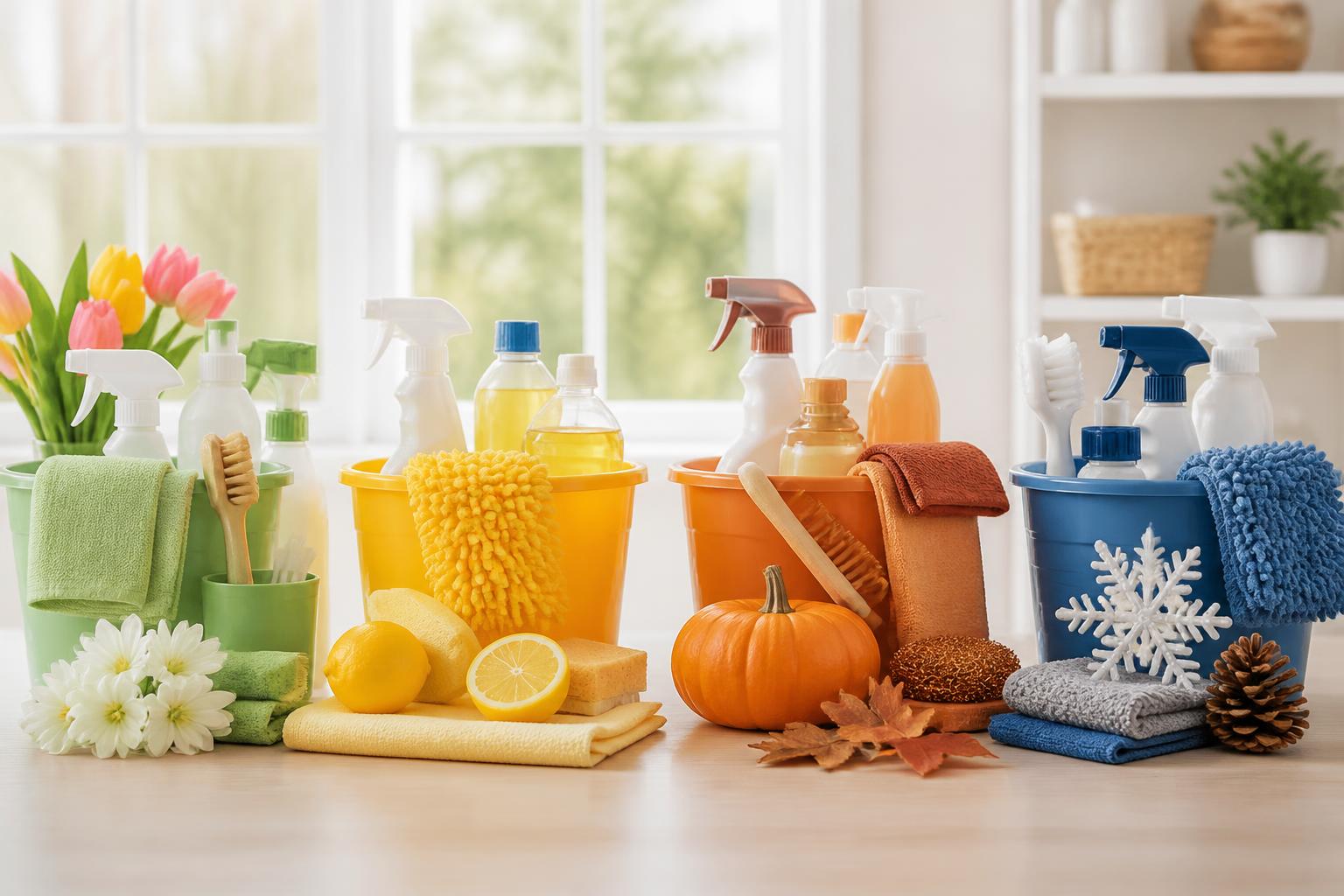
Seasonal supply list by quarter
Spring: Deep clean and degrease
- Heavy-duty degreaser (stovetops, range hoods, cabinets)
- Glass cleaner with streak-free formula
- Microfiber cloths – at least 6, dedicated to glass and one to degreaser work
- Stiff scrub brush for tile grout and oven racks
- Rubber gloves
- All-purpose disinfectant (check it’s labeled for your countertop material)
- Window squeegee for streak-free panes
Why this matters for you now: If you clean windows once a year in spring, buying the squeegee alongside the glass cleaner saves a second trip. If your stovetop has baked-on grease from holiday cooking, a general cleaner won’t cut it – the degreaser is the difference between a 5-minute wipe and a 20-minute scrub.
Summer: Outdoor surfaces and moisture control
- Outdoor surface cleaner (patio furniture, deck railings, siding)
- Mildew remover (for humid bathrooms and shaded outdoor spots)
- Grill grate brush with stainless steel bristles
- Citronella wipes for wiping down patio seating
- Hose nozzle with adjustable spray patterns
What to check before buying: Look at your patio material. If you have plastic/resin furniture, a general outdoor cleaner works. If you have metal or wood, confirm the cleaner is labeled for that surface to avoid corrosion or discoloration.
Fall: Indoor buildup and gutter prep
- Duster with extendable handle (reaching ceiling corners, ceiling fans, blinds)
- Carpet powder or foam cleaner for high-traffic entry mats and living areas
- Heavy-duty leaf bags (check weight rating – standard 30-gallon bags can tear)
- Gutter scoop or trowel
- Fabric-safe upholstery cleaner for sofas and armchairs used more during cooler months
Winter: Salt residue, moisture, and floor protection
- Ice melt labeled safe for your flooring type (some formulas damage tile grout or wood finishes)
- Humidifier disinfectant (match the product to your humidifier model – some need tablets, not liquid)
- Extra microfiber cloths for wiping salt residue from entryways and boot trays
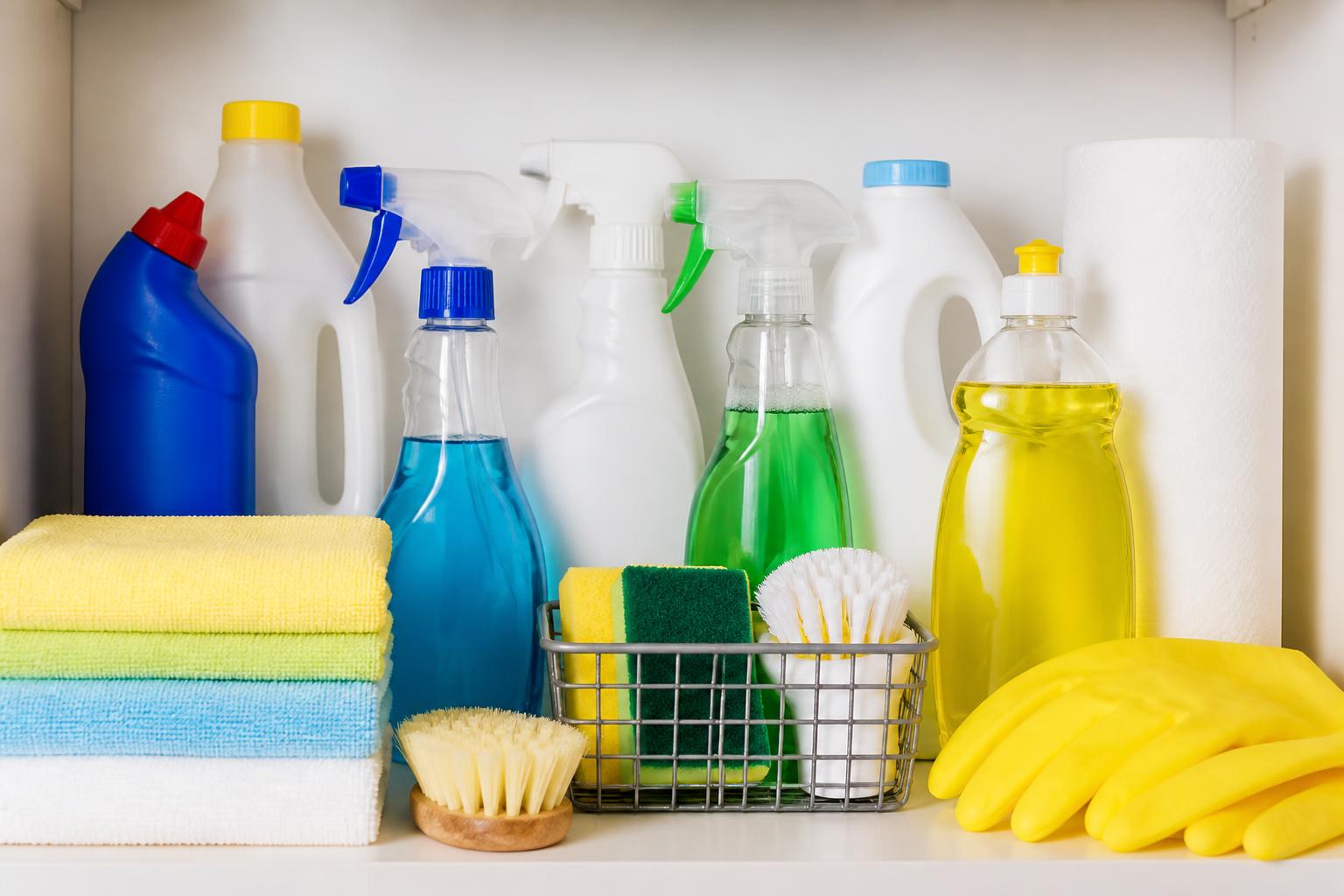
- Spot cleaner for wet boots, coats, and muddy pet paws
How to stock your seasonal cleaning supplies
Use this process at the start of each season to avoid buying duplicates or missing critical items.
- Review last season’s checklist – Look at what you used most and what ran out. Note any products that expired or lost effectiveness.
- Take a physical inventory – Open your cleaning caddy and storage area. Count microfiber cloths, check spray bottles for remaining liquid, and inspect brushes for wear.
- Verify supplies against your actual environment – This concrete step prevents buying the wrong product. For example: if you have sealed granite countertops, check that your spring degreaser is labeled “granite-safe” (ammonia-based cleaners can dull the seal). If you use a humidifier in winter, confirm the humidifier disinfectant matches your unit’s manual (some models require specific tablets, not liquid). Write the correct product name on your shopping list.
- Buy in batches – Purchase all missing supplies at once. Stick to the list – avoid adding random “maybe useful” products that clutter your storage.
- Store for quick access – Keep seasonal caddies separate. Label each with the season name so you can grab the right one without digging.
Success check: After restocking, you should be able to complete a full seasonal deep clean without stopping to buy anything. If you still need supply runs mid-task, add those items to your next season’s inventory review.
Realistic mismatch to watch for: A common trade-off is using a single all-purpose cleaner year-round. That works for basic touch-ups, but it won’t handle a greasy stovetop in spring (needs degreaser) or mildew on patio cushions in summer (needs mildew remover). Sticking to one product means you’ll scrub harder and longer, and the result won’t be as good. The consequence isn’t damage, but wasted effort and a less thorough clean. If you’re tempted to buy a single “does everything” cleaner, check the label for what it’s certified to disinfect – many all-purpose sprays lack the strength for seasonal grime.
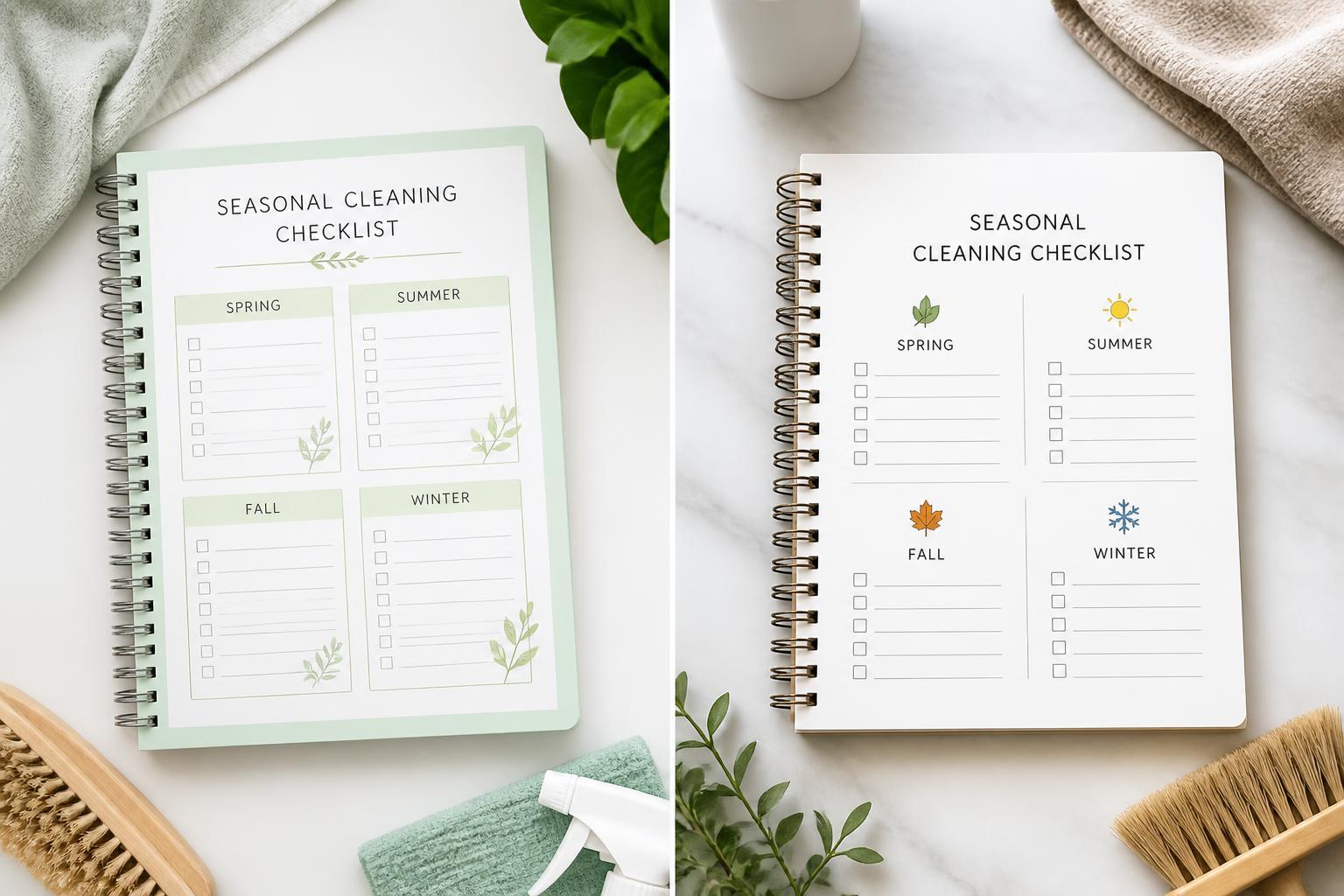
Comparison framework: Seasonal cleaning checklist planners
A good planner turns your supply list into a habit. The table below compares three options based on format and key features.
| Title | Brand | Best For | Key Features |
|---|---|---|---|
| Cleaning Checklist Planner: Color 52-Week Daily, Weekly, Monthly, Seasonal & Yearly Cleaning Schedules • Declutter Challenge • Home Maintenance Checklist • Speed Cleaning Checklists (Undated) | – | All‑around weekly + seasonal tracking | 52 weeks, undated, declutter challenge, speed cleaning pages, home maintenance checklist |
| Home Cleaning Planner & Checklist Book for Women Adults – Daily, Weekly & Monthly Cleaning Schedule and Checklist, Housekeeping Organizer with Cleaning Lists, Spiral Bound Cleaning Book Planner | XIMDY | Traditional daily/weekly/monthly layout | Spiral bound, daily/weekly/monthly sections, housekeeping checklists, no‑frills design |
| ADHD Cleaning Planner for Adults Women, Cleaning Schedule and Checklist Notebook, Daily Weekly Monthly Schedule Household Cleaning Checklist Planner, Green | GOLDPEI | ADHD‑friendly, simple structure | Daily/weekly/monthly schedule, green cover, straightforward formatting, focus on repeatable tasks |
Top Pick – The Cleaning Checklist Planner: Color 52-Week … (Undated) covers every time frame you need (daily through yearly) and adds extras like a declutter challenge and home maintenance checklist. Its undated format means you can start any month without wasting pages.
Quick decision aid: Choosing the right planner for your season-based cleaning
Use these five pass/fail checks before you buy any cleaning planner. If it fails more than two, move on to a different option.
- Covers all four seasons – Does the planner dedicate space to spring, summer, fall, and winter tasks? Many daily/weekly planners skip seasonal sections unless you add them yourself.
- Undated or dated – Can you skip unused weeks or start mid-year? Undated planners (like the top pick) let you avoid wasted pages.
- Durable enough for a cleaning caddy – Will the cover and binding hold up to occasional damp fingers and table spray? Spiral bound with a thick cover generally lasts longer than thin perfect-bound notebooks.
- Includes a supply inventory page – Is there a dedicated spot to list what you already have and what you need to buy? Without it, you’ll rely on memory.
- Layout matches your planning style – Do you prefer a simple check-off list or a more detailed schedule? The ADHD planner uses minimal visual clutter; the XIMDY uses a traditional calendar-style format.
If you check four or five of these boxes, the planner is likely a good fit for seasonal cleaning tracking.
Best‑fit picks by use case
- You want one planner that does it all – The undated 52‑week planner is the most comprehensive. It includes both seasonal and yearly schedules, so you can map out spring deep cleaning and winter maintenance in the same book.
- You prefer a simple daily‑to‑monthly system – The XIMDY Home Cleaning Planner gives you a no‑extra‑frills layout. It’s spiral bound so it lays flat while you work.
- You have ADHD or struggle with task overwhelm – The GOLDPEI ADHD Cleaning Planner keeps each page clean with less visual clutter. The real benefit is the reduced cognitive load from its pared‑down weekly and monthly checklists.
Trade‑offs to know
- Undated vs. dated – Undated planners let you skip months you don’t need; dated ones force you into a calendar but may leave wasted space if you miss weeks.
- Binding style – Spiral bound lies flat but can snag. Perfect‑bound (glued) stays compact but won’t stay open without a clip.
- Extra content – Declutter challenges and home maintenance checklists are useful if you actually use them. If you only need a simple supply tracker, those extras add weight without value.
- Price – No prices are listed in the comparison data, but generally undated planners with more pages cost slightly more. Check the current Amazon listings before buying.
Realistic mismatch for planners: If you’re buying a planner solely for its seasonal supply pages, make sure those pages exist. The XIMDY planner focuses on daily/weekly/monthly schedules and doesn’t include dedicated seasonal supply checklists; you’d need to write those in yourself. That’s fine if you already have a system, but if you want the planner to do the thinking for you, the undated 52‑week option is a better fit.
Frequently Asked Questions
What should I keep in a seasonal cleaning supply caddy?
A small caddy per season saves time. For spring: glass cleaner, degreaser, [microfiber cloths](https://thecleantips.com/how-to-use-microfiber-cleaning-cloths/), scrub brush, and gloves. For summer: outdoor surface cleaner, mildew remover, grill brush, and citronella wipes. For fall: extendable duster, carpet cleaner, leaf bags, gutter scoop. For winter: floor‑safe ice‑melt, humidifier cleaner, extra microfiber cloths, spot cleaner.
How often should I restock seasonal supplies?
Check your stock at the start of each season (first week of March, June, September, December). Replenish any products that have expired or dropped below half full. This avoids last‑minute trips.
Are digital cleaning checklists better than paper planners?
Digital lists are easy to edit and share. Paper planners don’t need charging, are always visible, and force you to write down tasks—which many people find more memorable. The best choice depends on whether you prefer tapping or writing.
Can I use the same all‑purpose cleaner year‑round?
Yes, but seasonal tasks often require targeted products: a degreaser for spring kitchen deep cleans, a mildew remover for humid summer bathrooms, and a carpet cleaner for fall indoor messes. A single all‑purpose spray won’t handle all of those effectively.
Explore This Topic
– How to Prepare Your Home for Summer: Deep Cleaning Checklist
– Best Cleaning Brushes and Scrubbers for Every Surface
– How to Use Microfiber Cleaning Cloths for Every Surface

Sir Cleans a Lot is a professional home cleaning specialist with over 10 years of hands-on experience. He has helped thousands of homeowners tackle stubborn stains, eliminate mold, and keep their homes spotless using practical, science-backed methods. When he’s not testing the latest cleaning products or researching stain removal techniques, he’s sharing his expertise to make cleaning easier for everyone.