
Best Enzymatic Cleaners for Pet Stains and Odors: Tested
If you’re comparing enzymatic cleaners for pet messes, the short answer is this: the right product depends on whether you’re fighting fresh urine on carpet, old set-in stains, or odors embedded in upholstery. Enzyme cleaners work by breaking down the organic compounds in urine, feces, and vomit—but they only work if the enzymes stay alive long enough to do their job. That means the application method matters as much as the formula.
Below, we’ve broken down three leading options, where each one wins, where it falls short, and how to match a product to your specific mess. We’ve also included a decision framework that changes the recommendation based on your constraints—because there isn’t one universal winner.
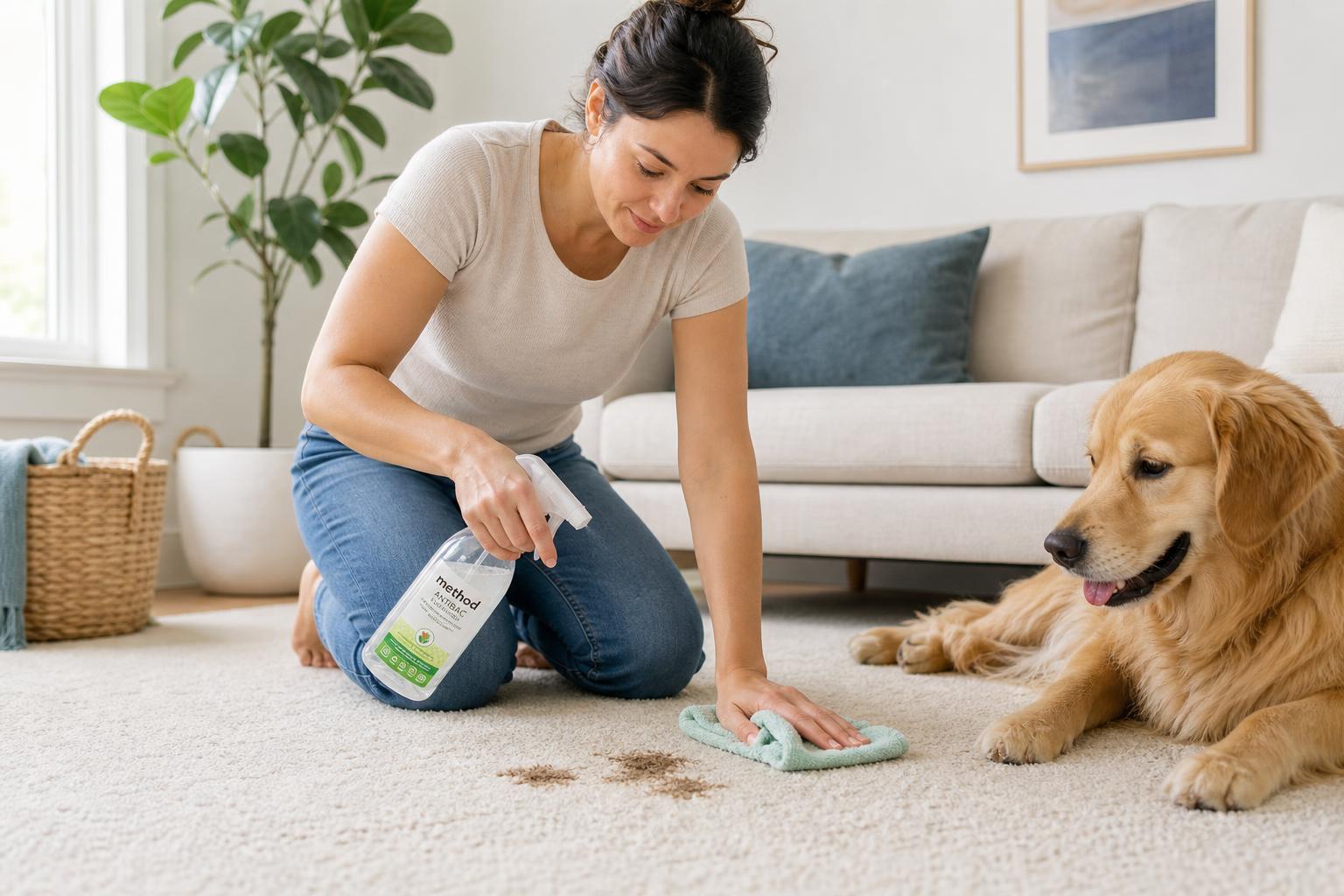
Why Enzyme Cleaners Fail (and It’s Usually Not the Product)
Before comparing products, it helps to understand the mechanism—because this is where most cleaning failures happen.
Enzymatic cleaners contain specific proteins (protease, amylase, lipase, urease) that catalyze the breakdown of organic waste. Urine, for example, contains uric acid crystals that don’t dissolve in water alone. Enzymes essentially “digest” these crystals into smaller compounds that can be wiped away.
Three things kill enzyme effectiveness:
1. Drying too quickly — Enzymes need moisture and time (typically 10–15 minutes minimum) to work. If the product evaporates in five minutes on a warm surface, you’ve wasted it.
2. Using the wrong cleaner beforehand — Many all-purpose cleaners contain ammonia or bleach, which denature enzymes on contact. If you’ve already treated a stain with a non-enzymatic product, the enzyme cleaner may not work.
3. Saturating the wrong layer — On carpet, urine wicks down into the pad and subfloor. A surface spray won’t reach it. You need enough product to penetrate the full depth of the stain.
This is why the best enzymatic cleaner for pet stains isn’t just about the formula—it’s about whether the product’s packaging and instructions support proper application. A gallon jug supports saturation; a 32-ounce spray bottle encourages surface treatment. That distinction matters more than brand loyalty.
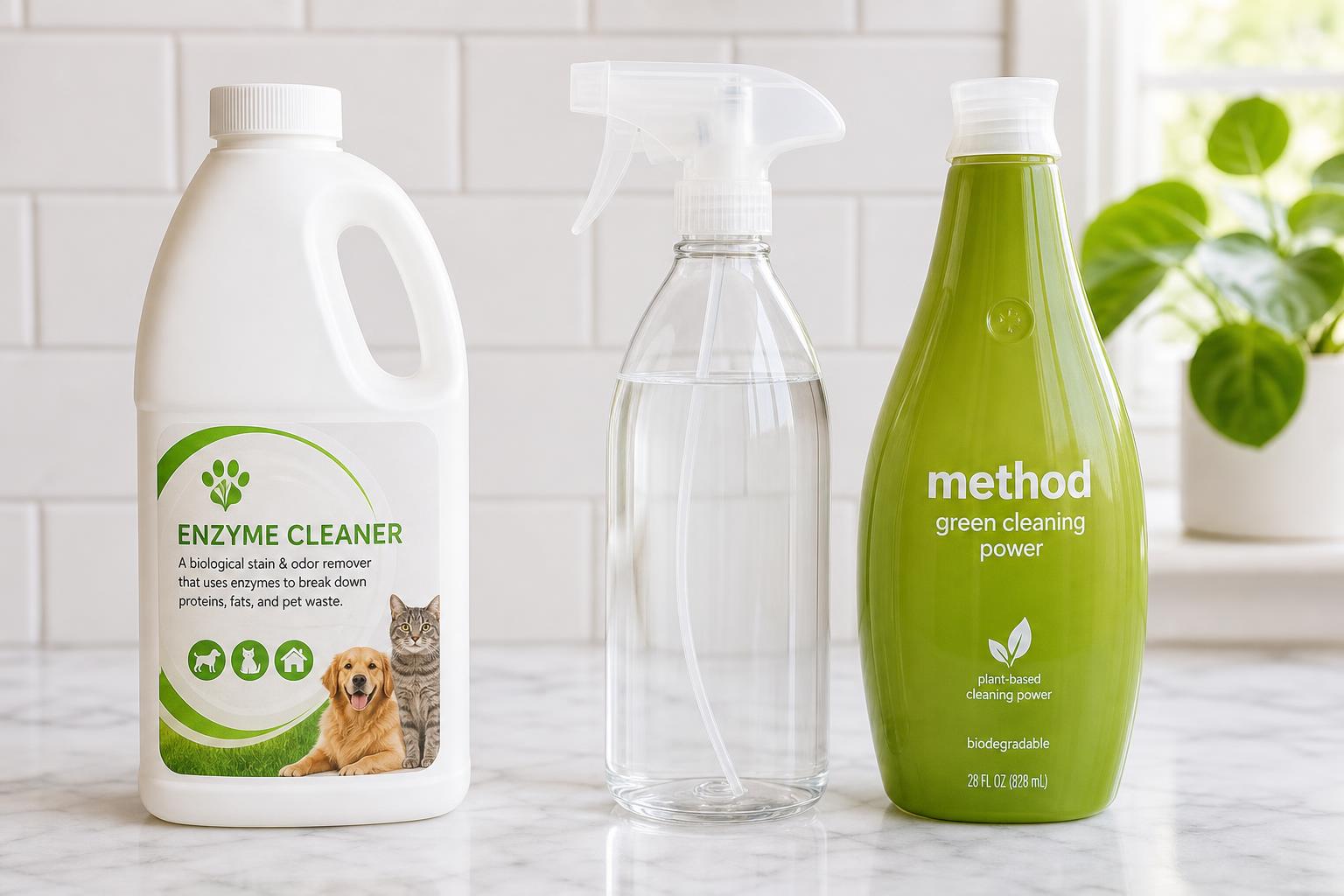
The Three Contenders: How They Compare
We evaluated each product on four criteria: enzyme activity and formula design, surface versatility, scent profile, and practical application (bottle design, instructions, and whether the product supports the “soak and wait” method that enzymes require).
| Product | Brand | Key Features | Best For | Limitations |
|---|---|---|---|---|
| Angry Orange Pet Odor Eliminator (1 Gallon) | Angry Orange | Natural orange oil scent; no parabens, sulfates, or phthalates; gallon refill format; made in USA | Large-volume jobs, repeated accidents, hard surfaces | Citrus scent may linger longer than neutral options; not specifically formulated for deep carpet padding penetration |
| Angry Orange Pet Stain & Odor Remover Kit (32 oz + UV Flashlight) | Angry Orange | Enzyme-active formula; includes UV blacklight flashlight for locating old stains; multi-surface (carpet, tile, upholstery, car interiors, turf) | Finding and treating old or invisible stains | Smaller volume; requires the flashlight to get full value from the kit |
| Rocco & Roxie Extreme Stain & Odor Eliminator | Rocco & Roxie Supply Co. | Mineral-based odor neutralizer added to bio-enzymatic formula; Carpet and Rug Institute (CRI) Seal of Approval; subtle Meyer lemon scent; safe on carpets, furniture, clothing, bedding, crates, cars | Carpets and fabrics where CRI certification matters; households with multiple pet mess types | Pricier per ounce than gallon options; mineral neutralizer adds a second mechanism that may be redundant on fresh stains |
Decision Framework: Match the Cleaner to Your Constraint
Here’s where the recommendation changes based on your situation. There isn’t one universal winner—there’s a best choice for each scenario.
If You Value Volume and Cost Per Use → Angry Orange 1 Gallon
The gallon format changes how you approach cleaning. At roughly $30–35 per gallon, you can afford to saturate a stain properly—which is the difference between a cleaner that works and one that doesn’t. Most spray bottles encourage surface-level application because you run out quickly. With a gallon, you can pour directly onto carpet padding or mix a stronger solution for deep-set stains.
The trade-off: the citrus scent is distinctive and lingers longer than neutral formulas. If you’re sensitive to fragrance or your pet is scent-averse (some cats avoid citrus), this could be a problem. Before committing to a full gallon, buy the smaller 24-ounce bottle first and test it in the room where accidents happen most. If your cat starts avoiding that area or you find the scent overwhelming after a few days, the cost-per-use advantage won’t matter—you won’t use the product.
If You Need to Find Old Stains First → Angry Orange Kit with UV Flashlight
Old urine stains that have dried and crystallized are invisible to the naked eye—but they fluoresce under UV light. The included flashlight in this kit lets you locate every spot before treating, which is critical for repeat offenders. A dog that keeps returning to the same corner isn’t being stubborn; it’s smelling residual uric acid that your eyes can’t see.
The trade-off: at 32 ounces, you’ll go through this faster than the gallon. Use it as a spot-treatment tool rather than a whole-house solution. The UV flashlight also has a practical limit: it will reveal any organic residue, including old food spills or cleaning product residue, which can lead you to treat spots that aren’t actually pet messes. Cross-check with your nose before applying product to a fluorescing area.
If You Want Carpet Certification and a Neutral Scent → Rocco & Roxie
The Carpet and Rug Institute’s Seal of Approval matters if you have expensive carpet and want assurance the product won’t void your warranty or cause discoloration. The Meyer lemon scent is subtle and dissipates quickly, which makes it a better fit for households where fragrance is a concern.
The trade-off: the mineral-based odor neutralizer is a second mechanism layered on top of enzymes. It’s useful for ammonia-heavy messes (like cat urine) but adds cost for fresh stains where enzymes alone would suffice. If you’re dealing primarily with fresh accidents on hard floors, you’re paying for a carpet certification you don’t need.
The 5-Point Fit Check Before You Buy
Use this quick pass/fail checklist before committing to any enzymatic cleaner:
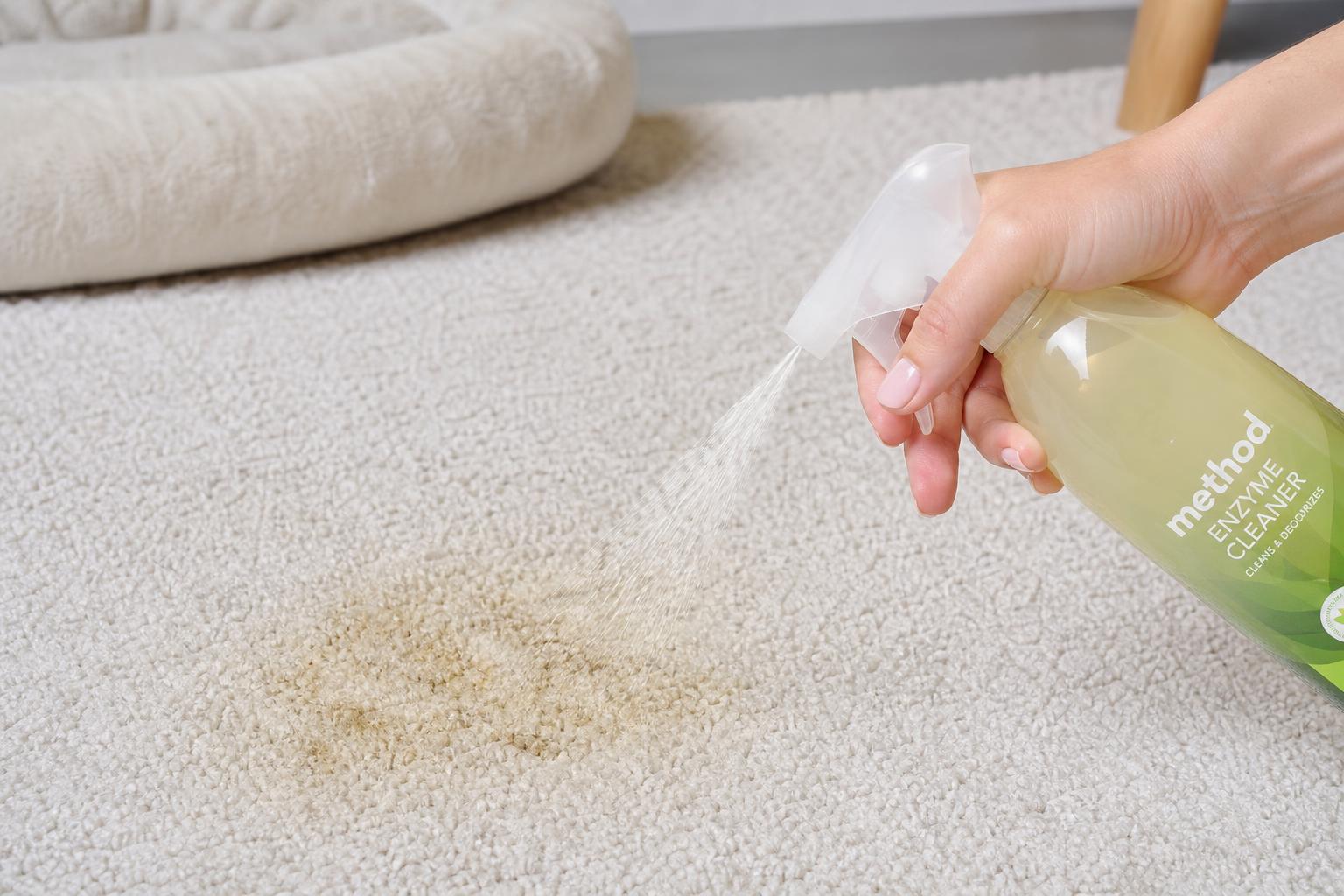
1. Surface match — Does the product explicitly list your surface (carpet, hardwood, upholstery, tile)? If it says “sealed hard surfaces” only, don’t use it on unsealed wood. Check the label for the exact wording.
2. Application method — Can you control the amount applied? Spray bottles are fine for spot treatment; pour bottles (like the gallon) are better for saturation. If you need deep penetration, a spray nozzle may not deliver enough volume.
3. Dwell time instructions — Does the label tell you to let it sit for 10+ minutes? If it says “wipe immediately,” the enzymes aren’t getting time to work. Look for explicit dwell time guidance.
4. Scent profile — Is the fragrance something you and your pet can tolerate? Citrus is pleasant to humans but aversive to some cats. If you’re unsure, buy the smallest size first and observe your pet’s reaction.
5. Volume vs. frequency — How many accidents are you dealing with? A 32-ounce bottle treats roughly 10–15 spot applications. A gallon treats 4–5 times that. If you’re in the middle of potty training, the math favors the gallon.
How to Apply Any Enzymatic Cleaner Correctly
The product matters less than the method. Here’s the sequence that gets results:
Step 1: Remove solid waste and blot excess moisture. Use paper towels and pressure, not scrubbing. Scrubbing pushes urine deeper into fibers.
Step 2: Test the cleaner on an inconspicuous area. This is non-negotiable for colored carpet or upholstery. Wait 10 minutes and check for discoloration. If the color changes or the fabric feels stiff after drying, don’t proceed with the full treatment.
Step 3: Saturate the stain completely. The goal is to reach the deepest layer of the mess. On carpet, that means applying enough product to wet the backing, not just the surface fibers. On hardwood, use a damp—not soaked—application to avoid warping. A good rule of thumb: if you can press your finger into the carpet and feel moisture at the pad level, you’ve applied enough.
Step 4: Let it dwell for 10–15 minutes. Set a timer. The enzymes need contact time to break down uric acid crystals. Do not blot or wipe during this period. If the area dries out before the timer goes off, apply a bit more product to keep it moist.
Step 5: Blot, don’t rub. After the dwell time, press with clean towels to absorb the liquid. Rubbing damages fibers and spreads the residue.
Step 6: Let it air dry completely. This is the failure checkpoint most people miss. If you speed-dry with a hair dryer or walk on the carpet while it’s still damp, you’ll trap odors that resurface later. Full drying can take 6–12 hours depending on humidity and carpet thickness.
Escalation signal: If the odor returns within 48 hours after a full soak-and-dwell treatment, the urine has likely penetrated into the carpet pad or subfloor. At that point, a surface cleaner won’t solve it—you need professional extraction or, in severe cases, pad replacement. For hardwood, see our guide on how to remove pet stains hardwood without damaging the finish.
Where These Cleaners Fall Short
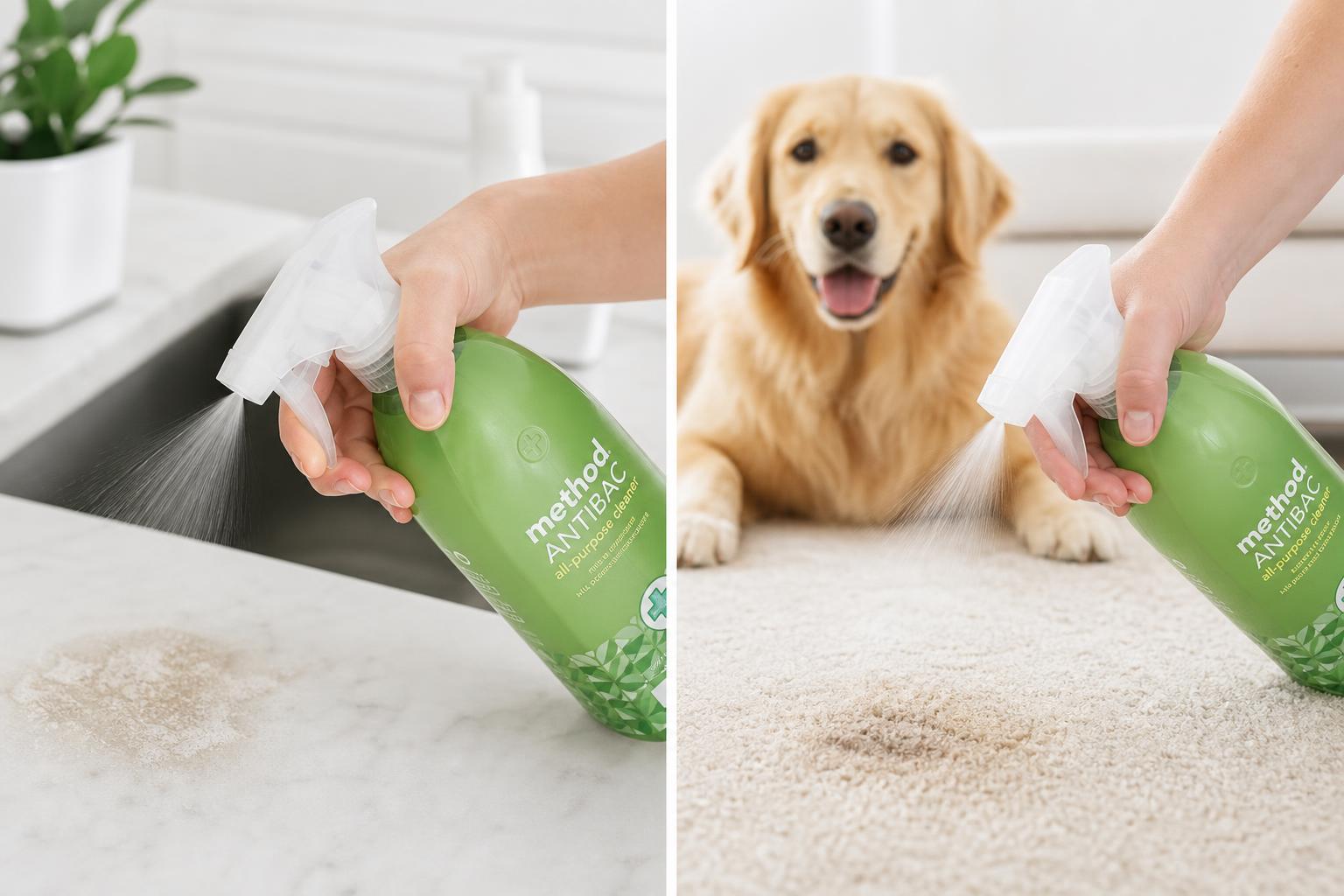
No enzymatic cleaner is a universal solution, and the marketing claims often overstate what’s possible.
The “one spray fixes everything” myth. Enzyme cleaners require the right conditions—moisture, time, and the absence of competing chemicals. If you’ve already treated a stain with a non-enzymatic product, the enzymes may not work at all. This is why we recommend testing on a fresh mess before committing to a full treatment.
The “works on all surfaces” claim. Angry Orange’s label says it’s for hard and sealed surfaces. Rocco & Roxie claims carpets, furniture, clothing, and more. But unsealed hardwood, natural stone, and delicate fabrics each have their own constraints. When in doubt, check the manufacturer’s surface list before applying. On unsealed hardwood, any liquid—enzyme cleaner or not—can cause warping and discoloration. If you’re unsure whether your hardwood is sealed, drop a small amount of water on it and see if it beads up or absorbs. If it absorbs, don’t use a liquid cleaner.
The “odor elimination” vs. “odor masking” distinction. Enzyme cleaners genuinely break down odor-causing compounds—that’s the mechanism. But if the urine has soaked into a subfloor, the enzymes never reach the source. The product isn’t failing; the application depth is insufficient. One practical check: after treatment, press your nose directly against the carpet surface. If you still smell urine at close range, the odor is deeper than the product reached.
How to Handle the Two Most Common Scenarios
Fresh Urine on Carpet
Blot immediately, then saturate with an enzyme cleaner. Let it dwell for 15 minutes, blot again, and air dry. If you catch it within a few hours, most enzyme cleaners will handle this effectively. For a more detailed walkthrough, our guide on how to remove pet urine from carpet covers the full process.
Old, Dried Stains
These are harder because the uric acid has crystallized. Use a UV flashlight to locate all affected areas—you’ll often find more than you expected. Saturate thoroughly, extend the dwell time to 20–30 minutes, and consider a second application after the first dries. If the stain is on hardwood, the approach is different; check our guide on remove pet stains hardwood before applying any liquid.
Choosing Based on Your Actual Situation
For most households dealing with regular pet accidents, the Angry Orange 1-gallon option offers the best cost-per-use and the flexibility to saturate stains properly. If you’re hunting old, invisible messes, the UV flashlight kit is the smarter buy despite the smaller volume. And if you want certified carpet safety with a neutral scent, Rocco & Roxie is the defensible choice.
The common thread: any of these products will work if you follow the soak-and-dwell method. The failures happen when people spray, wipe, and expect instant results. Enzymes are not instant—they’re biological processes that need time and moisture. Give them both, and you’ll see the difference.
One final practical note: if you’re dealing with a recurring accident spot, treat the area with a UV flashlight before applying any product. You may find that the visible stain is only a fraction of the affected area. Treating the full zone—not just what you can see—is what breaks the cycle of your pet returning to the same spot.

Sir Cleans a Lot is a professional home cleaning specialist with over 10 years of hands-on experience. He has helped thousands of homeowners tackle stubborn stains, eliminate mold, and keep their homes spotless using practical, science-backed methods. When he’s not testing the latest cleaning products or researching stain removal techniques, he’s sharing his expertise to make cleaning easier for everyone.