
Best Spray Bottles for DIY Cleaning Solutions and Concentrates
If you mix your own cleaning solutions, the bottle matters as much as the formula. A cheap sprayer that clogs on vinegar or degrades with bleach will ruin a perfectly good batch of DIY cleaner. The best spray bottles for cleaning solutions share three traits: chemical-resistant plastic, a trigger that survives repeated use, and a seal that doesn’t leak when pressurized.
For most home users mixing vinegar, alcohol, or diluted bleach solutions, a HDPE plastic bottle with a polypropylene spray head and stainless steel spring is the sweet spot. That combination handles the most common DIY cleaning ingredients without degrading. Below, we break down what to check before buying, compare three configurations of a solid option, and flag where most recommendations fall short.
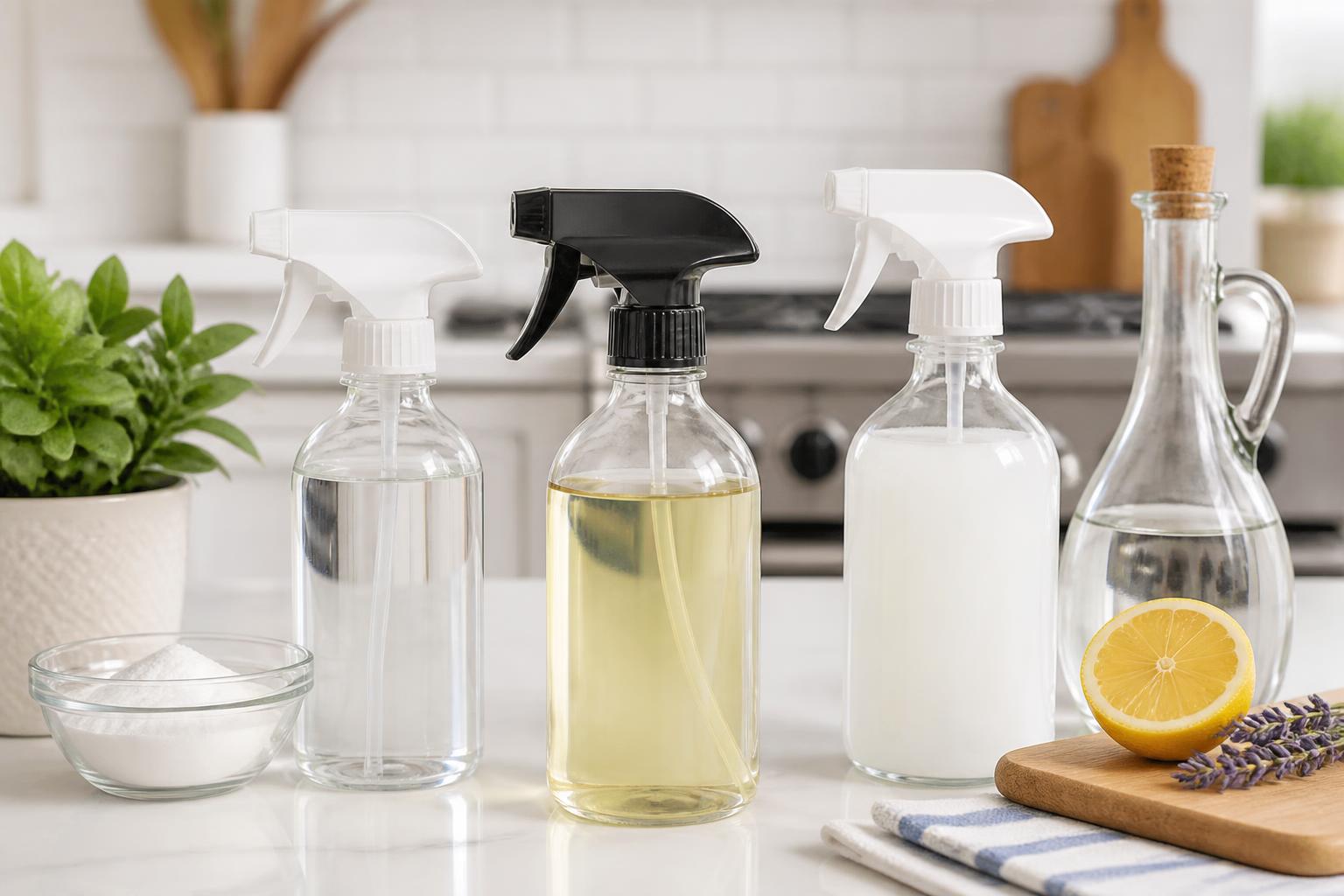
The One Criterion That Changes Everything: What’s Going In the Bottle
Most spray bottle guides treat “cleaning solution” as one category. It isn’t. The chemical compatibility of your bottle depends entirely on what you’re mixing.
Here’s the decision rule that should drive your purchase:
- Bleach or hydrogen peroxide → HDPE plastic (recycle code #2). Avoid PET (#1) and polycarbonate (#7). These can weaken or craze with oxidizers.
- Vinegar or citric acid → HDPE or PET both work. Acid is less aggressive on plastics, but the sprayer’s internal seals matter more.
- Rubbing alcohol (isopropyl) → HDPE is safe. Some sprayers with rubber gaskets degrade with alcohol; look for polypropylene or no rubber parts.
- Essential oil-based cleaners → HDPE works, but oils can leave residue in the dip tube over time. A wider mouth opening makes cleaning easier.
If you plan to rotate multiple solutions in one bottle, choose HDPE with a sprayer that has no rubber parts. That’s the most forgiving combination across the four most common DIY cleaning ingredients.
What this means for your next purchase: If you’re currently using a bottle with a brass spring and rubber gasket, it will fail with vinegar or alcohol — not eventually, but predictably within weeks. That’s not a reason to throw it out if you’re only using water-based or neutral-pH cleaners, but it is a reason to stop using it for anything acidic. Before you buy, check the product listing for two words: “stainless steel spring” and “no rubber parts.” If either is missing, assume the bottle is for light-duty use only.
Comparison Table: Pinnacle Mercantile Spray Bottle Configurations
All three options below use the same sprayer design and HDPE plastic — the difference is size and pack count. This makes them useful for comparing how your usage volume should shape the decision.
| Product | Price | Brand | Rating | Capacity | Pack Size | Key Features |
|---|---|---|---|---|---|---|
| Pinnacle Mercantile Plastic Spray Bottles USA Made 4 Pack 16 oz | Not listed | Pinnacle Mercantile | Not listed | 16 oz | 4 | HDPE #2, adjustable nozzle (mist/stream/off), 302 stainless steel spring, no rubber parts, top-rack dishwasher safe |
| Pinnacle Mercantile Plastic Spray Bottles 32 oz Pack of 3 | Not listed | Pinnacle Mercantile | Not listed | 32 oz | 3 | HDPE #2, same sprayer design, FDA compliant, BPA free, larger footprint (12″ tall with sprayer) |
| Pinnacle Mercantile Plastic Spray Bottles 32 oz Pack of 10 | Not listed | Pinnacle Mercantile | Not listed | 32 oz | 10 | HDPE #2, same sprayer design, bulk pricing for multiple solution stations |
Top Pick
Pinnacle Mercantile Plastic Spray Bottles USA Made 4 Pack 16 oz Leak Proof Empty Refillable Mist/Stream for Cleaning Solutions, Plants, Hair, Bleach, Vinegar, Alcohol Safe is the strongest starting point for most households. The 16 oz size keeps the bottle light enough for one-handed use, the 4-pack lets you dedicate one bottle per solution (vinegar, alcohol, bleach, and a spare), and the chemical compatibility covers the three most common DIY bases. The 5/8-inch mouth opening is narrow enough to control pouring but wide enough for a small funnel.
A quick fit check before you order: Measure the space under your kitchen sink or wherever you store cleaning supplies. The 32 oz bottles stand 12 inches tall with the sprayer attached — that’s roughly the height of a standard two-liter soda bottle. If your storage shelf has less than 12 inches of clearance, the 16 oz bottles (10.25 inches with sprayer) are the safer fit. This is the kind of detail that only surfaces after you’ve committed to a bulk pack, so verify it first.
How to Pressure-Test a Spray Bottle Before You Commit
You can’t fully test a bottle until it’s in your hands, but you can run a quick five-point check the day it arrives. This takes about five minutes and catches most defects early.
1. Prime it dry. Pump the trigger 5–6 times with the bottle empty. The mechanism should feel smooth, not gritty or stiff. If it doesn’t prime easily, the piston seal may be poorly seated.
2. Fill with water, spray, and inspect the nozzle pattern. Adjust the nozzle to stream and mist. The stream should be a straight line, not a sputtering arc. The mist should be fine, not large droplets. A sputtering pattern usually means air is getting into the dip tube.
3. Turn it upside down for 30 seconds. After spraying once, invert the bottle. Any liquid escaping from the trigger or cap area means the seal is compromised. This is the single most common failure point on cheap bottles.
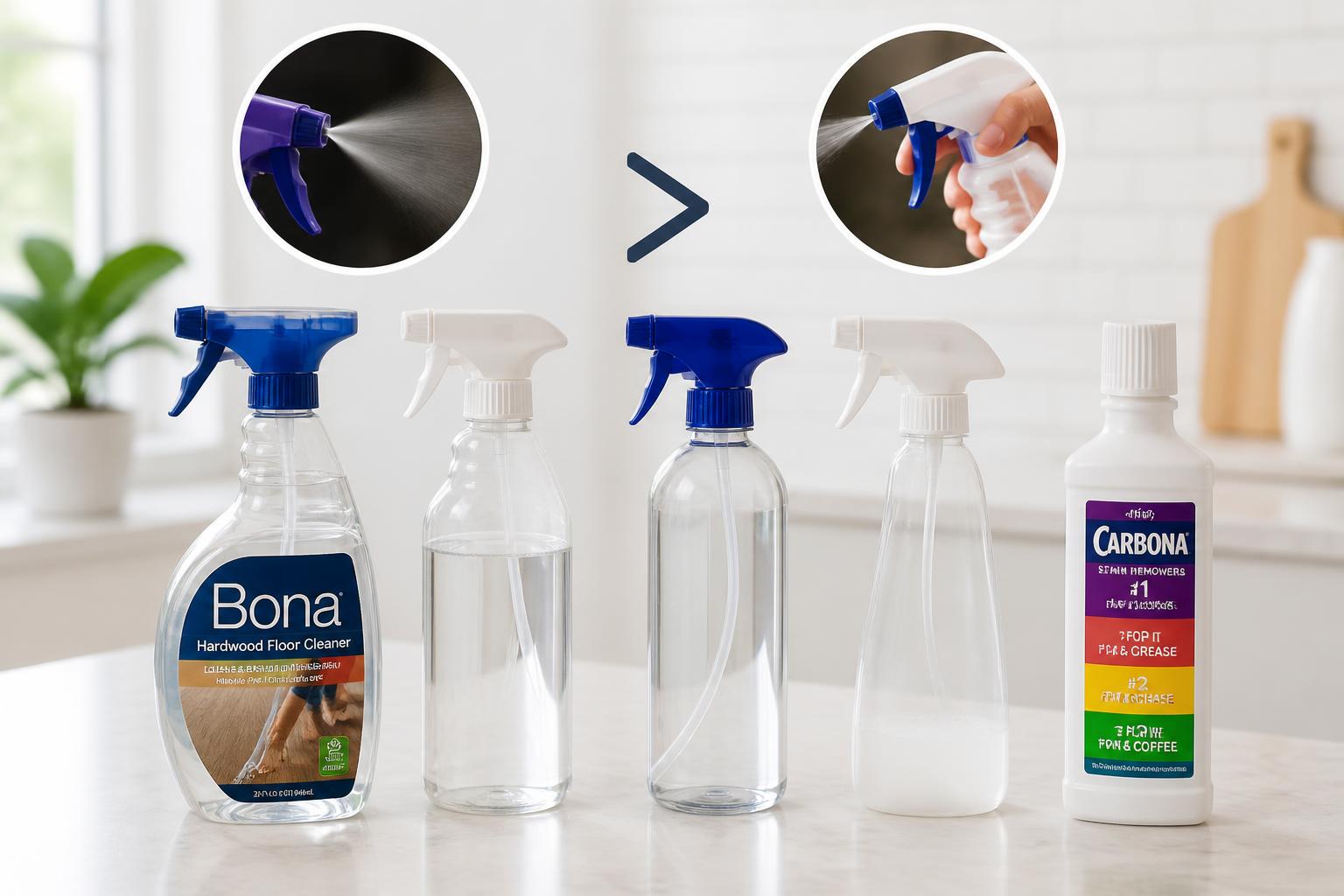
4. Check the dip tube length. The tube should reach the bottom channel of the bottle. If it’s too short, you’ll waste the last 10–15% of every solution.
5. Leave it filled for 24 hours. Fill with your actual cleaning solution, spray once, and set it aside. Check for clouding, warping, or leaks the next day. This catches chemical compatibility issues that water tests miss.
If the bottle fails any of these checks, return it. A sprayer that leaks bleach solution onto your counter is a safety issue, not just an inconvenience.
When to escalate: If the bottle passes steps 1–4 but fails step 5 with your specific solution, the problem is chemical incompatibility, not a defective unit. Don’t exchange it for the same model — switch to a different bottle material or a sprayer with different internal components. The 24-hour test is your early warning system; use it before you commit to storing a full batch of any new concentrate.
Why the Sprayer Mechanism Matters More Than the Bottle
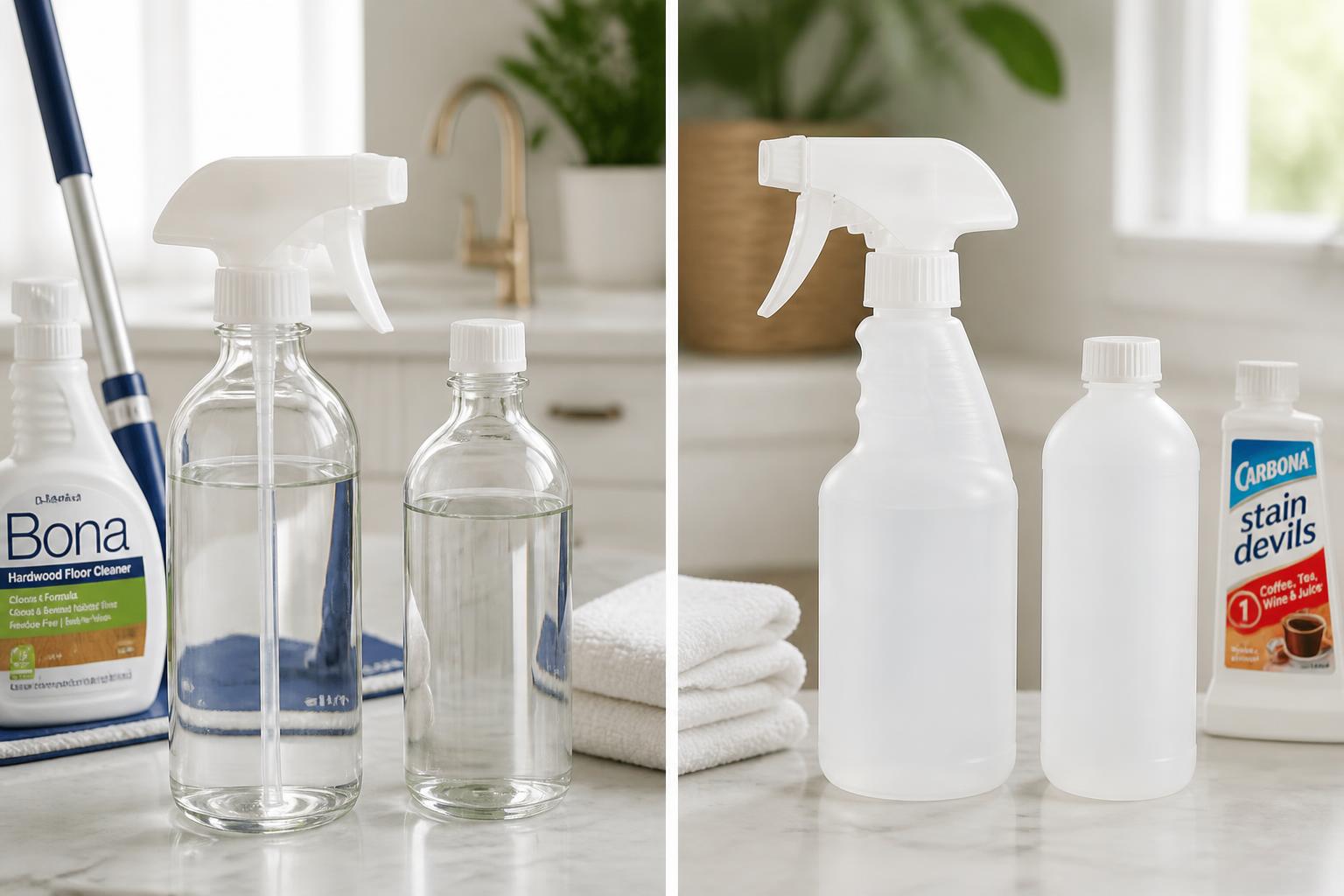
The bottle is just a container. The sprayer is the part that fails.
Most budget spray bottles use a brass or zinc spring inside the trigger mechanism. These corrode when exposed to acidic solutions like vinegar or citric acid. The corrosion creates friction, which makes the trigger harder to pull, which eventually causes the sprayer to seize entirely.
The Pinnacle Mercantile bottles use a 302 stainless steel spring, which resists corrosion from vinegar, bleach, and alcohol. That’s the material detail that separates a bottle that lasts two years from one that dies in two months.
The second critical detail is the absence of rubber parts. Many sprayers use rubber gaskets or valves that swell or degrade when exposed to alcohol or bleach. Polypropylene components handle a wider chemical range. If a product listing doesn’t specify the internal materials, assume it has rubber parts and budget for replacement sooner.
The trade-off you need to know: Stainless steel springs and polypropylene internals cost more to manufacture, which is why these bottles aren’t the cheapest option on the shelf. If you’re only spraying water for plants or ironing, a $1.50 bottle with a brass spring is fine — it will last years because there’s nothing corrosive in the liquid. The upgrade only pays for itself when you’re actually using acidic, alkaline, or alcohol-based solutions. Match the bottle to the chemistry, not to the price tag.
Glass vs. Plastic: Which Is Actually Better for DIY Cleaners?
Glass spray bottles look nicer on a shelf, but they have a structural weakness that matters for cleaning solutions: the pump mechanism. Most glass spray bottles use a crimped metal collar to attach the sprayer. That collar can loosen over time, especially if you’re using the bottle frequently. A loose collar means the sprayer wobbles, the seal breaks, and you get leaks.
Plastic bottles with threaded caps (like the Pinnacle Mercantile options) screw on and off. The seal is mechanical and consistent. If the cap cracks, you can replace it. With a crimped glass bottle, a failing collar often means replacing the whole bottle.
Glass does have one advantage: it won’t absorb odors or stains from strong solutions. If you’re storing a garlic-infused cleaner or something with heavy essential oils, glass won’t hold the smell. But for standard cleaning solutions, HDPE plastic doesn’t retain odors either — just rinse it between batches.
For heavy-duty chemical use, plastic is the safer choice. Glass can chip or shatter if dropped in a wet environment, and a broken bottle of bleach concentrate is a hazard no one needs.
Where glass genuinely wins: If you’re making small-batch cleaners with essential oils that you’ll use within a week or two, glass is worth the fragility trade-off. The crimped collar will hold up fine for occasional use, and you avoid any plastic residue concerns. But if the bottle sits on a caddy or gets moved around during cleaning, the plastic option is the more durable choice. Consider your storage and handling habits before defaulting to glass for aesthetic reasons.
What Most Spray Bottle Recommendations Get Wrong
Many guides recommend the same few bottles without considering how they’re actually used. Here’s where common advice falls short:
“Buy the cheapest pack you can find.” The price per bottle looks attractive, but cheap sprayers typically use brass springs and rubber gaskets. With vinegar or alcohol, these fail within weeks. You’ll replace the pack two or three times in the same period a quality bottle lasts once.
“Get the biggest bottle you can.” A 32 oz bottle is heavy when full, especially with a trigger that requires effort to squeeze. If you’re cleaning mirrors, windows, or counters, a 16 oz bottle is easier to control and less fatiguing. The 32 oz size makes sense for floor cleaners or degreasers where you’re spraying large surface areas.
“All HDPE bottles are the same.” The plastic is only half the equation. The sprayer quality, the cap seal, and the dip tube length determine whether the bottle actually works. Two HDPE bottles can perform completely differently based on these components.
“Glass is always better for DIY.” As covered above, the crimped collar on glass sprayers is a structural weak point. Unless you specifically need odor resistance or are using solvents that degrade plastic, HDPE is more practical for daily cleaning.
The mismatch nobody mentions: A 32 oz bottle with a fine-mist nozzle is a frustrating combination for floor cleaning. You’ll be squeezing the trigger constantly to cover a large area, and the fine mist means you’re mostly wetting the surface rather than applying a usable amount of solution. For floor or large-surface work, you want a stream setting or a dedicated trigger sprayer with a coarser pattern. Check the nozzle settings before you buy — if the listing only shows “mist,” it’s not the right tool for big jobs.
How Many Bottles Do You Actually Need?
A common mistake is buying one bottle and using it for every solution. That means rinsing between each use, which takes time and leaves residual solution that can contaminate the next batch.
A practical setup looks like this:
- 1 bottle for vinegar-based cleaner (glass and mirrors)
- 1 bottle for alcohol-based disinfectant (counters and high-touch surfaces)
- 1 bottle for diluted bleach (bathrooms and mold-prone areas)
- 1 spare for specialty solutions or experiments
The 4-pack of 16 oz bottles covers this exactly. If you prefer larger capacity for floor cleaning, the 3-pack of 32 oz bottles works, but you’ll have one fewer dedicated bottle.
The labeling step that saves you from mistakes: Before you fill your bottles, label them clearly — not just “cleaner” but the specific solution inside. A bottle of vinegar solution and a bottle of bleach solution look identical in white HDPE plastic. Mixing them up can create toxic fumes. A permanent marker on the cap or a piece of painter’s tape on the side is enough. This is the cheapest safety upgrade you can make to your cleaning setup.
FAQ
What is the best spray bottle for home cleaning?
For most home cleaning tasks, a 16 oz HDPE plastic bottle with a polypropylene spray head and stainless steel spring is the most practical choice. It handles vinegar, alcohol, and diluted bleach without degrading, and the smaller size reduces hand fatigue during extended cleaning sessions.
What is a good spray bottle that actually works?
A good spray bottle primes quickly, produces a consistent spray pattern, and doesn’t leak when inverted. Look for a threaded cap (not crimped), a dip tube that reaches the bottom of the bottle, and a trigger mechanism with a stainless steel spring if you plan to use acidic or alcohol-based solutions.
Is it better to use glass or plastic spray bottles?
Plastic is generally better for cleaning solutions because the threaded cap provides a more reliable seal than the crimped collar used on most glass spray bottles. Glass resists odors and stains better, but it’s more fragile and the pump mechanism is more likely to fail over time.
What is a good heavy-duty spray bottle for chemicals?
For heavy-duty chemical use, choose a bottle made from HDPE plastic (recycle code #2) with no rubber parts in the sprayer. This combination resists bleach, hydrogen peroxide, and alcohol. The Pinnacle Mercantile bottles meet these criteria with their polypropylene spray head and 302 stainless steel spring.
Choosing Based on Your Cleaning Routine
The best spray bottle for cleaning solutions depends on what you’re mixing and how often you clean. For most households, a 4-pack of 16 oz HDPE bottles with stainless steel springs covers every common DIY solution without breaking the bank. If you’re cleaning large surface areas or mixing in bulk, the 32 oz versions give you more capacity without sacrificing chemical resistance.
Run the five-point test on whatever you buy, and don’t ignore the internal materials of the sprayer. The bottle is easy to get right — the trigger is where cheap products fail. Match the bottle to the chemistry of your solutions, verify the fit for your storage space, and label everything clearly before you start mixing batches.

Sir Cleans a Lot is a professional home cleaning specialist with over 10 years of hands-on experience. He has helped thousands of homeowners tackle stubborn stains, eliminate mold, and keep their homes spotless using practical, science-backed methods. When he’s not testing the latest cleaning products or researching stain removal techniques, he’s sharing his expertise to make cleaning easier for everyone.