
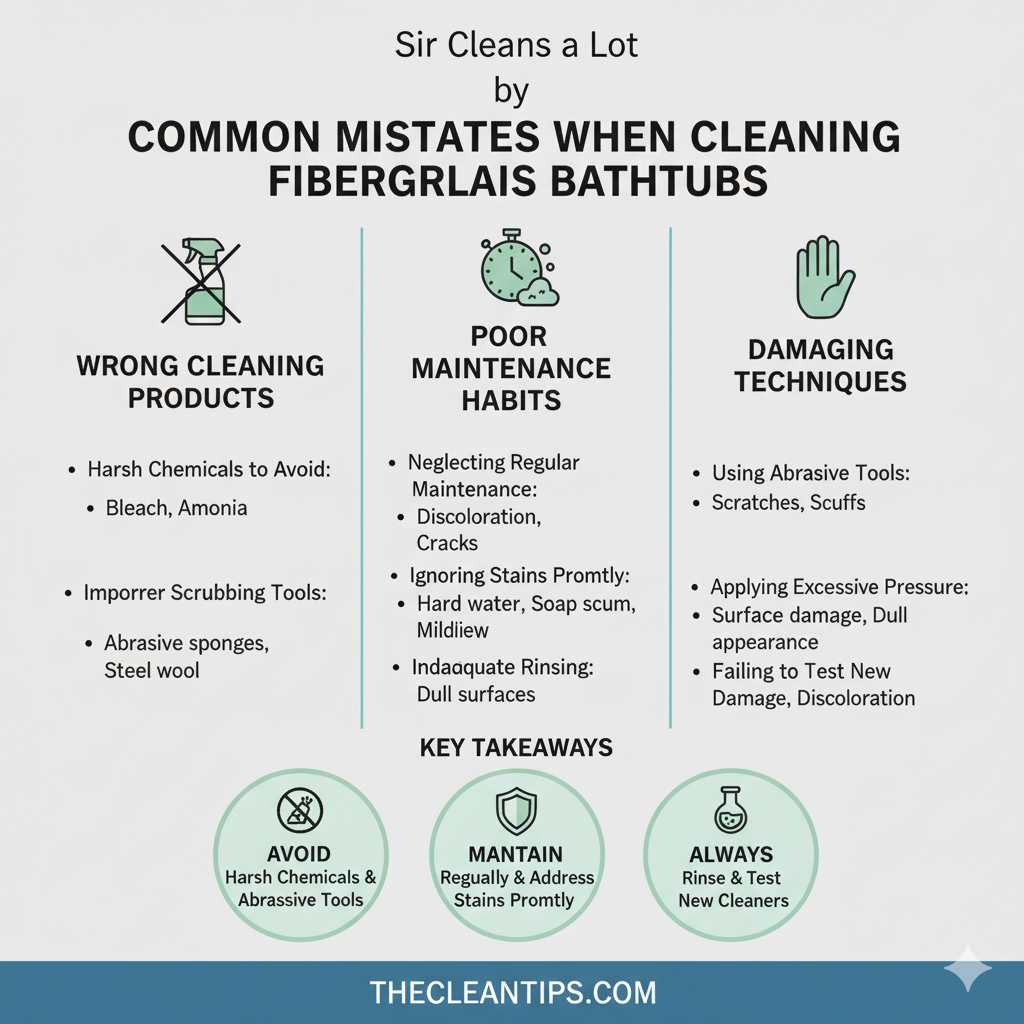
Common Mistakes When Cleaning Fiberglass Bathtubs
When it comes to how to clean a fiberglass bathtub, many people unknowingly make mistakes that can lead to damage and less-than-stellar results. They often choose the wrong cleaning products or use abrasive tools, thinking these will make the job easier. Regular maintenance is sometimes neglected, leading to stubborn stains that could’ve been easily removed. Additionally, some individuals overlook the importance of using soft cloths and rinsing adequately after cleaning. By understanding these common pitfalls, anyone can achieve a sparkling clean bathtub without causing harm.
Key Takeaways
Using harsh chemicals like bleach and ammonia can cause long-term damage and discoloration to fiberglass bathtubs.
Improper tools, such as abrasive sponges and steel wool, can lead to surface scratches and micro-abrasions.
Failing to address stains promptly can result in permanent marks and damage to the bathtub’s appearance.
Neglecting to thoroughly rinse and test new cleaners can lead to residue buildup and adverse reactions on the fiberglass surface.
Choosing the Wrong Cleaning Products
Choosing the wrong cleaning products can lead to damage and diminished appearance of fiberglass bathtubs. Many people don’t realize the impact of using harsh chemicals or improper tools on their surfaces. With that in mind, here are some common mistakes to avoid when cleaning fiberglass bathtubs.
Harsh Chemicals to Avoid
Harsh chemicals like bleach and ammonia can significantly damage the surface of fiberglass bathtubs. They often lead to discoloration and weakening of the material. Many homeowners mistakenly believe that stronger cleaners yield better results. In reality, using gentler alternatives can preserve the bathtub’s integrity. Neglecting to read product labels can result in unintended harm.
Improper Scrubbing Tools
Using improper scrubbing tools can scratch the surface of fiberglass bathtubs, leading to costly repairs. Many homeowners often opt for abrasive sponges or steel wool, thinking they’ll get the job done effectively. They don’t realize that these choices can create micro-abrasions that accumulate over time. Instead, soft cloths or non-abrasive pads should be used for cleaning. Ignoring this simple guideline can result in a damaged and unsightly bathtub.
Ignoring Manufacturer Recommendations
Ignoring manufacturer recommendations often leads to unexpected damage and costly repairs for homeowners. It’s crucial for homeowners to consult the care guidelines provided with their bathtubs. Many don’t understand that specific products and techniques are designed to maintain the integrity of fiberglass. Consequently, using alternative methods can result in scratches or discoloration. Ultimately, adhering to manufacturer advice ensures the longevity and beauty of the bathtub.
Overlooking Eco-Friendly Options
Many people overlook eco-friendly options that can effectively clean fiberglass bathtubs without causing harm to the environment. They often reach for chemical-laden products without considering natural alternatives. Using vinegar and baking soda, for instance, can provide a powerful yet gentle cleaning solution. Many don’t realize that these eco-friendly options can maintain the tub’s shine and integrity. Choosing sustainable products not only benefits the bathtub but also contributes to a healthier home.
Using Abrasive Tools
When it comes to cleaning fiberglass bathtubs, many homeowners underestimate the impact of using abrasive tools. They often think these tools will make the job easier, but that’s rarely the case. Instead, they can lead to a host of problems that compromise the bathtub’s integrity.
Damage to Surface Finish
The damage to the surface finish can significantly diminish the overall appearance and lifespan of the fiberglass bathtub. Homeowners often overlook how easily scratches and scuffs can occur from improper cleaning methods. Once the surface is compromised, it becomes more susceptible to stains and discoloration. Repairing or refinishing a damaged surface can be costly and time-consuming. This makes it even more important to address issues like ineffective stain removal that can compound the problem.
Ineffective Stain Removal
Homeowners often find that traditional cleaning methods aren’t effective for removing tough stains from fiberglass bathtubs. They might rely on bleach or harsh chemicals, thinking these will do the trick, but that’s not always the case. Many don’t realize that certain products can actually worsen the stains or damage the surface. Instead of achieving a clean look, they might end up with discoloration or dullness. Over time, this can lead to a more challenging cleaning process and increased frustration.
Scratches and Scuffs
Scratches and scuffs can significantly detract from the appearance of fiberglass bathtubs, making regular maintenance essential. Many homeowners don’t realize that even minor abrasions can accumulate over time. They often overlook the importance of using non-abrasive cleaners and soft cloths. It’s common for individuals to mistakenly believe that scrubbing harder will yield better results. Ultimately, these missteps can lead to a bathtub that looks worn and neglected.
Alternative Cleaning Methods
Alternative cleaning methods can effectively maintain a fiberglass bathtub’s shine without causing damage. Many people use gentle solutions like vinegar and baking soda instead of harsh chemicals. They find that microfiber cloths or soft sponges are ideal for avoiding scratches. It’s also noted that regular maintenance with these methods keeps the tub looking new. Homeowners often appreciate how easy these alternatives are to implement.
Neglecting Regular Maintenance
Neglecting regular maintenance can lead to a decline in the appearance and longevity of fiberglass bathtubs. Many homeowners underestimate its importance, often resulting in costly repairs down the line. Recognizing the signs of neglect and implementing effective maintenance strategies can make all the difference.
Importance of Routine Care
Routine care plays a crucial role in maintaining the aesthetic appeal and functionality of fiberglass bathtubs. It helps prevent stains and discoloration that can occur over time. Regular cleaning ensures that any buildup of soap scum and mildew is promptly addressed. Homeowners often find that a consistent maintenance schedule extends the lifespan of their bathtubs. Ultimately, a little routine care can save a lot of time and money in the long run.
Signs of Neglecting Maintenance
Visible discoloration and cracks often indicate that maintenance hasn’t been properly addressed. Homeowners might overlook these signs, assuming they’re merely cosmetic issues. Over time, neglect can lead to deeper structural problems that are more expensive to fix. Regular cleaning and inspections can prevent these visible signs of wear and tear. By understanding these indicators, one can better appreciate the need for effective maintenance strategies.
Effective Maintenance Strategies
Effective maintenance strategies can significantly enhance the durability and appearance of fiberglass bathtubs, ensuring they remain in good condition for years to come. Regular cleaning with gentle, non-abrasive products keeps the surface smooth and shiny. It’s important to inspect for any chips or cracks and address them immediately to prevent further damage. Using a protective sealant can also help maintain the glossy finish and repel stains. Ignoring stains promptly can lead to more extensive issues that may require professional intervention.
Ignoring Stains Promptly
Ignoring stains promptly can lead to more significant issues down the line. It’s essential to recognize the types of common stains that can affect fiberglass bathtubs and act quickly. With effective stain removal tips and the right tools, one can prevent future stains from becoming a problem.
Types of Common Stains
Common stains on fiberglass bathtubs include hard water deposits, soap scum, and mildew, which can be troublesome if not addressed. Hard water deposits often leave unsightly white marks that can be difficult to remove. Soap scum builds up over time, creating a slippery surface that can be unappealing. Mildew thrives in damp environments, leading to dark spots that can spread quickly. Knowing these common stains is the first step toward implementing effective stain removal tips.
Effective Stain Removal Tips
Many homeowners find that using baking soda and vinegar together works wonders for removing tough stains from fiberglass bathtubs. They often create a paste with baking soda and apply it to the stained areas, letting it sit for a while. Afterward, they spray vinegar over the paste, allowing a fizzing reaction to lift the stains. Rinsing thoroughly with warm water leaves the bathtub looking fresh and clean. For those who want to tackle stains immediately, having the right tools on hand can make all the difference.
Tools for Immediate Action
The right tools for immediate action can make all the difference in tackling stubborn stains on fiberglass bathtubs. Having a quality scrub brush, a non-abrasive cleaner, and a microfiber cloth can streamline the cleaning process. A good pair of rubber gloves ensures protection while scrubbing away tough grime. Using a spray bottle for vinegar or baking soda mixtures can provide an effective solution for many common stains. Finally, a squeegee helps prevent water spots and keeps the surface looking pristine after cleaning.
Preventing Future Stains
Preventing future stains requires regular maintenance and the use of protective coatings. It’s important for homeowners to clean their bathtubs consistently to avoid buildup. They should consider applying a sealant designed for fiberglass to create a barrier against stains. Regular inspections can help catch any early signs of staining before they become problematic. Ultimately, a proactive approach can save time and effort in the long run.
Rinsing Inadequately
Rinsing inadequately can lead to a myriad of problems that often go unnoticed until it’s too late. It’s easy to overlook the importance of thorough rinsing, but many homeowners make common rinsing errors that can compromise their cleaning efforts. Understanding the best rinsing techniques and the effects of inadequate rinsing is essential for maintaining a pristine fiberglass bathtub.
Importance of Thorough Rinsing
Thorough rinsing is crucial for ensuring that no residue is left behind, which could otherwise lead to damage or staining over time. Many individuals underestimate how leftover soap or cleaner can affect the appearance of their fiberglass bathtubs. It’s often assumed that a quick rinse is sufficient, but that’s not always the case. Not paying attention to this step can result in dull surfaces and buildup. Ultimately, proper rinsing is a key factor in maintaining the longevity and beauty of fiberglass bathtubs.
Common Rinsing Errors
Common rinsing errors can significantly diminish the effectiveness of cleaning efforts in a fiberglass bathtub. Many homeowners don’t realize that leaving soap residue can create a film that attracts dirt. Some forget to rinse the corners and edges, where grime can accumulate unnoticed. Others may use water that’s too hot, which can damage the fiberglass surface over time. Not rinsing thoroughly can also lead to unwanted odors and skin irritation.
Best Rinsing Techniques
Best rinsing techniques often involve using warm water and ensuring that all cleaning agents are completely washed away. It’s important to use a handheld showerhead or a detachable sprayer for optimal coverage. Homeowners should also pay attention to corners and crevices, where residue can often accumulate. Rinsing for an adequate amount of time helps to ensure that no soap scum or cleaner remains. Neglecting these techniques can lead to significant issues, making it crucial to understand the effects of inadequate rinsing.
Effects of Inadequate Rinsing
Inadequate rinsing can cause soap scum buildup and discoloration, which many people might not notice until significant damage occurs. It can lead to the deterioration of the fiberglass surface, making it more susceptible to scratches and stains. Additionally, the residue left behind can create an unsightly appearance that detracts from the bathtub’s overall aesthetic. Over time, this neglect can result in costly repairs or replacements that could have been easily avoided. It’s crucial to pay attention to all cleaning tools, including soft cloths, to ensure a thorough and gentle cleaning process.
Overlooking the Importance of Soft Cloths
Many people don’t realize that using soft cloths can prevent scratches on fiberglass bathtubs. Many assume that any cloth will do, but that’s not the case. It’s often overlooked that rough materials can cause significant damage over time. Some individuals might think that scrubbing harder will yield a cleaner surface, but that’s a misconception. They might not be aware that the right cloth can make all the difference. It’s important to choose microfiber or other gentle materials for cleaning. Many people ignore the label instructions on cleaning products, leading to further harm. Even a simple towel can be detrimental if it’s not designed for delicate surfaces. Therefore, being mindful of the tools used is critical, especially before applying excessive pressure.
Applying Excessive Pressure
When cleaning fiberglass bathtubs, many overlook the dangers of applying excessive pressure. It’s easy to assume that more force equates to better results, but that’s often not the case. Understanding the risks and adopting proper cleaning techniques can make a significant difference in maintaining the integrity of the surface.
Risks of Excessive Pressure
Excessive pressure can lead to scratches and damage that compromise the bathtub’s finish. Many people don’t realize that using abrasive materials can exacerbate this issue. It’s common for individuals to believe that scrubbing harder will remove stubborn stains more effectively. Over time, those scratches can accumulate, resulting in a dull appearance. Maintaining a gentle approach ensures the fiberglass remains in pristine condition.
Proper Cleaning Techniques
Proper cleaning techniques ensure that fiberglass bathtubs retain their shine and durability without sustaining damage. Using a gentle touch helps prevent scratches and wear on the surface. Regular cleaning with mild, non-abrasive products keeps the finish looking fresh. It’s crucial to rinse thoroughly to remove any remaining cleaning agents that could cause buildup. Next, understanding how to choose the right tools further enhances the cleaning process.
Choosing the Right Tools
Choosing the right tools ensures that cleaning fiberglass bathtubs is both effective and safe for the surface. Using abrasive materials can lead to scratches, which may compromise the bathtub’s appearance and longevity. Soft sponges and non-abrasive cleaners are recommended for optimal care. It’s also important to select tools that are designed specifically for fiberglass to avoid potential damage. However, even with the right tools, one must be cautious about failing to test new cleaners.
Failing to Test New Cleaners
Failing to test new cleaners can lead to unexpected damage and costly repairs. It’s essential to understand the importance of testing cleaners before applying them to fiberglass surfaces. By overlooking this crucial step, one risks compromising the integrity of the bathtub.
Importance of Testing Cleaners
The importance of testing cleaners can’t be overstated, as it ensures the safety and longevity of fiberglass surfaces. Many homeowners overlook this step, thinking any cleaner will suffice. They often don’t realize the potential damage that harsh chemicals can cause. It’s crucial to test a small area before full application to prevent costly repairs. Ignoring this practice can lead to irreversible harm to the bathtub’s finish.
Recommended Testing Methods
Recommended testing methods often involve applying a small amount of cleaner to an inconspicuous area first, ensuring there’s no adverse reaction. This approach allows for the evaluation of the cleaner’s effects without risking visible damage. It’s advisable to wait for a short period to observe any changes in the surface. If no issues arise, the cleaner can be safely used on the rest of the bathtub. However, neglecting this step can lead to potential risks involved.
Potential Risks Involved
Potential risks involved with using untested cleaners can include surface damage, discoloration, and long-term deterioration of fiberglass bathtubs. Many individuals underestimate the impact that harsh chemicals can have on these surfaces. They might not realize that even seemingly mild products can lead to irreversible harm. It’s crucial to be aware of the potential consequences before applying any new cleaner. To ensure a safer cleaning process, one might consider using hot water for cleaning.
Using Hot Water for Cleaning
Using hot water for cleaning can cause damage to fiberglass bathtubs, so many homeowners avoid it. It’s not uncommon for individuals to think that hot water enhances the effectiveness of cleaners. However, this misconception can lead to discoloration and weakened surfaces. Some might believe that the heat helps lift grime more efficiently. In reality, the temperature can warp the fiberglass over time. They often overlook the potential consequences of their cleaning methods. Using cooler water is a safer alternative for maintaining the integrity of the tub. It’s crucial for homeowners to recognize the materials they’re working with. By opting for lukewarm water, they can ensure their bathtubs stay in good condition longer.
Frequently Asked Questions
What are the benefits of using a soft cloth for cleaning fiberglass bathtubs?
Using a soft cloth for cleaning fiberglass bathtubs helps prevent scratches and damage to the surface, ensuring it stays looking new. It also allows for effective cleaning without the risk of harsh abrasives that could harm the material.
How often should i clean my fiberglass bathtub to maintain its appearance?
To maintain its appearance, a fiberglass bathtub should be cleaned at least once a week. This regular cleaning helps prevent the buildup of soap scum and grime, keeping it looking fresh and new.
Can i use vinegar or baking soda to clean my fiberglass bathtub?
Using vinegar or baking soda to clean a fiberglass bathtub can be effective, but it’s important to use them carefully. They shouldn’t be left on the surface for too long, as that might cause damage to the finish.
If you’re looking for effective ways to maintain your fiberglass bathtub and tackle pesky soap scum, I highly recommend visiting this informative page on DIY solutions: soap scum. You’ll find practical tips and tricks that can help you achieve a sparkling clean finish without damaging the surface. Don’t miss out on these valuable insights!
Explore This Topic

Sir Cleans a Lot is a professional home cleaning specialist with over 10 years of hands-on experience. He has helped thousands of homeowners tackle stubborn stains, eliminate mold, and keep their homes spotless using practical, science-backed methods. When he’s not testing the latest cleaning products or researching stain removal techniques, he’s sharing his expertise to make cleaning easier for everyone.