
Vinegar vs Bleach for Mold: Which Actually Kills Mold at the Roots?
Neither vinegar nor bleach kills mold at the roots on porous materials like drywall, unfinished wood, or unsealed grout. Vinegar (acetic acid) can kill surface mold on non-porous surfaces such as tile or glass, but it won’t penetrate deep enough to stop regrowth. Bleach kills surface mold and disinfects, but its water-based formula doesn’t soak into porous surfaces and can actually feed mold inside by adding moisture. The real fix for deep mold requires removing the contaminated material or using a penetrating treatment like hydrogen peroxide or borax.
That said, both vinegar and bleach have specific jobs they do well. This comparison shows you where each works best and gives you a fast decision framework so you don’t waste time on the wrong solution.
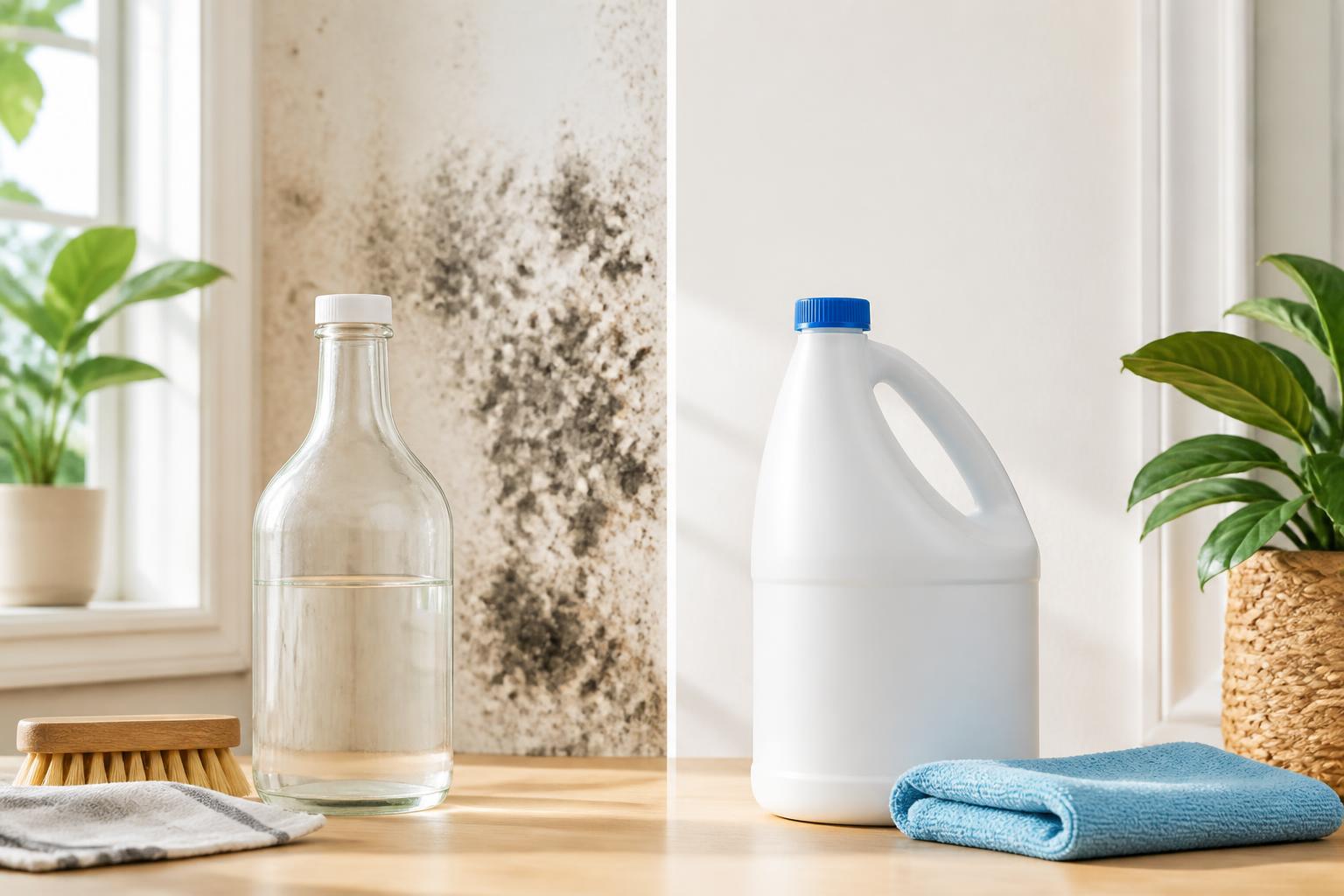
Comparison framework
The key boundary is surface type—not product brand or concentration. If the mold is growing on a non-porous surface (glazed tile, glass, sealed porcelain, stainless steel, fiberglass), both vinegar and bleach can remove visible surface growth. If the mold is on anything porous (drywall, unsealed wood, unsealed grout, concrete, carpet, fabric), stop before applying either product. Neither will reach the roots, and bleach will actively worsen the problem by adding moisture that feeds deeper colonies.
How to verify surface porosity on your actual material: Drip a few drops of water onto the surface. If the water beads and stays on top for 30 seconds, the surface is sealed or non-porous. If the water soaks in within 10 seconds, the material is porous and neither vinegar nor bleach will fix the problem.
| Product | Type | Best For | Key Feature | Limitation |
|---|---|---|---|---|
| Clorox Scentiva Bathroom Toilet Cleaning Gel, Cherry Blossom and Peach, 24 Fluid Ounces | Bleach gel | Toilet bowl mold and stains on porcelain | Gel clings to vertical surfaces, disinfects | Only for hard, non-porous, bleach-safe surfaces; misses roots |
| Scrubbing Bubbles Foaming Bleach Bathroom and Shower Cleaner Disinfectant Spray, Helps Erase Mold & Mildew, 32oz (Pack of 2) | Bleach foam | Shower tile, tub, sink, and other non-porous surfaces | Foaming action provides even coverage, EPA-registered | Fumes are strong; not for porous surfaces or deep mold |
| HARRIS Cleaning Vinegar All Purpose Household Multi-Surface Cleaner, 128oz (Lemon) with Easy Pour Funnel Included | 6% cleaning vinegar | Daily maintenance and light surface mold on non-porous surfaces | Higher acidity than cooking vinegar, no toxic fumes, mild scent | Requires longer dwell time; ineffective on porous or heavy growth |
Top Pick: Clorox Scentiva Bathroom Toilet Cleaning Gel, Cherry Blossom and Peach, 24 Fluid Ounces is the most targeted choice for toilet bowl mold because the gel formula clings to porcelain longer than a spray, giving bleach time to kill surface spores. For shower tile, the Scrubbing Bubbles Foaming Bleach Bathroom and Shower Cleaner Disinfectant Spray covers more area with less dripping. For routine wipe-downs on non-porous surfaces where you want to avoid bleach fumes, HARRIS Cleaning Vinegar is the safer daily option.
Five-point decision aid
Run through these checks before you spray anything. If you fail even one condition, the product won’t work as intended—or will make things worse.
- Surface material check – Is it non-porous (tile, glass, sealed counter, porcelain, fiberglass)?
→ If yes, proceed. If porous (drywall, unsealed wood, unsealed grout, concrete, carpet), stop. Neither vinegar nor bleach kills roots here. - Mold depth check – Is the mold just surface spots (small black dots on grout, light film on tile) or is it growing deeper (dark patches, fuzzy texture, musty smell behind the surface)?
→ Surface only → proceed. Deep growth → stop. Clean won’t fix it; you need removal or professional remediation. - Bleach-safety check – Can the surface withstand bleach without discoloration or etching (porcelain, tile, stainless steel, white grout)?
→ Yes → bleach is fine for non-porous hard surfaces. No or unsure → use vinegar or another non-bleach cleaner. - Ventilation check – Can you open windows or run an exhaust fan for at least 15 minutes during and after application?
→ Yes → bleach is usable. No → avoid bleach fumes entirely. Vinegar is milder but still requires some airflow. - Residual effect check – Do you need the surface to stay mold-resistant after cleaning?
→ No → either works. Yes → bleach leaves no residue, but vinegar leaves an acidic film that may slightly slow regrowth on non-porous surfaces. Neither prevents future mold if the moisture source remains.
If you checked all boxes and the surface is non-porous, proceed with your chosen product. If you hit “porous” or “deep growth,” stop and escalate to physical removal or a professional mold remediation service.
Best-fit picks by use case
For toilet bowl mold: Clorox Scentiva gel
The gel formula clings to vertical porcelain surfaces, keeping active bleach in contact with mold longer than liquid bleach. Apply around the rim, let it dwell for 5 minutes, then scrub with a toilet brush. Use it only on porcelain—not on the wax seal or any rubber gaskets inside the tank.
For shower tile and tub: Scrubbing Bubbles Foaming Bleach
The foam clings to vertical tile and grout without dripping into drain overflows. Spray it evenly, wait 5–10 minutes, scrub with a tile brush (nylon), and rinse thoroughly. The foaming action helps you see where you’ve applied it, reducing missed spots.
For daily maintenance on sinks, counters, and glass: HARRIS Cleaning Vinegar
Spray undiluted on clean surfaces after showers or spills. Let it sit for 10 minutes, wipe dry. The 6% acetic acid is stronger than regular vinegar and leaves no chemical residue. Use this as a preventive wipe-down, not as a treatment for heavy mold.
Step-by-step application for any of these products:
Preparation
– Put on gloves and eye protection. If using bleach, also wear a mask and ensure the room is well-ventilated (open windows, run exhaust fan).
– Remove any visible debris or loose mold spores with a dry cloth—dispose of it immediately in a sealed bag.
Early checkpoints
– Test the product on a small hidden area of the surface. Wait 5 minutes and check for discoloration, etching, or color change.
– Dilute bleach properly: mix 1 cup of bleach with 1 gallon of water. Do not exceed that concentration. Vinegar can be used full-strength (undiluted) from the bottle.
Ordered steps
1. Apply the product to the moldy area. For bleach gel or foam, follow the product label. For vinegar, spray or wipe it on so the surface is wet but not dripping.
2. Let the product dwell. Bleach needs 5–10 minutes of contact time. Vinegar needs at least 10 minutes; for heavier spots, leave it for 30 minutes.
3. Scrub the area with a stiff-bristled brush (nylon for tile, soft brush for glass).
4. Rinse thoroughly with water. For bleach, rinse until no chlorine smell remains. For vinegar, a final wipe with water removes the acid residue.
5. Dry the surface completely with a clean towel or allow air circulation. Mold regrows on damp surfaces within 24–48 hours.
Friction point: bleach on porous surfaces makes things worse. If you mistakenly apply bleach to unsealed grout, the water in the solution soaks in and feeds the mold colony deeper. The surface will look clean for a few days, then darker patches will reappear.
Mismatch to watch for: If you use vinegar on a surface that previously had bleach residue (or vice versa), the two can react. Even diluted residue can create irritating fumes. Always rinse the surface with water between switching products.
Escalation signals
– Mold returns within one week.
– You smell a musty odor after cleaning.
– The mold colony is larger than a 12-inch circle or covers multiple connected areas.
In those cases, stop cleaning and hire a professional mold remediation service. Surface treatments will not fix an active colony that has penetrated the material.
Success check: After drying, run a white-glove test: wipe the cleaned area with a dry paper towel. If no dark residue appears and the surface feels dry, you’ve removed the surface mold. Keep monitoring that spot weekly for regrowth.
Trade-offs to know
Vinegar doesn’t kill roots either. This is the counter-intuitive angle most articles skip. Even 6% acetic acid only kills surface mold on non-porous surfaces. On porous materials, the mold stays alive below the surface and regrows within days. Vinegar’s advantage is safety—no toxic fumes—not deeper penetration.
Bleach on porous surfaces makes the problem worse. The water in bleach soaks into materials like drywall or wood, leaving the mold plenty of moisture to grow deeper. You’ll see the surface turn white, but the colony just relocates. This is why bleach is actively counterproductive for mold on drywall or unsealed wood.
Mixing is dangerous. Never mix bleach with vinegar or any other acid—it creates toxic chlorine gas. Use one or the other, and rinse the surface thoroughly with water before switching.
Scent and residue. Vinegar’s smell fades in 30–60 minutes; bleach has a strong chlorine odor that may linger for hours. Bleach can also yellow certain plastics, fabrics, or painted surfaces. Vinegar can etch natural stone like marble or granite.
Cost vs. effectiveness. A gallon of bleach costs roughly $3–5. A gallon of cleaning vinegar costs roughly $5–8. Neither is expensive, but if you’re using either on the wrong surface, you’re throwing money and time away.
Related questions
Can I use vinegar on moldy grout? Only if the grout is sealed. Unsealed grout is porous, so vinegar won’t reach the roots. Apply a penetrating sealer after cleaning, or consider replacing the grout entirely. For sealed grout, vinegar can remove surface mold with a 10-minute dwell time.
Will bleach kill black mold on concrete? Concrete is porous, so bleach won’t kill mold growing inside. It will only bleach the surface. Use a product formulated for masonry, or scrub with hydrogen peroxide (3% or higher) and let it dwell for 30 minutes. For deep concrete mold, you may need a pressure wash or professional treatment.
How long should I let vinegar sit to kill mold? Let it dwell for at least 10 minutes on a non-porous surface, then scrub. For heavier growth, 30 minutes is better. Do not let it dry on the surface—reapply if it evaporates. Rinse thoroughly after. Vinegar needs direct contact time to break down the mold cell walls.
Neither vinegar nor bleach is a miracle cure for mold at the roots. Use them on the right surface and in the right situation, and they’re effective tools. For deep or recurring mold, the only reliable solution is removing the contaminated material and fixing the moisture source.
Explore This Topic
– 7 Natural Mold and Mildew Killers That Actually Work
– How to Remove Mold from Carpet and Carpet Padding
– How to Remove Mold from Clothes and Fabric Without Ruining Them

Sir Cleans a Lot is a professional home cleaning specialist with over 10 years of hands-on experience. He has helped thousands of homeowners tackle stubborn stains, eliminate mold, and keep their homes spotless using practical, science-backed methods. When he’s not testing the latest cleaning products or researching stain removal techniques, he’s sharing his expertise to make cleaning easier for everyone.