
How to Use a Swedish Dishcloth: Complete Beginner’s Guide
A Swedish dishcloth replaces up to 15 rolls of paper towels and lasts several months with proper care. To use one, wet the dry cloth, wring out excess water, and wipe surfaces like a sponge. Rinse after each task and hang to dry. That is the core action. Below you find the exact steps, care routines, common pitfalls, and clear signals for when to wash versus replace your cloth.
How to Prepare Your Swedish Dishcloth for First Use
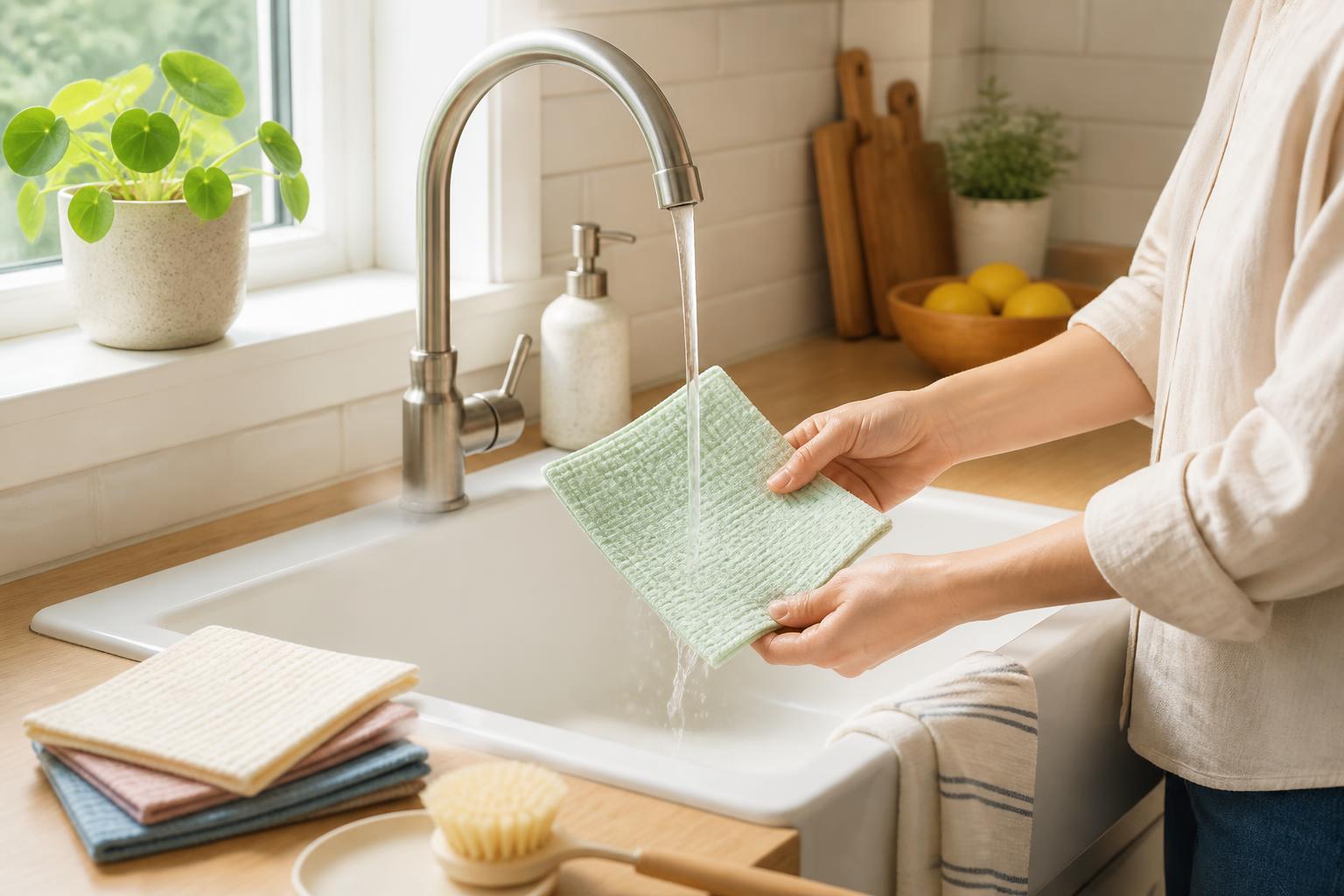
A new Swedish dishcloth arrives stiff and dry because it is made from cellulose and cotton fibers compressed into a thin sheet. Always wet it thoroughly before first use to soften the fibers. Hold it under running water for 10–15 seconds until fully saturated, then squeeze out excess water so it is damp, not dripping. This activation step improves absorbency and flexibility immediately.
An early checkpoint to watch for: If the cloth feels stiff or scratchy after wetting, you did not soak it long enough. Submerge it in warm water for 30 seconds and squeeze repeatedly until the fibers relax. New cloths sometimes shed a few loose fibers during the first rinse — that is normal and stops after two or three washes.
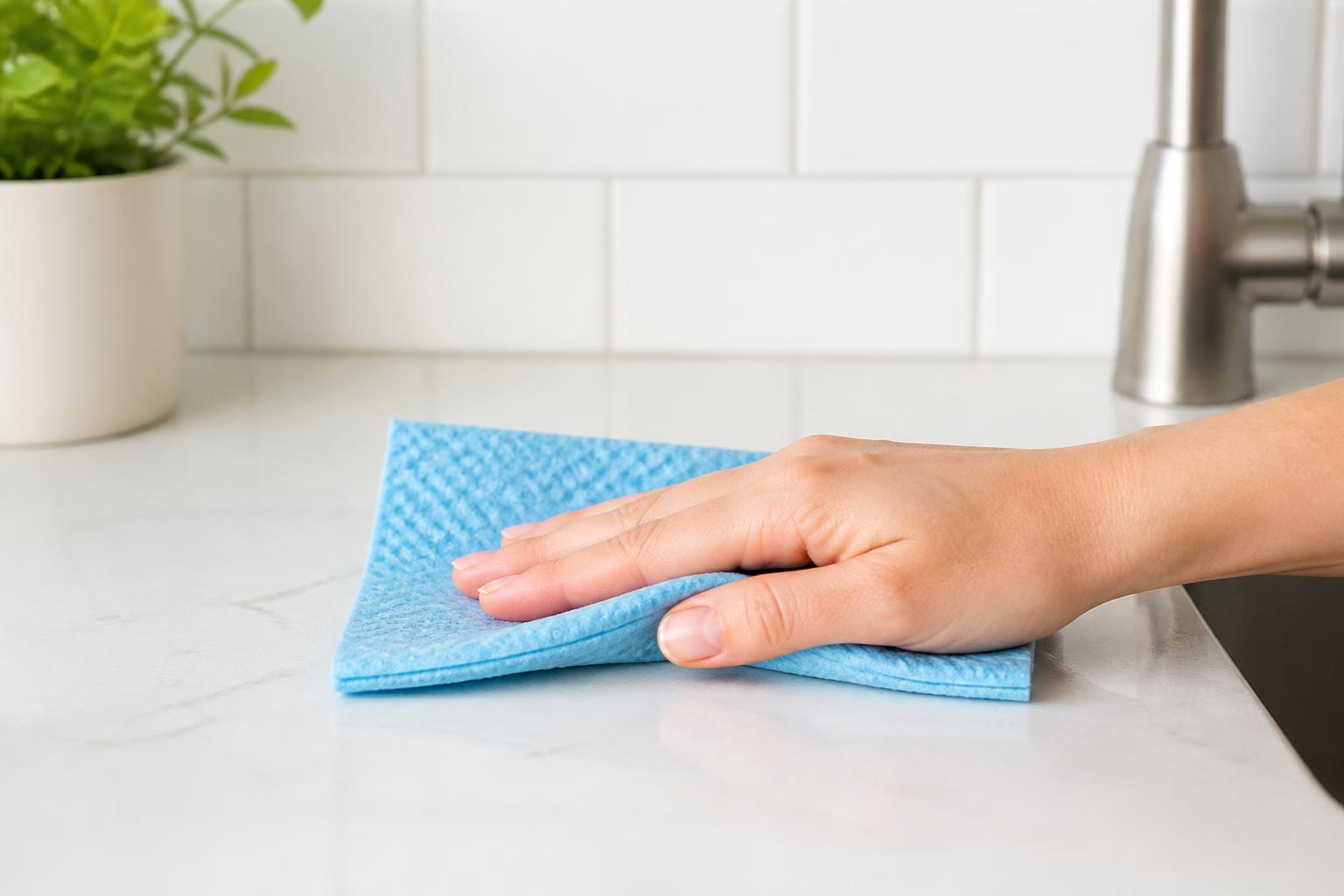
Concrete example: A cloth straight out of the package can feel like thin cardboard. After a 15‑second soak and a gentle squeeze, it becomes pliable and ready to absorb spills. Skipping this step leaves the cloth less effective for its first few uses and can cause frustration for new users.
How to Use a Swedish Dishcloth for Daily Cleaning
The cloth works like a hybrid of a sponge and a paper towel, but with better drying speed and less bacterial retention than either. Here is the operator flow for daily use:
- Wet the cloth — run under warm water and squeeze until damp.
- Apply cleaning product — optional. Use dish soap, all‑purpose spray, or just water for light dusting. Avoid concentrated bleach on colored cloths, as it will fade the dyes permanently.
- Wipe the surface — use the cloth’s textured side for scrubbing stuck‑on food or grease (for example, a greasy stovetop after frying), and the smooth side for glass, mirrors, and polished countertops to avoid streaking.
- Rinse after each task — hold under running water and squeeze several times to remove debris. For heavy grease, add one drop of dish soap during rinsing and work it through the fibers with your fingers.
- Hang to dry — drape over a dish rack, faucet, or hook. Never store folded or bunched up while damp, as that invites mildew growth within hours.
A friction point to note: The cloth can feel slimy if you leave it wet too long. Always spread it flat or hang it with good air circulation. In humid kitchens, rotate between two cloths: use one while the other air‑dries fully.
Likely cause of failure: Hard water deposits or lingering grease can clog the fibers, reducing absorbency over time. If the cloth starts repelling water instead of soaking it up, it needs a deeper clean (see the deep cleaning section below).
Escalation signal: If the cloth develops a sour odor even after washing, or if you see visible mold spots, discard it immediately. One concrete example: a cloth left in a damp pile overnight on a granite countertop produced a musty smell by morning. Hanging it prevented the issue entirely.
Stop threshold: If you have already run a deep clean cycle (dishwasher, boil, or bleach soak) and the cloth still smells sour or shows mold, stop all DIY attempts. There is no repair or warranty for a compromised cloth — replace it right away. Continuing to use a moldy cloth can transfer bacteria to surfaces and food.
Success check: After wiping a greasy pan, does the cloth still feel absorbent? After rinsing, does it return to a neutral smell within a few hours? If yes, it is fine to reuse for the next task.
When to Wash vs. Replace Your Swedish Dishcloth
Use this 5‑item decision aid to decide quickly. If you answer “yes” to any of the first three items, wash the cloth. If you answer “yes” to either of the last two items, replace it.
- [ ] The cloth smells musty or sour after rinsing? → Wash (bleach soak or dishwasher cycle).
- [ ] Visible food particles remain stuck after rinsing? → Wash (scrub with soap or machine wash).
- [ ] Less than two weeks of daily use have passed? → Wash (general maintenance cycle).
- [ ] Fibers are fraying, tearing, or thinning noticeably? → Replace.
- [ ] Cloth feels greasy even after washing with soap? → Replace (absorbency is gone permanently).
One additional decision criterion changes the recommendation depending on your water quality: hard water. If you live in a hard‑water area (water hardness above 10 grains per gallon, common in parts of the Midwest U.S. and the Southwest), wash the cloth with a splash of white vinegar every two weeks. Otherwise, standard washing every four to five days is sufficient. Hard water minerals can stiffen the fibers faster, so adjusting your schedule based on water quality prevents premature replacement. For example, a cloth used in a hard‑water household will feel rough after just three days if not treated with a vinegar soak, while the same cloth in a soft‑water area can stay pliable for a full week between washes.
How to Use a Swedish Dishcloth for Deep Cleaning
[Swedish dishcloths](https://thecleantips.com/best-swedish-dishcloth-brands/) are machine‑washable and dishwasher‑safe. For regular deep cleaning, use one of these four methods:
- Dishwasher: Place the used cloth on the top rack. Run a normal cycle with heat dry. This sanitizes the fibers and restores absorbency effectively.
- Washing machine: Cold or warm cycle with mild detergent. Tumble dry low or air dry. Do not use fabric softener — it seals the pores and reduces absorbency by up to 30 percent.
- Microwave (cloth must be damp): For a quick sanitize between washes, microwave for one to two minutes. Watch for sparks — never microwave a dry cloth or one that contains metal fibers. Place a cup of water beside it to prevent fire risk.
- Boiling water (traditional method): Submerge the cloth in boiling water for five minutes, then rinse thoroughly and air dry.
Important: Avoid bleach unless the cloth is white. Colored cloths will fade significantly after one bleach treatment. Hydrogen peroxide or white vinegar can substitute for whitening without damaging the fibers.
Hard water treatment: If you notice the cloth becoming stiff after washing, soak it for 30 minutes in a solution of one part white vinegar to four parts warm water. Then rinse thoroughly and air dry. This dissolves mineral deposits that can trap bacteria and reduce absorption over time.
Troubleshooting Odor, Sliminess, and Lost Absorbency
Three main problems occur with Swedish dishcloths, and each has a specific fix rather than requiring immediate replacement.
Musty or sour odor — The most common issue, caused by leaving the cloth damp in a closed space. Immediate fix: wash in the dishwasher with a heat‑dry cycle. If the smell persists, soak in a solution of one tablespoon baking soda per cup of warm water for two hours, then rinse and dry fully. For persistent odor after two washes, replace the cloth — the bacteria have embedded too deeply in the fibers for home cleaning to reach.
Slimy surface — This happens when the cloth is stored wet and bacteria multiply on the surface. Prevention is essential: always hang flat or over the sink edge after each use. If sliminess occurs, rinse vigorously under hot water with a drop of dish soap, then microwave the damp cloth for one minute. Do not use the cloth again until it is completely dry.
Lost absorbency — If the cloth stops soaking up liquids, it may be clogged with grease or mineral deposits. A vinegar soak (as described above) often restores function. If absorbency does not return after a deep clean, the cloth has reached the end of its useful life. Check the decision aid in the previous section — if absorbency fails after a deep clean, replace it.
Concrete example: A cloth used daily for wiping a greasy cast‑iron skillet lost its absorbency after three weeks. After a vinegar soak and a dishwasher cycle, it regained 90 percent of its original capacity and lasted another two months before needing replacement.
Storage and Drying Essentials
After each use, never store the cloth wet in a closed container. Hang it over the sink edge, on a hook, or lay it flat on a dish rack. Good air circulation prevents bacteria growth and extends the cloth’s lifespan by weeks. If you travel with a cloth, let it dry completely before sealing it in a plastic bag or container.
For daily rotation, keep two cloths in use: one for kitchen surfaces and dishes, one for glass and countertops. Label or color‑code them to avoid cross‑contamination between tasks. Avoid storing cloths in a drawer while damp — that accelerates mold growth and creates a persistent odor problem.
Concrete example: A cloth left balled up in the sink overnight will develop a sour smell by morning. A cloth hung over the faucet rim will be dry and ready to use again in a few hours. In a household with high humidity (above 65 percent), consider using a dedicated drying rack in a well‑ventilated area or a small hook near a window to speed up drying time.
Evaluating Cloth Condition with a Simple Test
Use this evaluation template to decide when to replace your Swedish dishcloth based on actual usage data rather than guesswork.
Let WASH_COUNT = number of times cloth has been washed
Let DAYS_SINCE_FIRST_USE = days since first activation
Let ABSORBENCY_TEST = time in seconds for a teaspoon of water to soak into cloth

IF ABSORBENCY_TEST > 10 seconds OR DAYS_SINCE_FIRST_USE > 120
 THEN "Replace cloth"
ELSE IF WASH_COUNT > 50
 THEN "Check for fraying; if frayed, replace"
ELSE
 "Cloth is still usable; clean if soiled"
END
This gives a concrete decision rule rather than relying on subjective feel. For example, a cloth that has been washed 60 times but still absorbs water in three seconds and shows no fraying can continue to be used for light tasks like dusting or wiping clean surfaces. Run the test weekly to catch deterioration early and avoid using a cloth past its effective lifespan.
Frequently Asked Questions
Are you supposed to wash Swedish dishcloths?
Yes, you should wash them regularly to prevent bacterial buildup. Rinse after each use, and deep clean using a dishwasher, washing machine, or boiling water every three to five days with heavy use, or weekly for light use. Washing restores absorbency and removes trapped food particles and grease.
How long should you use a Swedish dishcloth?
Use a single cloth for up to four months if cared for properly. Rotate between two cloths for different tasks, such as one for counters and one for dishes. Replace immediately if you notice persistent odor, visible mold, fraying edges, or a loss of absorbency that does not recover after a deep clean.
What are the cons of Swedish dishcloths?
The main drawbacks include initial stiffness before wetting, mildew risk if not dried promptly after each use, limited effectiveness for heavy scrubbing on rough surfaces, a shorter lifespan compared to silicone sponges, and possible loose fiber shedding during the first few washes. All of these are manageable with proper care and timely replacement.
What is so great about Swedish dishcloths?
They replace up to 15 rolls of paper towels over their lifespan, are fully biodegradable, absorb up to 20 times their weight in water, dry quickly (reducing bacterial growth compared to sponges), and can be washed hundreds of times. They also generate less landfill waste than conventional sponges, which often contain microplastics, and outperform microfiber cloths in grease pickup on kitchen surfaces.
How do you dry a Swedish dishcloth?
Always hang or lay flat to air dry away from enclosed spaces. A dry cloth lasts longer and stays odor‑free. Avoid placing it on a radiator or direct heater, as high heat can shrink the fibers and reduce the cloth’s effective surface area.
Explore This Topic
– Swedish Dishcloth vs Traditional Sponge: Which Cleans Better?
– How to Store Swedish Dishcloths to Prevent Odor and Curling
– How to Dry and Care for Swedish Dishcloths

Sir Cleans a Lot is a professional home cleaning specialist with over 10 years of hands-on experience. He has helped thousands of homeowners tackle stubborn stains, eliminate mold, and keep their homes spotless using practical, science-backed methods. When he’s not testing the latest cleaning products or researching stain removal techniques, he’s sharing his expertise to make cleaning easier for everyone.