
Best Electric Spin Scrubbers: Do They Really Save Time?
If you’re staring down soap scum in the shower or grime lodged in grout lines, the pitch for an electric spin scrubber sounds appealing: press a button, let the brush rotate, and let the tool do the work. The honest answer is yes, they save time—but only for specific tasks and only if you choose the right configuration. For large flat surfaces like floors, a traditional mop or best spin mop covers more square footage per minute. For corners, grout, tile crevices, and vertical surfaces where elbow grease is the bottleneck, an electric scrubber genuinely cuts cleaning time by a meaningful margin.
The key is understanding the trade-offs between brush head variety, battery life, and handle flexibility before you buy. Below, we break down the mechanics, compare three popular Leebein models, and give you a practical filter for deciding which one fits your cleaning patterns.
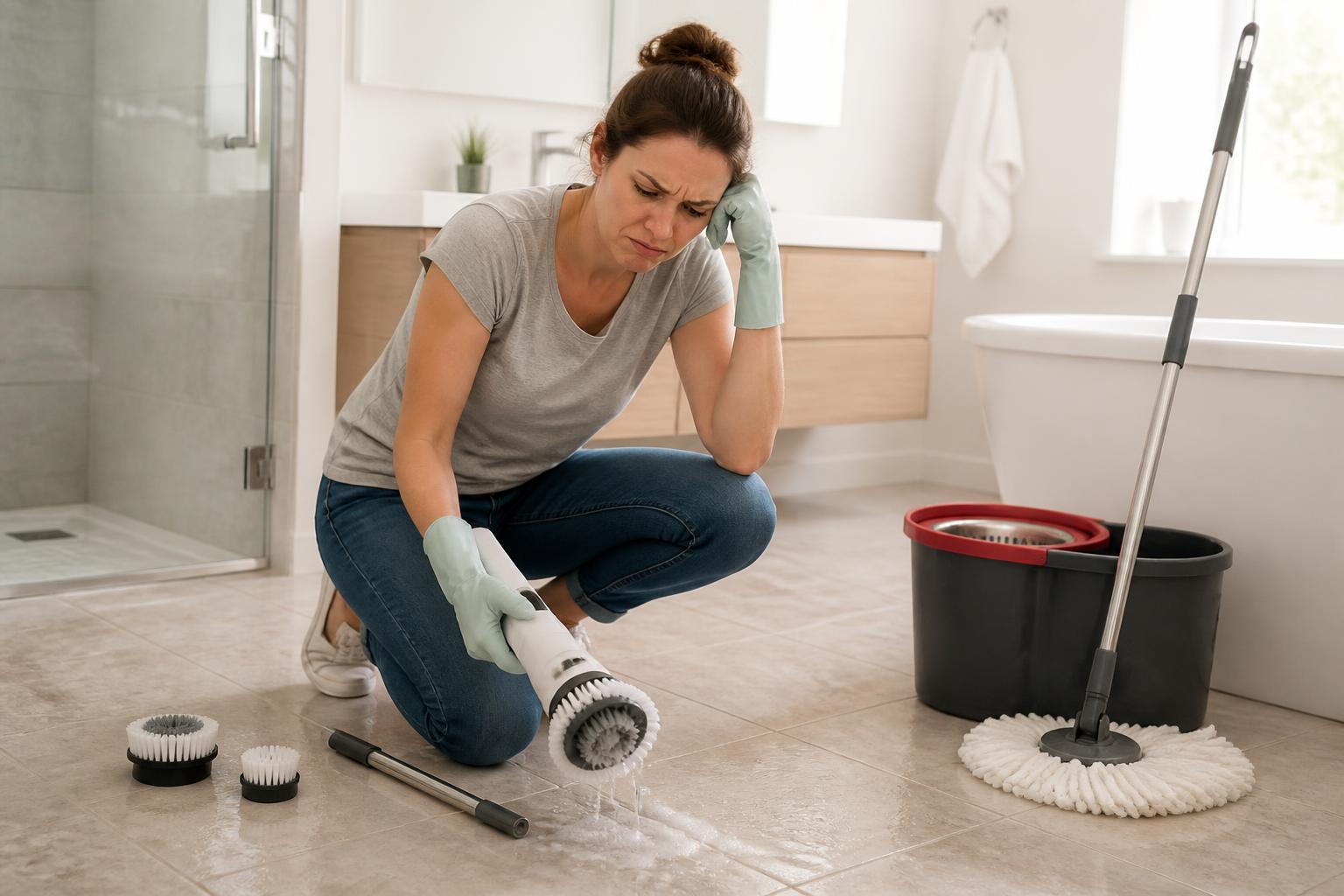
The Stall Problem: Why Some Electric Scrubbers Fail
Before looking at specific products, it’s worth addressing the most common complaint in owner reviews: the brush stalls or stops spinning when you apply pressure. This is the failure mode that makes people return the device and dismiss the entire category as a gimmick.
Here’s the mechanism behind it. Most electric scrubbers use a motor with a fixed torque output. When you press the brush head against a stain, the motor has to work harder to keep the bristles rotating. If the motor is underpowered or the battery is running low, the brush slows down or stops entirely. The result is that you end up doing the scrubbing motion manually—which defeats the entire purpose.
How to detect this early:
- Check the RPM rating and motor specs. Lower-end models often advertise 250–300 RPM. That’s fine for light maintenance cleaning but insufficient for baked-on soap scum or hard water stains.
- Look for dual-speed controls. A low speed (around 300 RPM) for delicate surfaces and a high speed (400+ RPM) for tough grime gives you a margin of power when you need it.
- Test the pressure sensitivity. If you can, try a demo unit in a store. Press the brush against your palm. If it stalls with moderate pressure, it will stall on grout.
The second failure mode is battery anxiety mid-clean. A scrubber that dies after 20 minutes is useless for a full bathroom. Look for a stated runtime of at least 60 minutes, and prefer models with a battery level display so you’re not caught off guard.
What this means for your purchase decision: If you primarily clean light dust and daily grime, a lower-torque model will serve you fine and save you money. But if you’re tackling months of accumulated hard water stains or rental-move-out deep cleans, you need a model with a higher RPM ceiling and a battery that won’t quit halfway through. Match the tool to your dirt level, not the marketing photos.
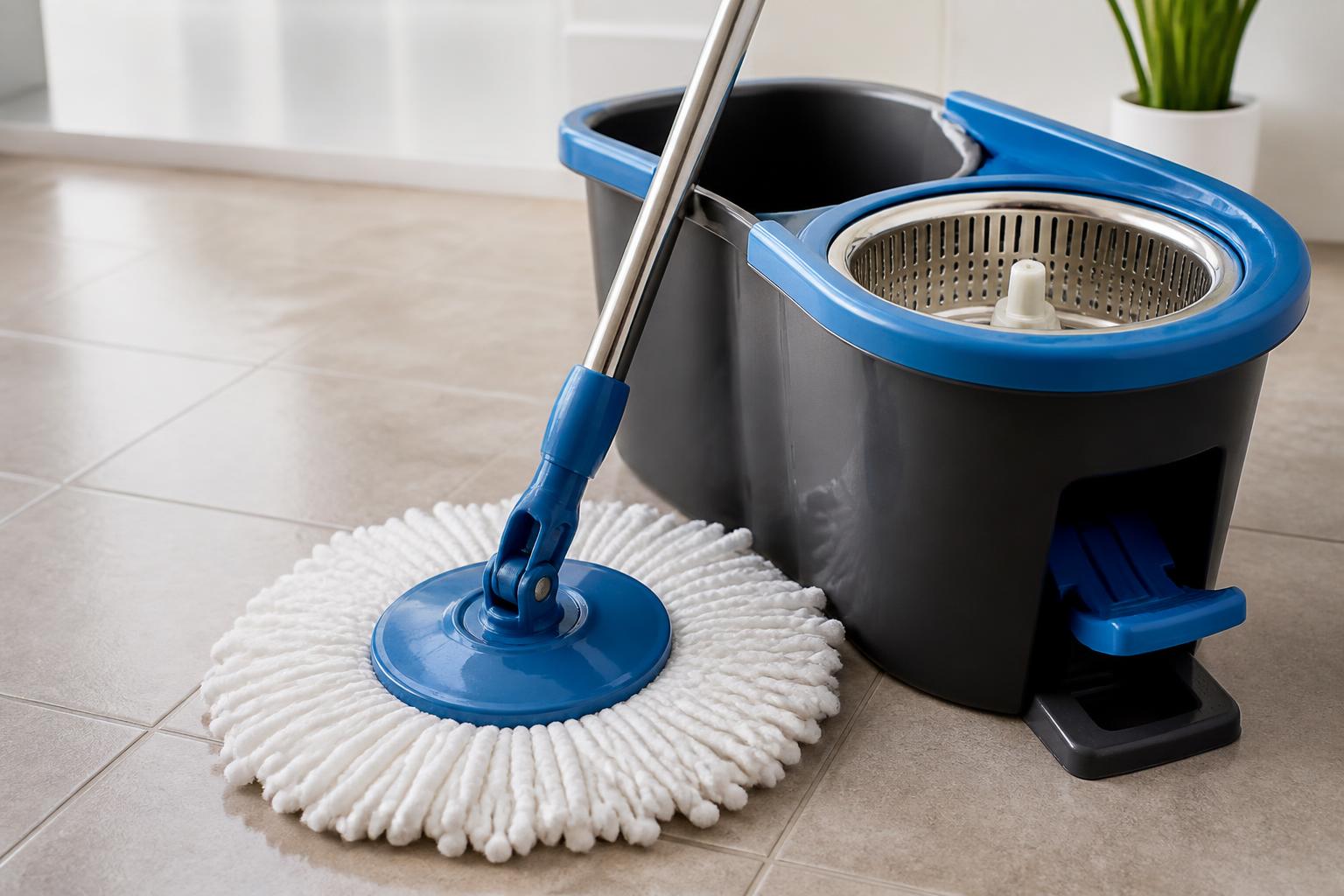
What Actually Matters When Comparing Electric Spin Scrubbers
Not all spin scrubbers are created equal, and the spec sheet hides more than it reveals. Here’s what to weigh:
Brush Head Variety vs. Brush Head Quality
More heads sound better, but the material and shape matter more than the count. A flat brush is good for large surfaces; a corner brush with stiff bristles is what actually gets into grout lines; a sponge head works for glass but will wear out quickly. If a model includes eight heads but half of them are redundant variations of the same flat brush, that’s marketing, not utility.
The trade-off to watch: Cloth and sponge heads are consumables. They wear out after several uses, and replacement packs add to the long-term cost. If a model’s included heads are mostly soft materials, factor in that you’ll be reordering within a few months of regular use.
Handle Length and Adjustability
The main ergonomic benefit of an electric scrubber is avoiding kneeling and bending. A handle that extends to at least 50 inches lets you clean a shower floor while standing. But check how the extension mechanism works—a flimsy locking collar will slip under pressure, and a wobbly connection makes precise control harder.
How to verify this before buying: Extend the handle fully and apply sideways pressure as if you’re scrubbing a wall. If the joint flexes more than a few degrees, it will fatigue your wrist and make the brush skip across the surface instead of digging into it.
Waterproofing Rating
IPX7 means the device can be submerged in water up to 1 meter for 30 minutes. That’s more than enough for bathroom use. But be careful: some models claim “waterproof” without an IP rating, which usually means splash-resistant at best. Check the actual rating before trusting it near a filled bathtub.
The limitation nobody mentions: IPX7 protects against water ingress, but it doesn’t mean the device is designed to run submerged. The Leebein product notes explicitly state the scrubber “cannot be used under water.” That’s fine for shower walls and tub surfaces, but don’t try to clean a pool or a flooded basement with it.
Battery Technology and Charging
USB-C fast charging is now standard on better models, and a 2.5–3 hour charge time for 60–90 minutes of runtime is a reasonable ratio. The battery capacity (measured in mAh) gives you a rough sense of runtime, but the motor’s efficiency matters just as much. A 2500mAh battery in a high-torque motor will drain faster than the same battery in a lower-power motor.
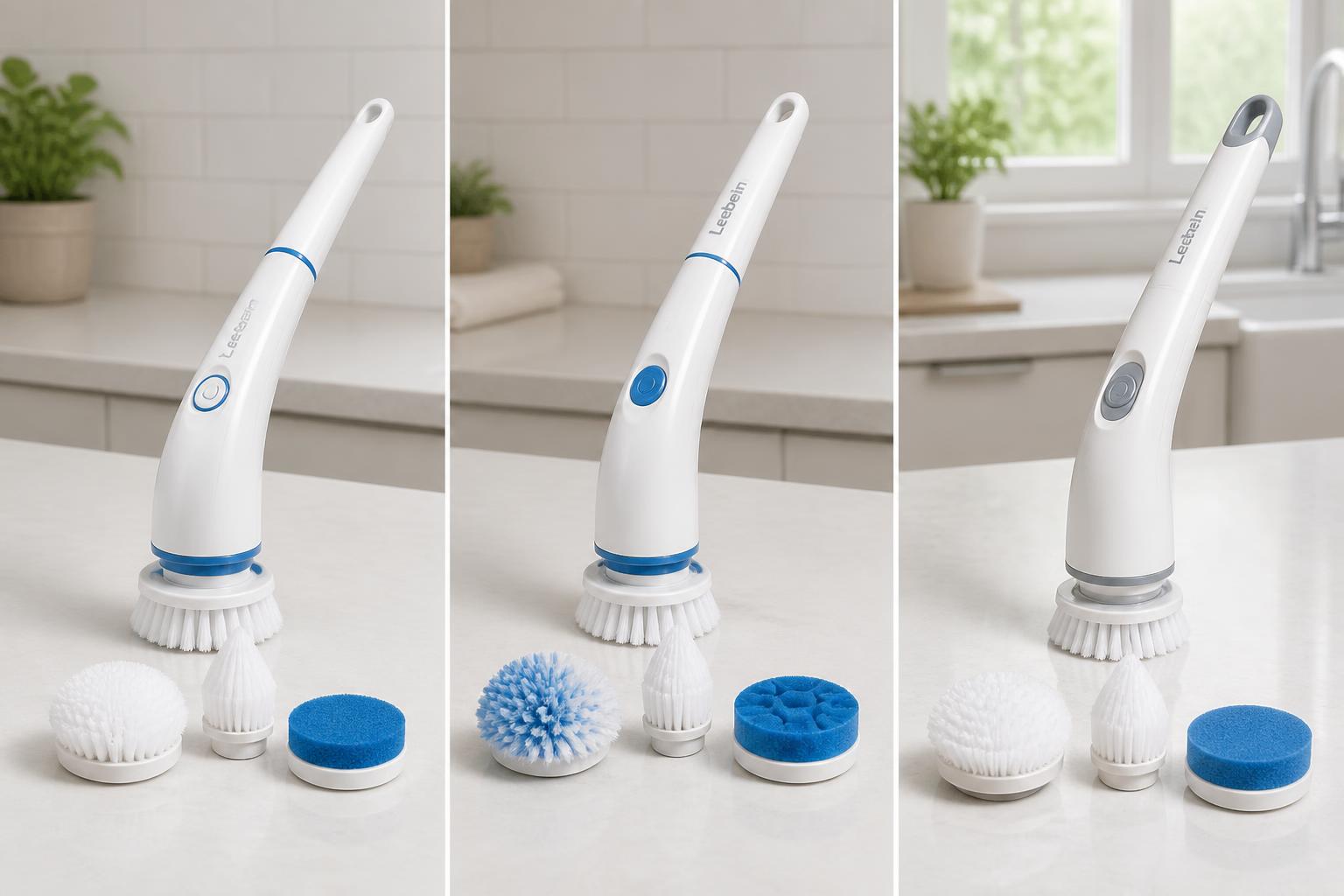
The practical implication: If you’re cleaning a single bathroom, any of these runtimes will cover the job. If you’re cleaning a whole house, look for the 90-minute runtime models and plan to charge between rooms. A battery level display isn’t a luxury—it’s the difference between finishing the last section of tile and running out of power mid-wall.
Comparison: Three Leebein Electric Spin Scrubbers
All three models below come from the same brand, which makes the differences in design philosophy easier to see. They target slightly different use cases, and the right choice depends on whether you prioritize head count, handle flexibility, or remote control convenience.
| Model | Brush Heads | Speed Settings | Handle Length | Battery & Charging | Waterproofing | Notable Feature |
|---|
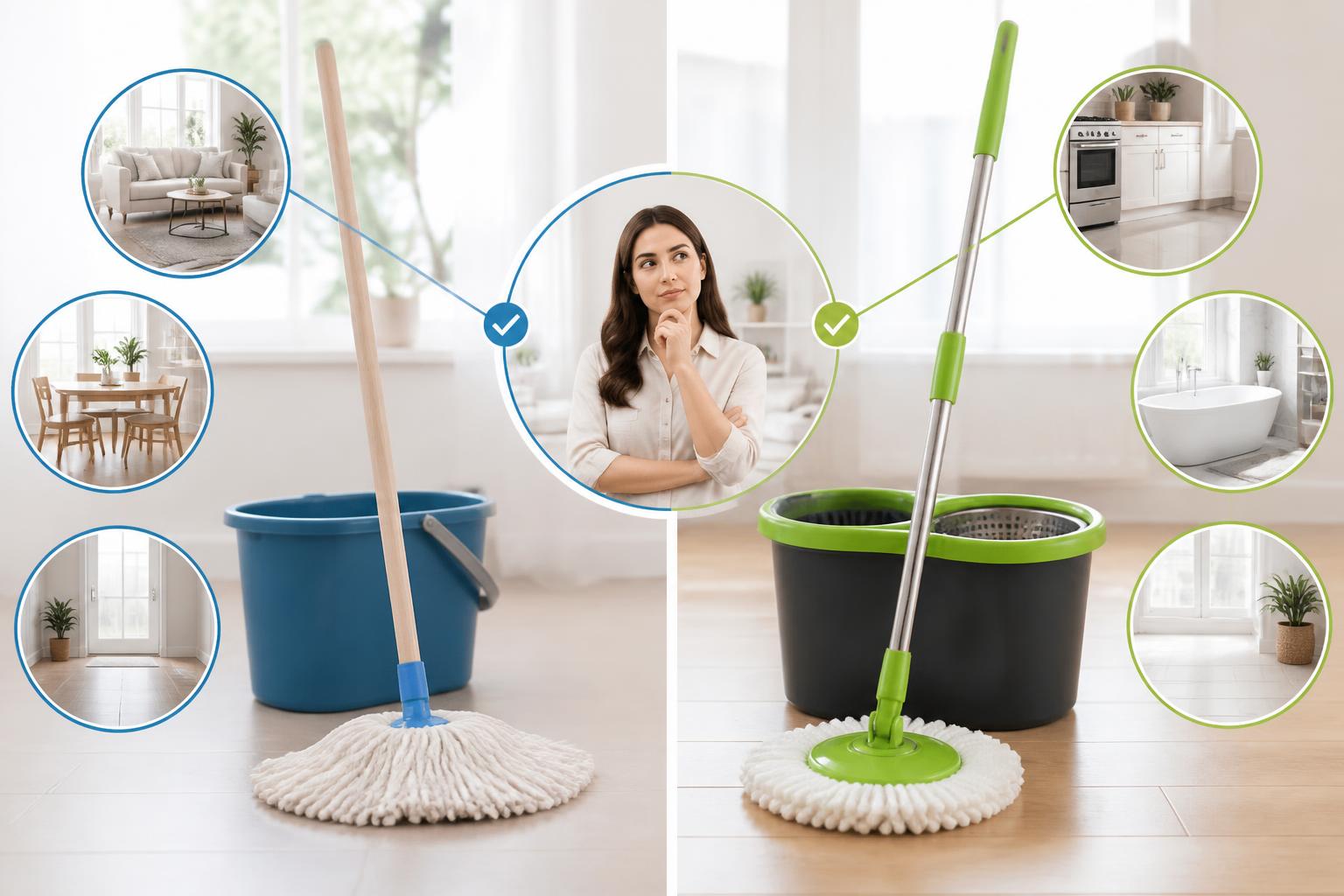
| Leebein Electric Spin Scrubber (8 Heads, Adjustable Handle) | 8 (flat, corner, cloth, sponge, etc.) | 2 speeds (300/400 RPM) | 12–54 inches (detachable, telescopic) | 90 min runtime, 3 hr charge, USB-C | IPX7 | Battery level display; includes car polishing heads |
|---|---|---|---|---|---|---|
| Leebein Electric Spin Scrubber (2026 Upgraded, 7 Heads) | 7 (tiles, counters, general purpose) | 2 speeds (unspecified RPM) | Extendable (length not specified) | Not specified | IPX7 | 2-year warranty; newer model design |
| Leebein Electric Spin Scrubber (4 Adjustable Angles, Remote Control) | 8 (durable, anti-scratch) | 2 speeds (350/450 RPM) | Long handle with 4 adjustable angles (90°–180°) | 60–90 min runtime, 2.5 hr charge, USB-C, 2500mAh×2 | IPX7 | Remote control for on/off and speed without bending |
Decision Framework: Which Model Fits Your Cleaning Pattern?
Rather than declaring one model the winner for everyone, here’s a practical filter based on how you actually clean.
Choose the 8-Head Adjustable Handle Model If:
- You want the widest range of brush heads for different surfaces (tile, wood, glass, car).
- You need the longest extension range (up to 54 inches) for cleaning ceilings, high walls, or shower enclosures without a step stool.
- You prefer a visible battery display so you can plan your cleaning session without guessing.
Choose the 2026 Upgraded 7-Head Model If:
- You want the newest design and the peace of mind of a 2-year warranty.
- Your cleaning needs are mostly bathroom and kitchen surfaces—you don’t need car polishing or specialty heads.
- You’re willing to trade a few brush heads for a simpler, more focused kit.
A caveat on this model: The product listing doesn’t specify RPM values or battery capacity, which makes it harder to evaluate before purchase. If those specs matter to you, contact the seller directly before ordering, or stick with a model that publishes full specifications.
Choose the Remote Control Model If:
- You have mobility issues or simply hate bending down to adjust settings.
- You clean large areas where you’d otherwise have to walk back and forth to change speeds.
- You want the highest RPM (450) for stubborn grout and hard water stains.
- The adjustable head angles (90° to 180°) matter for cleaning under sinks, behind toilets, or along baseboards.
The trade-off to consider: The remote control adds convenience, but it’s another electronic component that can fail. If the remote breaks and the handle-mounted controls are limited, you may lose access to some functions. Check whether the handle controls cover all essential operations before relying on the remote as your primary interface.
A Quick Fit Check Before You Buy
Run through these five checks before committing to any electric spin scrubber:
1. Torque test: Does the brush maintain speed when you press firmly against a surface? If the spec sheet doesn’t mention RPM under load, assume it stalls.
2. Runtime match: Will the stated battery life cover your largest cleaning session in one charge? If you clean multiple bathrooms, you need 60+ minutes.
3. Head availability: Are replacement brush heads sold separately and at a reasonable price? A scrubber with proprietary heads you can’t reorder is a disposable device.
4. Handle lock integrity: Does the extension mechanism feel solid when you apply lateral pressure? A wobbly handle makes precise scrubbing harder, not easier.
5. Waterproofing clarity: Is there an explicit IP rating? If not, assume it’s not safe for wet environments.
If a model fails any of these checks, it’s worth looking elsewhere—or adjusting your expectations for what it can handle.
How to Use an Electric Spin Scrubber Without Wasting Time
Even the best scrubber won’t save time if you use it inefficiently. Here’s a simple workflow:
Step 1: Pre-treat the tough spots. Spray your cleaner on grout, soap scum, and hard water stains. Let it sit for 5–10 minutes. This softens the grime so the brush doesn’t have to work as hard.
Step 2: Start with the highest speed on the toughest stains. Use the corner brush for grout lines and edges first, while the cleaner is still wet. Move to the flat brush for larger surfaces.
Step 3: Work from top to bottom. Clean walls and vertical surfaces first, then the tub or floor. This way, the runoff from above doesn’t re-soil what you’ve already cleaned.
Step 4: Rinse and check. After the initial pass, rinse the surface and inspect. If you see residue, do a second pass with the sponge or cloth head. Don’t keep scrubbing the same spot with the stiff brush—that’s how you scratch surfaces.
Likely friction point: If the brush head loads up with hair or debris, it will lose contact with the surface and spin uselessly. Stop and rinse the brush head under running water every few minutes when cleaning hairy or fibrous surfaces. This is normal, not a defect.
Stop point: If the brush stalls under pressure even after a full charge, or if the battery drains noticeably faster than the stated runtime, that’s a sign of a defective unit or a motor that’s too weak for your cleaning needs. Contact the manufacturer for a warranty claim rather than adapting your technique to a faulty tool.
Success check: You know the scrubber is working correctly when you can hold it at a comfortable height, apply light pressure, and see the bristles maintain their rotation while the surface comes clean within a few passes. If you’re still scrubbing manually after the first minute, something is wrong.
The Time-Saving Verdict, With Caveats
Electric spin scrubbers do save time, but the savings are concentrated in specific scenarios: grout lines, shower corners, tile walls, and any surface that requires kneeling or repeated back-and-forth motion. For wide-open floors, a best spin mop or a traditional mop will cover more square footage per minute. For textured surfaces and crevices, the electric scrubber wins.
If you’re deciding between the three Leebein models above, the 8-head adjustable version offers the most versatility for the price, and the remote control model is the better pick if you’re cleaning large areas solo. The 2026 upgraded model is a reasonable choice if warranty length is your priority, but it offers less information on battery specs and RPM, which makes it harder to evaluate before purchase.
Before you commit, think about the actual dirt load in your home. If you’re doing weekly maintenance cleaning, a simpler model with fewer heads will likely suffice. If you’re facing months of accumulated grime or preparing a property for move-out, the higher-RPM models with longer runtimes are worth the extra investment. And if you’re primarily concerned with floors, consider whether a dedicated floor-cleaning tool might serve you better than a handheld scrubber with an extension pole.
For a deeper look at how these devices compare to other cleaning tools, including alternatives for specific surfaces, check out our guide to the best electric spin scrubber and the best cleaning brushes for more context on what fits your routine.

Sir Cleans a Lot is a professional home cleaning specialist with over 10 years of hands-on experience. He has helped thousands of homeowners tackle stubborn stains, eliminate mold, and keep their homes spotless using practical, science-backed methods. When he’s not testing the latest cleaning products or researching stain removal techniques, he’s sharing his expertise to make cleaning easier for everyone.