
Best Spin Mops: Tested and Reviewed for Every Floor Type
If you’re comparing spin mops for your home, the core trade-off comes down to this: how much control you want over water content, and how much storage space the bucket system occupies. A spin mop’s real job isn’t just scrubbing—it’s wringing the mop head to the right dampness so you’re not pushing dirty water across sealed hardwood or leaving streaks on tile.
Below, we break down three top contenders, explain what actually matters when choosing a system, and give you a decision framework that works whether you have 400 square feet of tile or a multi-level house with mixed flooring.
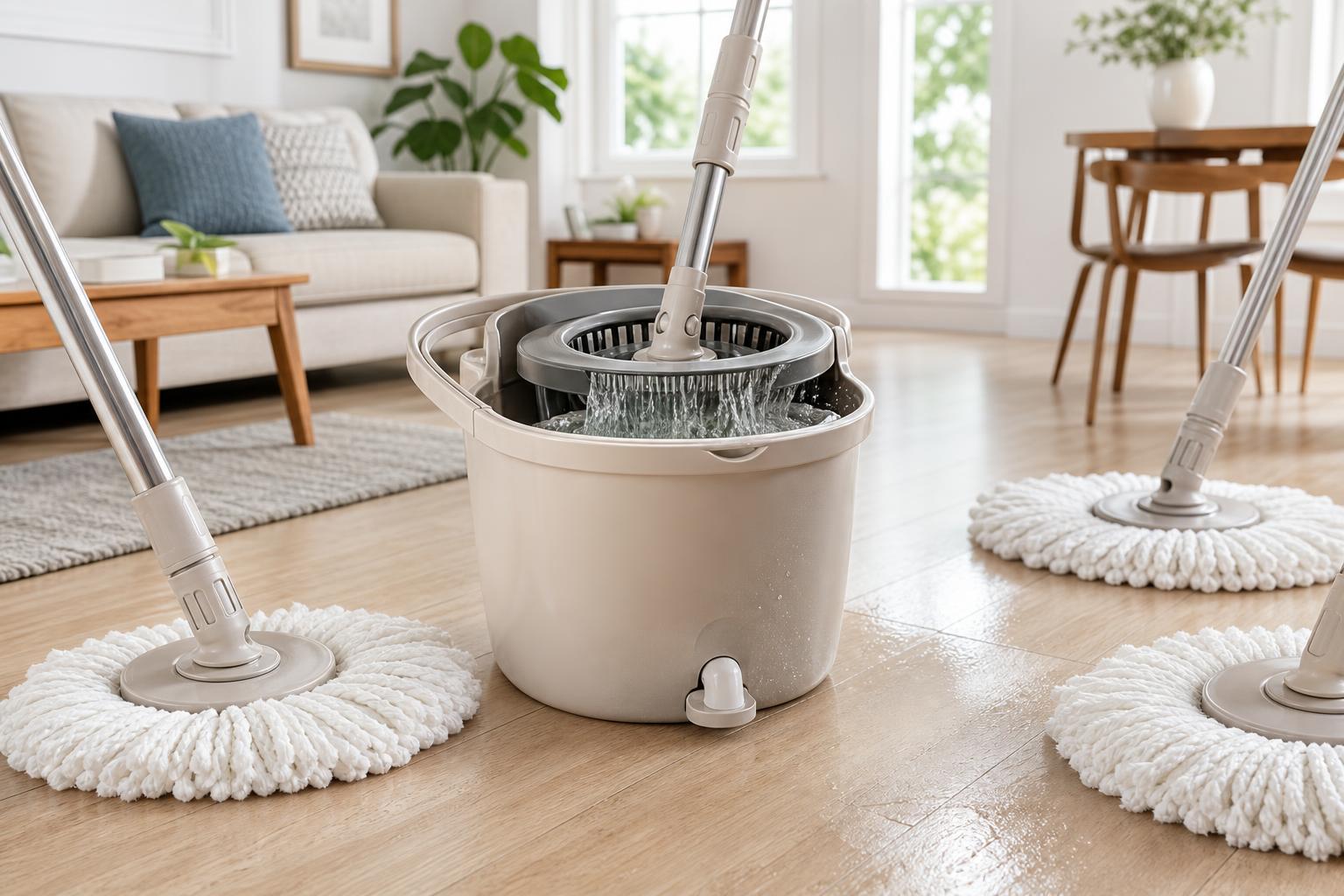
Why the Wringing Mechanism Matters More Than the Mop Head
A spin mop combines a microfiber head with a bucket that has a built-in spinner basket. You push the mop handle down or step on a pedal, and the head spins at high speed to fling water out via centrifugal force. The result: you control exactly how wet the mop head is before it touches the floor.
That control matters more than most people expect. According to O-Cedar’s product documentation, their RinseClean system removes over 99% of bacteria with just water—no chemical cleaners required. That claim is about the microfiber’s mechanical action, not a sanitizing agent. The practical takeaway: if you want to cut down on cleaning chemicals, a spin mop with a good microfiber head can do the heavy lifting with plain water.
But there’s a catch. Spin mops are only as good as their wringing mechanism. A weak spinner leaves the head too wet, which can damage unsealed wood or leave visible water marks on tile. A strong spinner, on the other hand, gives you a nearly dry mop for quick touch-ups.
The mechanism type also affects long-term reliability. Foot-pedal designs rely on plastic gears that can strip or crack after heavy use—especially if someone in the household tends to stomp rather than press. Handle-press designs (like the spiral steel rod system in the FunClean) transfer force more directly and have fewer moving parts to fail. If you’re buying for a household with varied cleaning styles, that durability difference is worth weighing upfront.
The Three Contenders: What the Specs Say
Here’s how the three systems stack up on paper:
| Product | Price | Brand | Rating | Key Features | Best For |
|---|---|---|---|---|---|
| FunClean Spin Mop and Bucket with Wringer Set | Not listed | RinseWise | Not listed | Stainless steel construction, 61″ telescopic handle, 360° rotation, 6 microfiber refills, 2 wheels + pull handle, drain plug, detergent dispenser | Large homes, mixed flooring, users who want minimal bending |
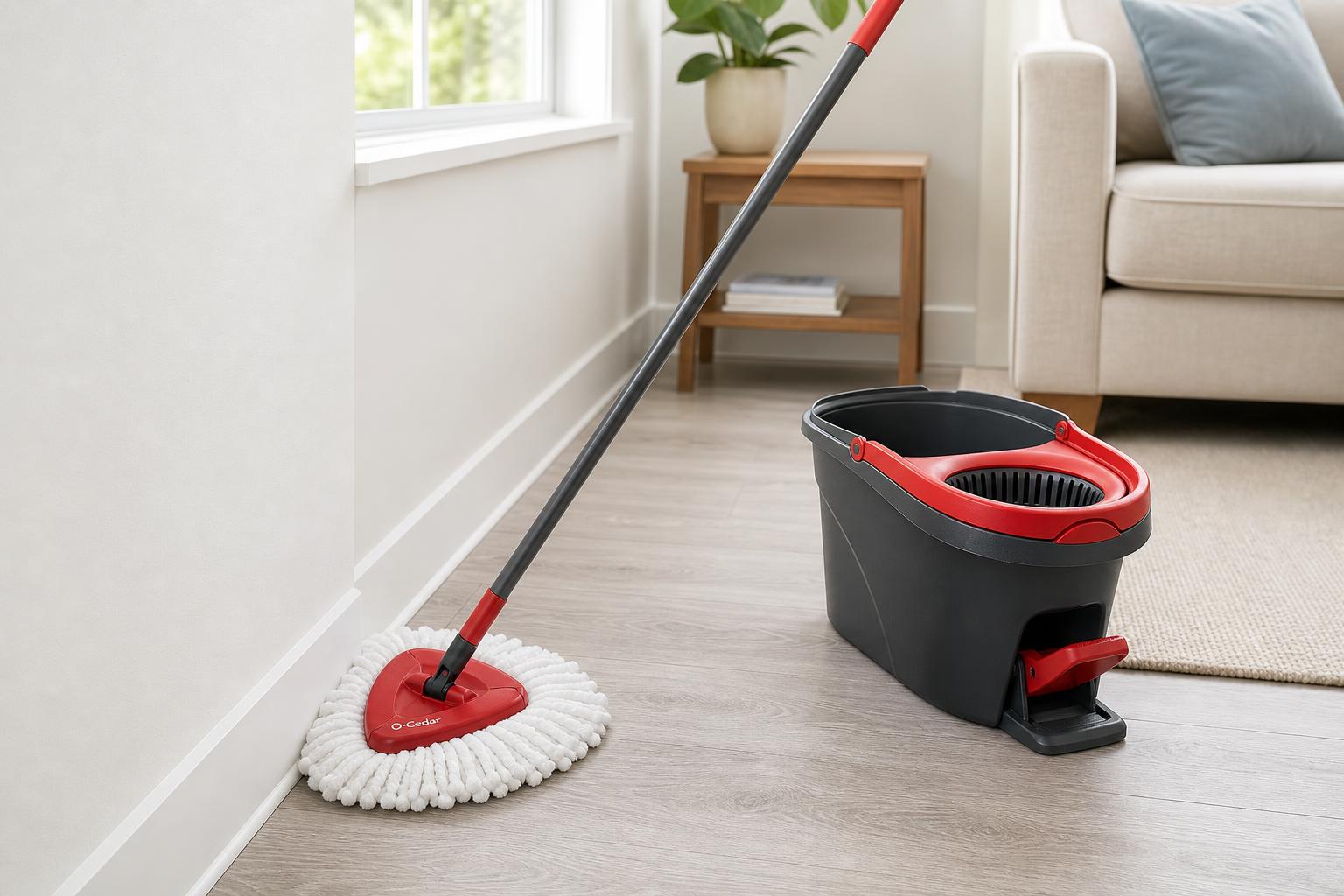
| O-Cedar EasyWring Microfiber Spin Mop | Not listed | O-Cedar | Not listed | Hands-free wringing, splash guard, triangle head for corners, 48″ handle, machine-washable head | Corner-heavy rooms, finished hardwood, budget-conscious buyers |
| O-Cedar RinseClean Spin Mop & Bucket System | Not listed | O-Cedar | Not listed | Foot-pedal spinning, clean-water rinse design, removes 99% of bacteria with water, machine-washable head | Households that want to minimize chemical use, frequent moppers |
Top Pick: FunClean Spin Mop and Bucket
The FunClean Spin Mop and Bucket with Wringer Set stands out for one structural reason: the entire wringing assembly uses stainless steel, not plastic. The press-type dehydration design draws power from a spiral steel rod inside the handle, which is more durable than the foot-pedal mechanisms found on many competitors. If you’ve ever had a plastic pedal crack after a year of use, you’ll understand why this matters.
The 61-inch telescopic handle is another differentiator. Most spin mops top out around 48 inches, which forces taller users to hunch. At 61 inches, you can mop standing nearly upright—a meaningful comfort difference for anyone with back issues.
The included six microfiber refills also change the math on replacement costs. O-Cedar recommends swapping heads every three months; at that rate, six heads covers 18 months of use before you need to buy more. That’s a real cost advantage if you’re comparing total ownership, not just the upfront price.
One limitation to verify before buying: the FunClean’s press-type wringing requires a firm, continuous push on the handle. If you have limited hand or wrist strength, the foot-pedal design of the O-Cedar models may be easier to operate. The handle mechanism also adds some resistance when you’re pushing down—it’s not heavy, but it’s noticeable compared to a pedal.
The O-Cedar EasyWring: The Corner-Clearing Specialist
The O-Cedar EasyWring Microfiber Spin Mop has one feature the others don’t: a patented triangular mop head. That shape lets the head fit flush into corners and along baseboards, which round heads simply can’t reach. If your kitchen has a lot of 90-degree angles or you have pets that track dirt into corners, this is the practical advantage to weigh.
The built-in wringer works hands-free, and the splash guard keeps water inside the bucket during transport. That’s a small detail that becomes important when you’re carrying a full bucket from the kitchen to the bathroom—nobody wants a wet trail across the hallway.
The trade-off is the 48-inch handle. At 5’10” or taller, you’ll feel some bend. It’s not a dealbreaker, but it’s the kind of ergonomic compromise that becomes obvious after 20 minutes of mopping.
Fit verification tip: Before buying, extend the handle to its full length and hold it as you would while mopping. The grip should land somewhere between your hip and lower rib cage. If it’s below hip level, you’ll be bending for the entire mopping session—and that’s exactly the kind of discomfort that leads people to abandon their mop in a closet.
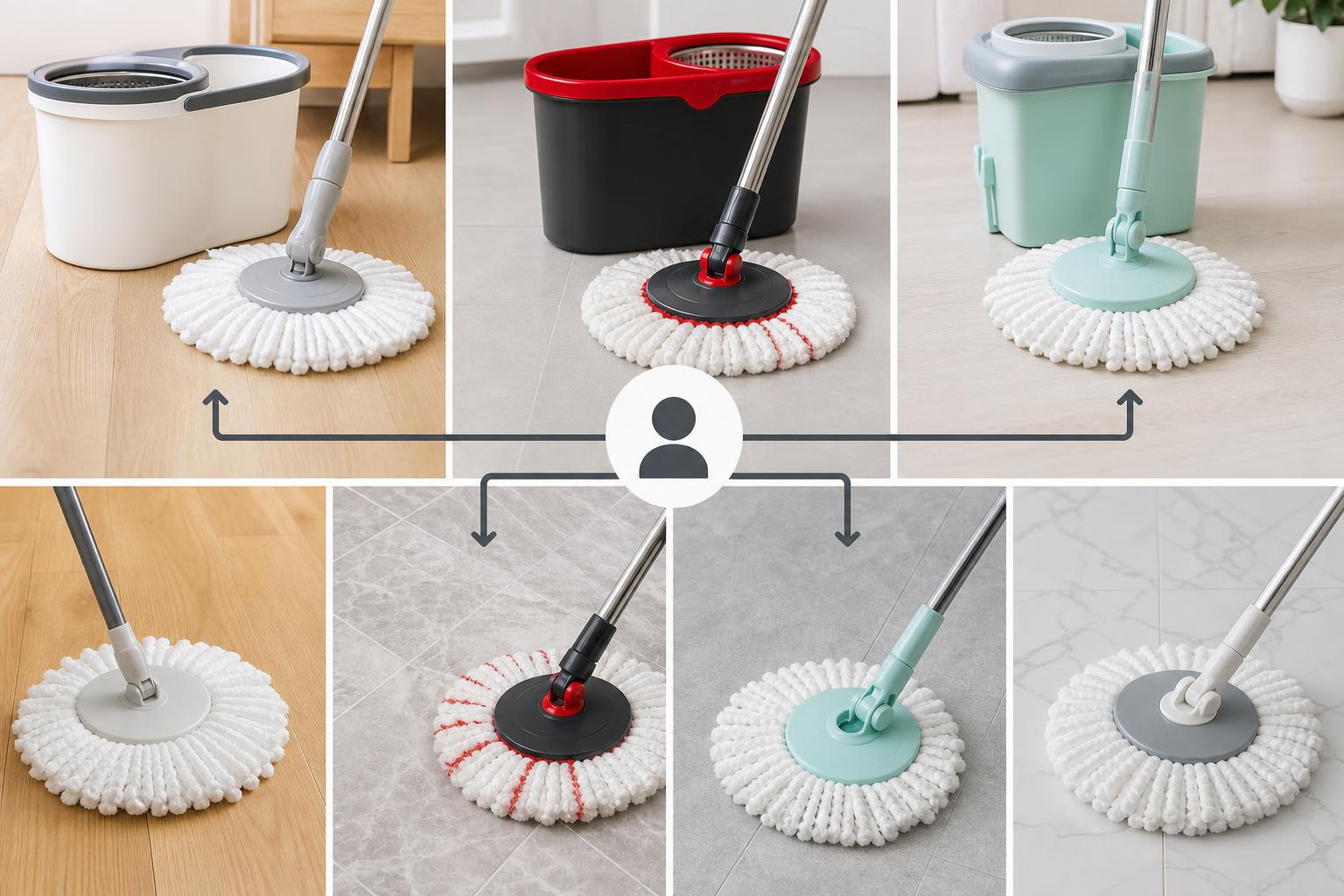
The O-Cedar RinseClean: For Chemical-Free Cleaning
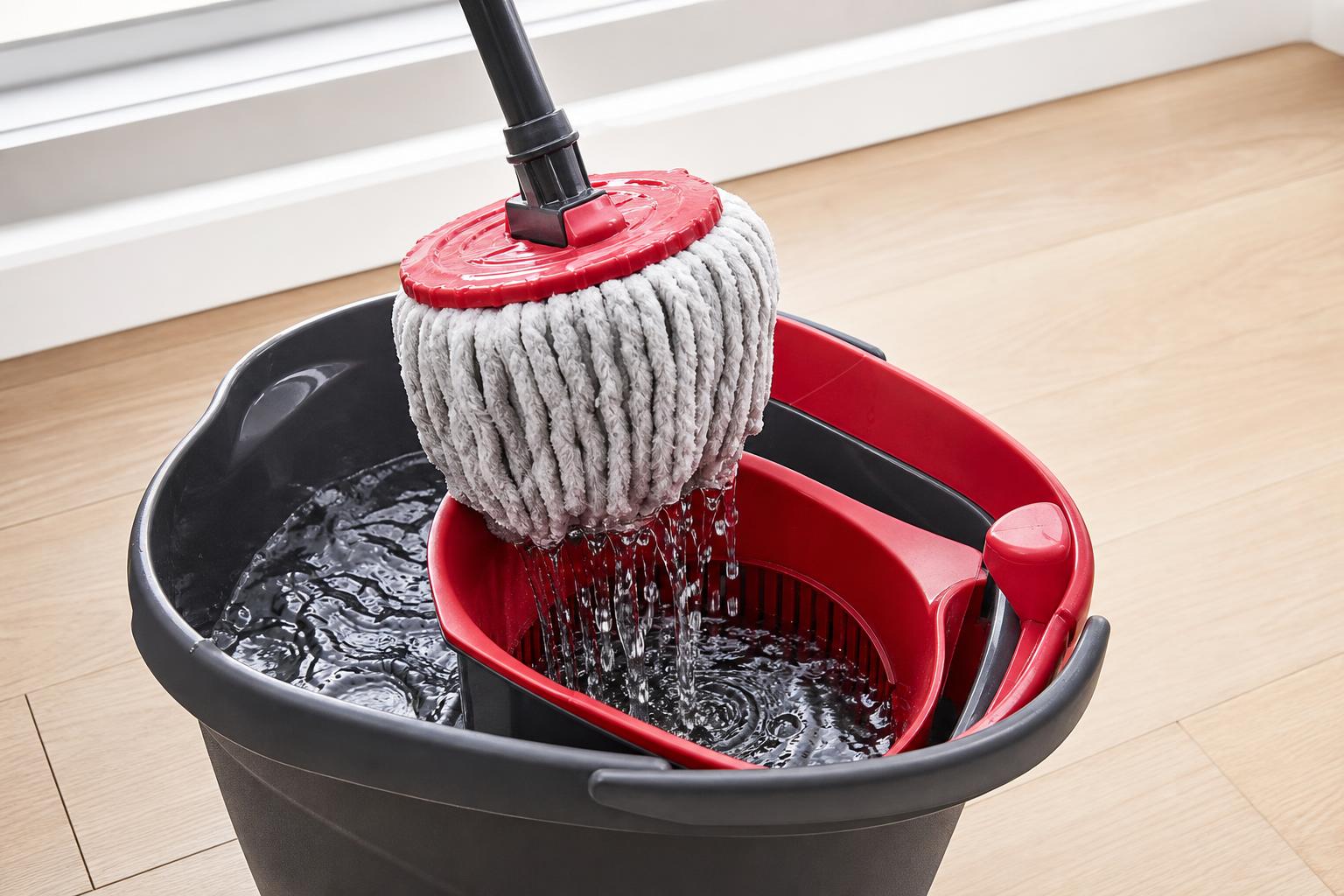
The O-Cedar RinseClean Spin Mop & Bucket System solves a problem most spin mops ignore: you’re mopping with the same dirty water the entire time. The RinseClean’s two-chamber design keeps clean water separate from the dirty water you wring out, so you’re always applying fresh water to the floor.
O-Cedar claims this system removes 99% of bacteria with just water. That’s a bold number, but the mechanism is plausible: microfiber physically lifts and traps bacteria, and the clean-water rinse prevents re-depositing them. If you have kids or pets on the floor and want to reduce chemical exposure, this is the system to consider.
The foot-pedal spinning mechanism gives you precise control over moisture. Step lightly for a damp mop; step firmly for a nearly dry one. That adjustability is valuable on mixed flooring—use a damp mop for tile, then switch to a drier setting for sealed hardwood.
The trade-off that surprises most buyers: the two-chamber design makes the bucket noticeably bulkier, and you’ll need to empty and refill the clean-water chamber more frequently than a single-bucket system. The dirty-water chamber also needs rinsing after every use—if you let it sit, the residual grime can develop an odor that transfers to the mop head. If you’re the type who prefers to hang the mop and walk away, this system demands a bit more after-care.
The Decision Framework: Which Spin Mop Fits Your Constraints?
Here’s the criterion that changes the recommendation: your floor-to-area ratio and your willingness to bend.
If you have more than 1,500 square feet of hard flooring and you’re an average-height adult, the FunClean’s 61-inch handle and wheeled bucket will save you measurable effort. The wheels matter more than you’d think—dragging a loaded bucket across a large home is the most tiring part of mopping, not the mopping itself.
If you have under 1,000 square feet or your home is mostly corners and tight spaces, the O-Cedar EasyWring’s triangular head gives you better coverage in the areas that actually get dirty. The shorter handle is less of an issue when you’re only mopping for 10 minutes.
If you want to eliminate chemical cleaners from your routine, the RinseClean’s clean-water design is the only one of these three that genuinely delivers on that promise. The other two will eventually leave a dirty-water film if you don’t change the water frequently.
A 5-Point Fit Check Before You Buy
Run through these before committing to any spin mop:
1. Handle height test: Extend the handle fully and stand naturally. Is the grip at hip level without bending? If not, cross it off.
2. Bucket weight when full: A spin mop bucket holds 2–3 gallons. Can you lift it when full, or does it need wheels?
3. Head replacement cost: Check the price of replacement heads. A $15 mop with $12 refills every 3 months costs more than a $40 mop with $8 refills.
4. Floor type compatibility: Confirm the mop head is safe for your specific flooring. Most microfiber heads work on sealed hardwood, tile, and vinyl, but unsealed wood requires a nearly dry mop.
5. Storage space: Measure where you’ll store the bucket. The RinseClean’s two-chamber design takes up noticeably more floor space than the other two.
Are Spin Mops Worth It Compared to Traditional Mops?
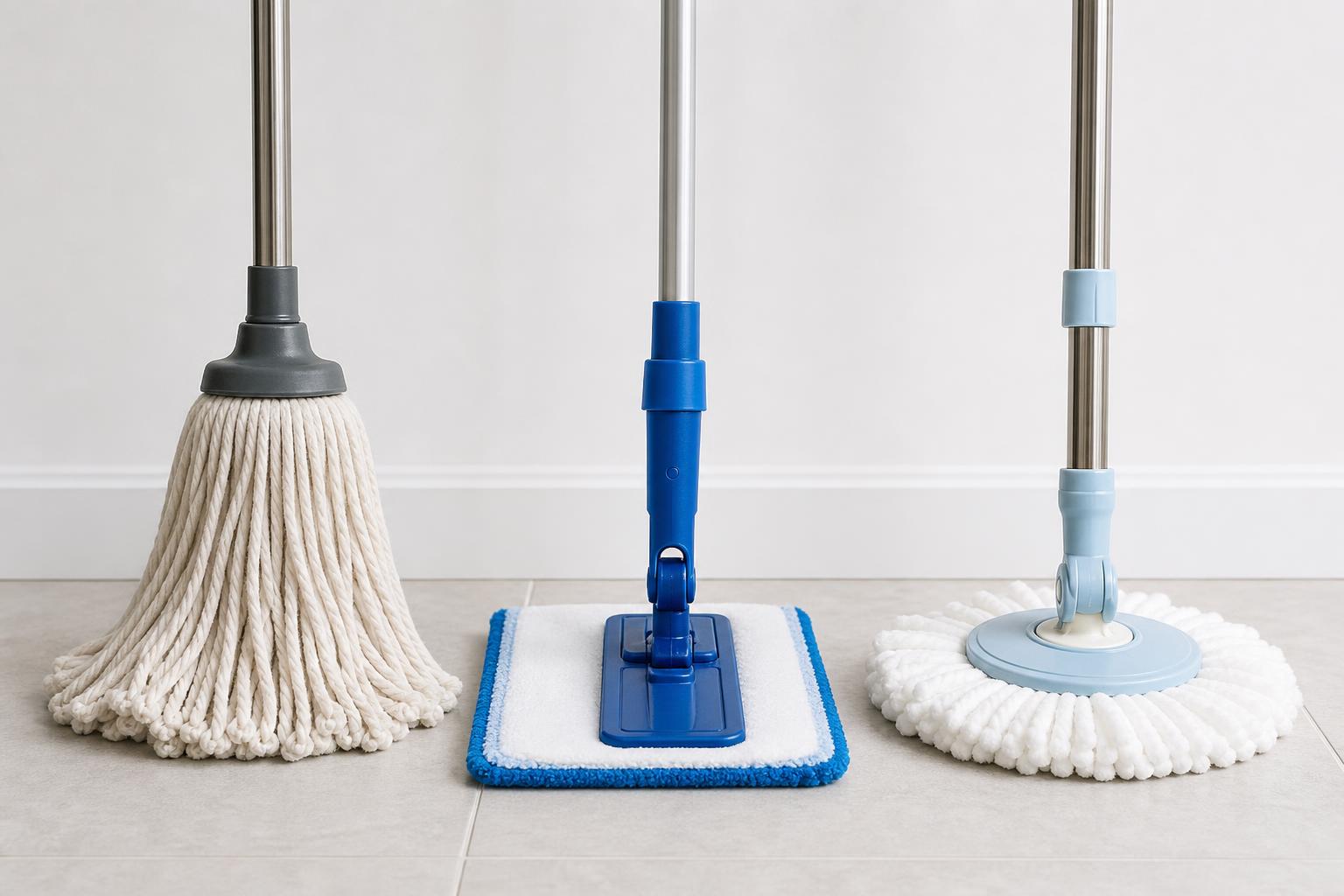
Yes, with one caveat. A spin mop’s advantage over a traditional string mop is the wringing mechanism—you get consistent moisture control without touching the mop head. That’s a genuine improvement in both hygiene and convenience.
But if you’re comparing a spin mop to a spray mop or a steam mop, the value proposition shifts. Spray mops are lighter and more compact, but you pay ongoing costs for cleaning solution refills. Steam mops sanitize without chemicals, but they don’t work on unsealed wood and require electricity. A spin mop sits in the middle: no ongoing costs, no electricity, but more physical effort than a steam mop.
For residential use, the deciding factor is usually floor type and cleaning frequency. If you mop weekly or more, a spin mop’s water control and reusable heads make it the most cost-effective option. If you mop monthly, a spray mop’s convenience might win.
The practical implication: if you already own a spin mop and you’re considering upgrading, ask yourself whether your current system’s limitation is the wringing mechanism, the handle height, or the head shape. Upgrading to a similar system with a slightly different bucket design won’t solve a fundamental ergonomic mismatch. Measure your handle height and test the wringing action before spending money on a marginal improvement.
How to Mop Properly With a Spin Mop
Getting the most out of a spin mop comes down to technique, not just equipment. Here’s a flow that works:
Preparation: Sweep or vacuum first. A spin mop picks up surface dirt, but it’s not a substitute for dry cleaning. If you’re working on hardwood, check that your mop head is only damp, not wet.
First pass: Start in the farthest corner of the room and work backward toward the door. This prevents you from walking on freshly mopped floors.
Wringing checkpoint: After every 2–3 passes, spin the mop head to remove dirty water. If you see streaks on the floor, you’re using too much water—spin harder.
Mid-clean check: Flip the mop head or rotate it to expose a clean side. A saturated head stops picking up dirt and starts pushing it around.
Success signal: The floor should dry within 2–3 minutes. If it takes longer, your mop head is too wet.
After care: Rinse the mop head thoroughly and hang it to dry. Machine-wash it every 2–3 uses to prevent odor buildup. Replace the head every 3 months or when it starts leaving lint.
Escalation signal: If you’re consistently getting streaks even after adjusting your wringing technique, the issue may be the mop head itself—not your method. Old microfiber heads lose their absorbency and need replacement. If a fresh head still streaks, your water may be too hard; try using distilled water for a final pass.
Common Failure Points to Watch For
Not all spin mops perform equally, and the cheap ones fail in predictable ways:
Plastic wringing mechanisms crack under repeated use. The FunClean’s stainless steel assembly avoids this, but it’s the first thing to check on any budget model.
The spin basket can become unbalanced if you overload it with water. Always spin with the mop head fully seated in the basket, not partially hanging off.
Microfiber heads lose absorbency over time. Fabric softener is the enemy—it coats the fibers and destroys their water-capturing ability. Wash mop heads with plain detergent only.
Bucket wheels wear out on rough surfaces. If you’re dragging the bucket across outdoor concrete or uneven tile, check the wheel quality before buying.
The mismatch to watch for: if you have unsealed hardwood or natural stone floors, a spin mop may not be the right tool at all—even with careful wringing, the moisture can seep into unsealed surfaces and cause warping or discoloration. In that case, a dry microfiber mop or a best steam cleaner designed for sealed floors is a safer option. Check your flooring manufacturer’s care guidelines before introducing any wet mopping system.
FAQ
Which brand spin mop is the best?
O-Cedar is the most established brand in this category, with two solid systems (EasyWring and RinseClean) that cover different needs. RinseWise’s FunClean model offers better ergonomics and more included refills, making it a strong alternative if handle height and long-term cost matter more to you.
What is the highest rated spin mop?
The O-Cedar EasyWring consistently receives high ratings across retail platforms, largely because of its triangular head and hands-free wringing. However, “highest rated” depends on your priorities—the FunClean’s stainless steel construction and 61-inch handle may serve taller users better.
Are spin mops really worth it?
Yes, if you mop regularly and want consistent moisture control without touching a dirty mop head. They cost more upfront than traditional mops, but reusable microfiber heads eliminate ongoing refill costs. If you mop rarely, a simpler mop may be sufficient.
What is the best mop for residential use?
For most homes, a spin mop with a telescopic handle and machine-washable microfiber heads is the best balance of cost, effectiveness, and convenience. Choose based on your floor type and home size—the FunClean suits larger spaces, while the O-Cedar EasyWring excels in corner-heavy rooms.
Final Considerations Before You Buy
The right spin mop for your home depends less on brand loyalty and more on three factors: your height, your floor area, and whether you want to eliminate chemical cleaners. The FunClean offers the best ergonomics and value over time with its six included heads. The O-Cedar EasyWring is the corner-clearing specialist. The RinseClean is the choice for chemical-free households.
Measure your storage space, check the handle height, and confirm the mop heads are compatible with your flooring. If you’re also comparing other cleaning tools, our guides to the best mop for hardwood floors and the best electric spin scrubber cover adjacent categories. And if you’re dealing with pet hair before mopping, check our recommendations for the best vacuum pet hair options.
A spin mop won’t replace your vacuum or your steam cleaner, but for everyday hard floor maintenance, it’s the most straightforward tool for the job. Choose based on your specific constraints, and you’ll get years of use without the recurring costs of disposable pads or cleaning solutions.

Sir Cleans a Lot is a professional home cleaning specialist with over 10 years of hands-on experience. He has helped thousands of homeowners tackle stubborn stains, eliminate mold, and keep their homes spotless using practical, science-backed methods. When he’s not testing the latest cleaning products or researching stain removal techniques, he’s sharing his expertise to make cleaning easier for everyone.