
Best Steam Cleaners for Floors, Grout, and Upholstery
If you’re comparing steam cleaners for home use, the core question isn’t which one has the most impressive-sounding specs — it’s whether the machine can sustain enough heat and pressure to actually lift embedded soil from grout lines and fabric fibers. A steam cleaner that drops below effective temperature mid-job leaves you with damp surfaces and redistributed dirt, which is the most common failure mode buyers discover only after the return window closes.
The McCulloch canister line dominates this category for a reason: they use pressurized steam (measured in PSI) rather than the gentler vapor output of many upright models. That pressure difference matters most on grout, where dirt is packed into porous channels, and on upholstery, where steam needs to penetrate rather than just wet the surface.
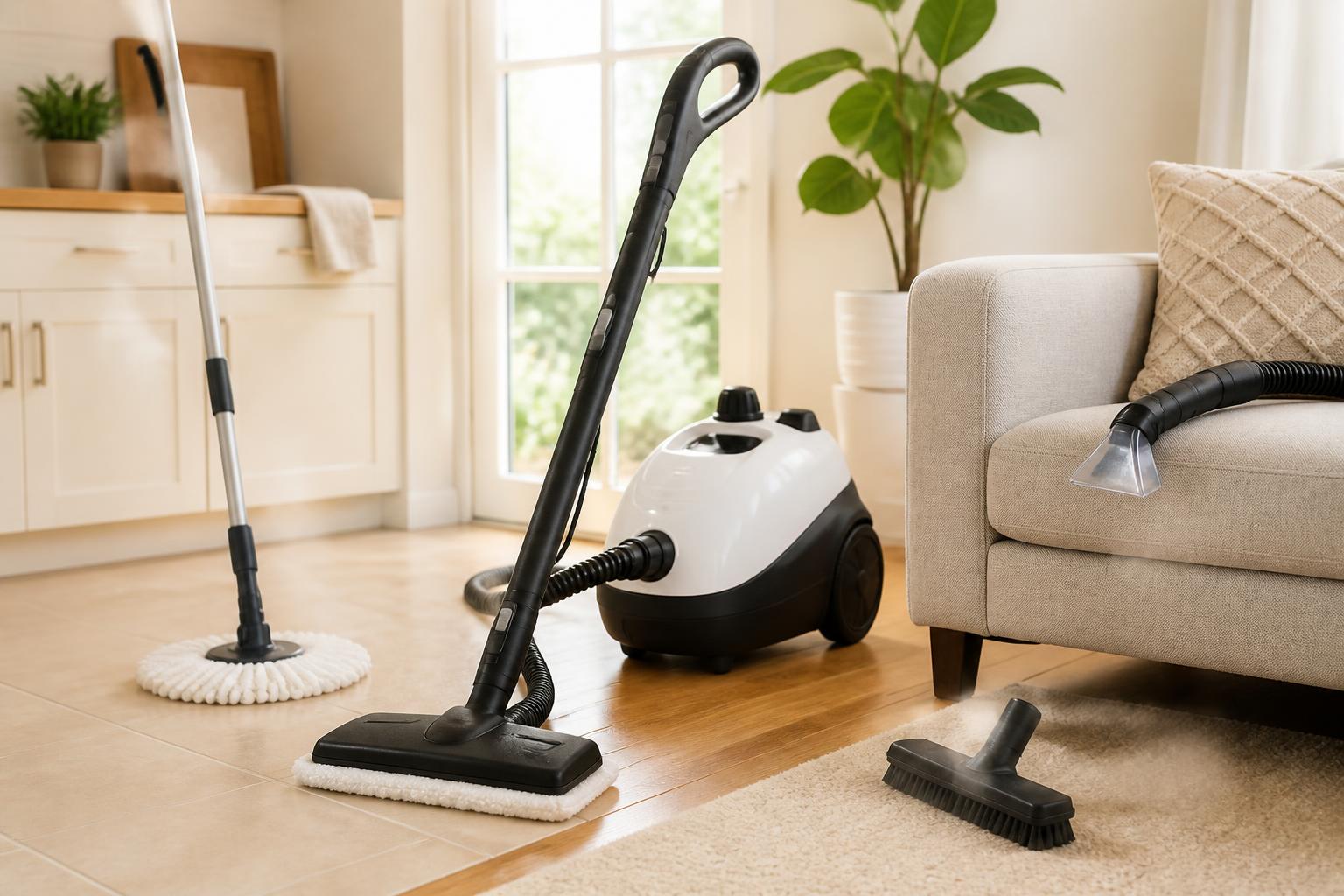
Why Pressure and Runtime Matter More Than Wattage
Steam cleaners are often marketed on heat-up time and accessory counts, but two specifications determine real-world performance: steam pressure and continuous runtime.
Pressure, measured in bars or PSI, dictates how forcefully steam is delivered. Higher pressure means the steam can dislodge ground-in grime rather than just moisten it. The McCulloch units in this comparison operate at 58 PSI (4 bar), which is notably higher than many consumer steam mops that hover around 30–40 PSI. For grout lines that have darkened over months of foot traffic, that extra force is the difference between scrubbing and simply wiping.
Runtime is equally practical. A 45-minute unit sounds adequate until you realize that a full ground-floor cleaning — kitchen tile, bathroom grout, and a couple of upholstered chairs — can easily run past that mark. You’ll either wait for the tank to cool and refill, or you’ll rush through the last rooms. The 64-ounce tank on the MC1385 stretches to roughly 120 minutes of steam, which covers a whole-house pass without interruption.
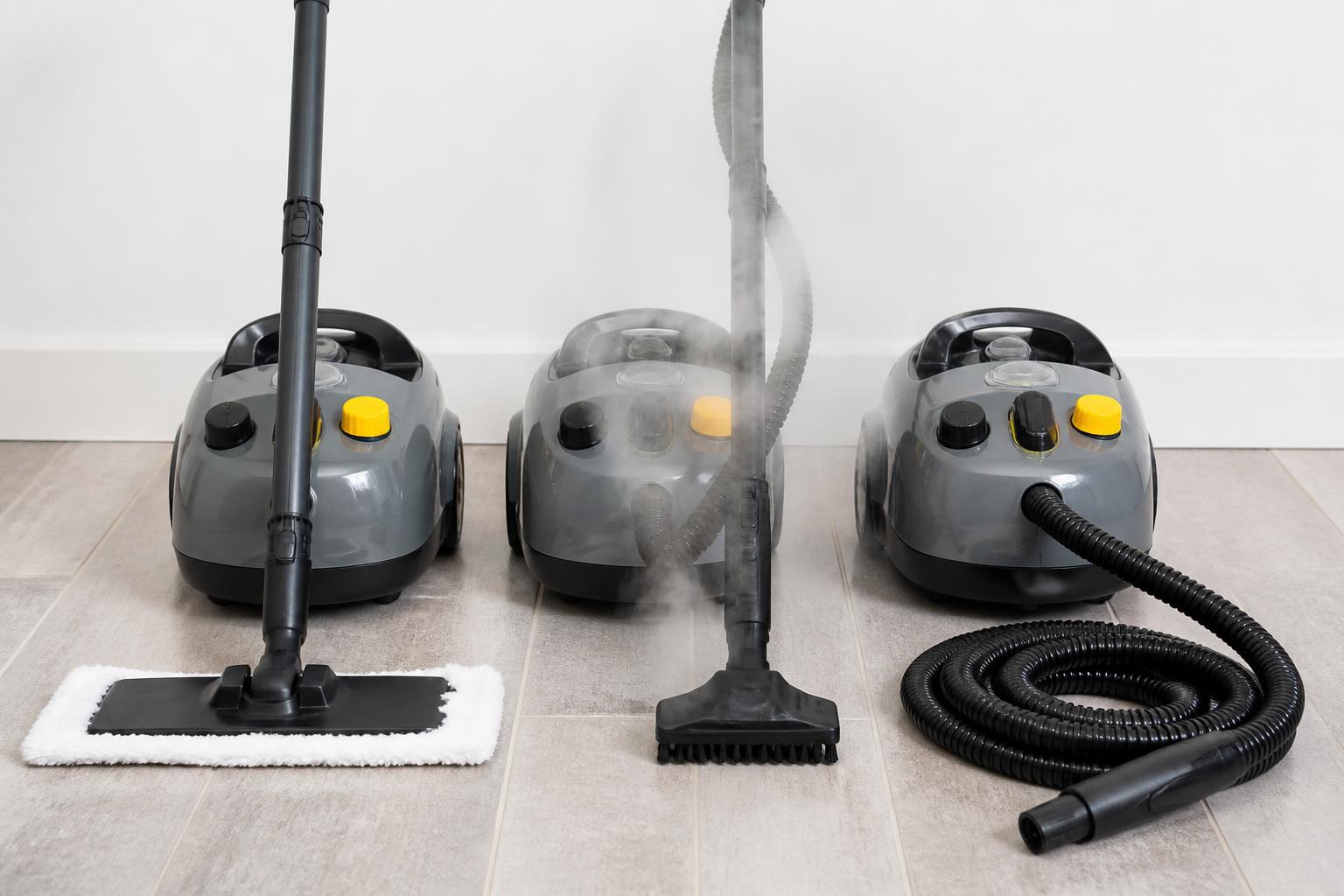
There’s also a maintenance angle worth considering: steam cleaners with smaller tanks require more frequent refills, and each refill means the unit must re-pressurize. That adds 8–12 minutes of downtime per refill depending on the model. Larger tanks don’t just extend runtime — they reduce the number of heat-up cycles, which extends the life of the heating element.
The Three McCulloch Canister Models: What Each One Actually Buys You
All three McCulloch canister steam cleaners share the same fundamental design: a rolling tank, a steam hose, and a collection of attachments. The differences come down to tank size, accessory count, and runtime. Here’s how they break down in practice.
McCulloch MC1385 — The Long-Runtime Workhorse
The MC1385 is the top-tier model in this lineup, and its defining feature is the 64-ounce tank that delivers up to 120 minutes of steam. That’s roughly double the runtime of the MC1275, which makes it the only one of the three that can handle a full-home cleaning session without a refill stop.
It ships with 23 accessories, including a floor mop, mop pads, nylon and brass brushes, an angled nozzle, a scraper, and a squeegee. The brass brush is worth calling out specifically: it’s the attachment you’ll reach for on baked-on kitchen grease or stubborn grout deposits, because brass is harder than nylon and won’t deform under pressure.
The 18-foot power cord and 7-foot hose give you solid reach, though you’ll still move the canister between rooms. At this price point, you’re paying for the extended runtime and the broader accessory set — if you regularly clean more than 1,000 square feet of hard flooring, the extra tank capacity justifies the cost.
McCulloch MC1375 — The Balanced Mid-Range Option
The MC1375 sits in the middle with a 48-ounce tank and 90 minutes of runtime. It includes 20 accessories, which covers the essentials: floor mop, mop pads, nylon brushes, brass brush, angled nozzle, scrub pad, scraper, and squeegee. You lose three accessories compared to the MC1385, but for most homes, the included set covers every standard task.
The 90-minute runtime is the practical sweet spot here. It handles a typical kitchen-and-bathroom cleaning session plus a car interior detail without requiring a refill. The 58 PSI pressure matches the MC1385, so cleaning performance is identical — you’re only giving up tank capacity and a few niche attachments.
If you’re trying to decide between the MC1375 and the MC1385, ask yourself how often you’ll clean in a single continuous session. For most households, 90 minutes is enough. The MC1385 makes sense if you have a larger home, multiple bathrooms, or you plan to use the steam cleaner for regular car detailing where you’ll be working continuously.
McCulloch MC1275 — The Entry Point with Real Limitations
The MC1275 is the budget option, and it’s important to understand what that price cut actually costs you. The 48-ounce tank provides up to 45 minutes of steam — the same tank size as the MC1375 but roughly half the runtime. That discrepancy comes down to steam output: the MC1275 runs at a lower continuous output rate, which means less steam per minute.
For small apartments or targeted jobs like grout lines in a single bathroom, 45 minutes is workable. But for whole-home cleaning, you’ll hit the refill point mid-task, and the 8-minute heat-up time means a noticeable pause in your workflow.
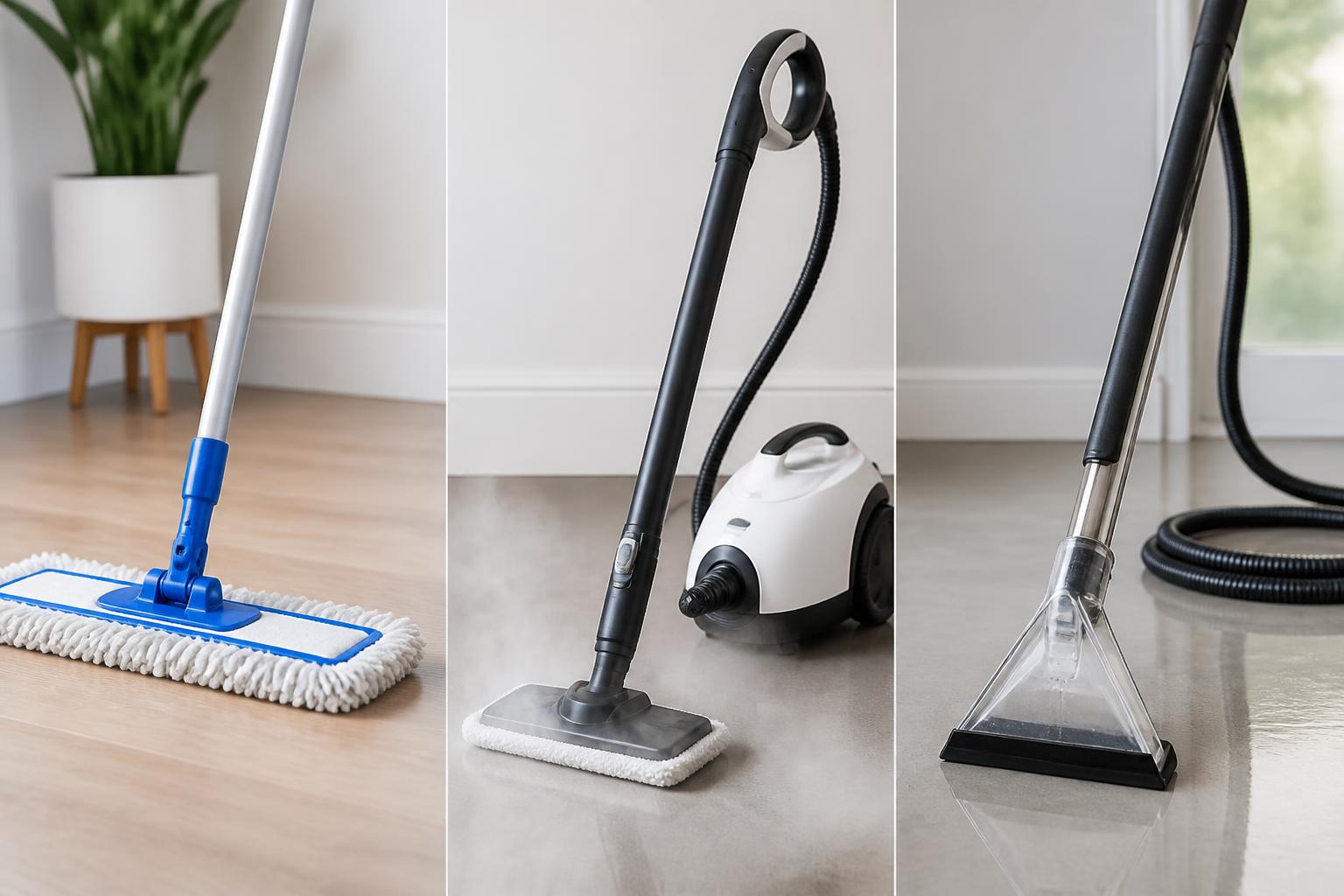
It includes 18 accessories, which drops the squeegee and a couple of brush options compared to the MC1375. The 15.7-foot cord and 9-foot hose are slightly shorter, though the hose length is actually a touch longer than the other two models.
The MC1275 is best understood as a starter unit. If you’re unsure whether a steam cleaner will earn its place in your cleaning routine, it’s the lowest-cost way to find out. But if you already know you’ll use it regularly, the MC1375’s additional runtime is worth the upgrade.
Side-by-Side Comparison
| Model | Runtime | Tank Size | Accessories | Pressure | Heat-Up Time | Best For |
|---|---|---|---|---|---|---|
| McCulloch MC1385 Canister Steam Cleaner | Up to 120 min | 64 oz | 23 | 58 PSI | Under 12 min | Whole-home cleaning, car detailing, large spaces |
| McCulloch MC1375 Canister Steam Cleaner | Up to 90 min | 48 oz | 20 | 58 PSI | Under 12 min | Typical homes, kitchen + bathroom sessions |
| McCulloch MC1275 Heavy-Duty Steam Cleaner | Up to 45 min | 48 oz | 18 | 58 PSI | Under 8 min | Small spaces, targeted grout and spot cleaning |
Top Pick: McCulloch MC1385 Canister Steam Cleaner, For Grout and Tile, 23 Accessories
The Failure Mode Nobody Mentions: Steam Quality Degradation
Here’s the issue that trips up most first-time steam cleaner buyers: the steam output isn’t constant across the entire tank cycle. As the water level drops, the heating element has less thermal mass to work with, and steam temperature can fluctuate. On cheaper units, this means the last 20% of the tank produces weaker steam that struggles to lift grime.
The McCulloch canisters mitigate this with their larger tanks and higher pressure. Because the tank holds more water, the temperature curve stays flatter throughout the cycle. You’re not just paying for more runtime — you’re paying for more consistent steam quality from the first minute to the last.
How to detect this early: Before you commit to a model, run a test on a grout line in an inconspicuous area. Time how long it takes for visible dirt to lift. Then refill the tank and run the same test when the tank is nearly empty. If the second pass takes noticeably longer, that’s a sign of steam degradation. The McCulloch units tend to hold their performance across the cycle, which is one reason they’re consistently recommended over cheaper alternatives.
There’s also a subtler limitation that applies to all three models: the steam lock trigger. While the continuous steam lock is convenient for long passes on floors, it can be a liability on upholstery. If you engage the lock and set the nozzle down for even a few seconds, steam continues to blast into the fabric, potentially leaving a wet spot that takes hours to dry. On the MC1275, the lockable trigger is the only way to sustain output without holding the handle, so you need to be more deliberate about disengaging it between passes. The MC1385 and MC1375 both allow on-demand variable control, which gives you finer modulation when switching between hard floors and fabric surfaces.
A Quick Fit Check Before You Buy
Run through these five checks to narrow down which model fits your situation:
1. Floor area test: Measure the total hard flooring you plan to clean. If it’s over 1,000 square feet, the MC1385’s 120-minute runtime is the safer choice.
2. Upholstery commitment: Do you plan to clean fabric furniture regularly? If yes, confirm the model includes a fabric/grout nozzle and brush attachments — all three McCulloch units do, but the MC1385’s larger accessory set gives you more options for tight crevices.
3. Refill tolerance: How annoyed will you be by an 8–12 minute heat-up pause mid-job? If that would derail your cleaning session, choose the longer-runtime model.
4. Car detailing plans: If you intend to use the steam cleaner on vehicle interiors, the MC1385’s 18-foot cord is a meaningful advantage for reaching around the car without moving the canister repeatedly.
5. Storage space: Canister models take up floor space. The MC1385 is the largest of the three, and you’ll also need room for the accessory bag. If storage is tight, the MC1375 is more compact.
How to Use a Canister Steam Cleaner Effectively
Once you’ve chosen a model, the technique matters as much as the machine. Here’s a sequence that works across floors, grout, and upholstery.
Preparation
Vacuum or sweep the surface first. Steam loosens dirt, but it doesn’t remove large debris — pushing a mop over crumbs just makes mud. For grout, apply steam for 5–10 seconds before scrubbing. The steam needs time to penetrate the porous surface and soften the bond between dirt and grout.
Early Checkpoint
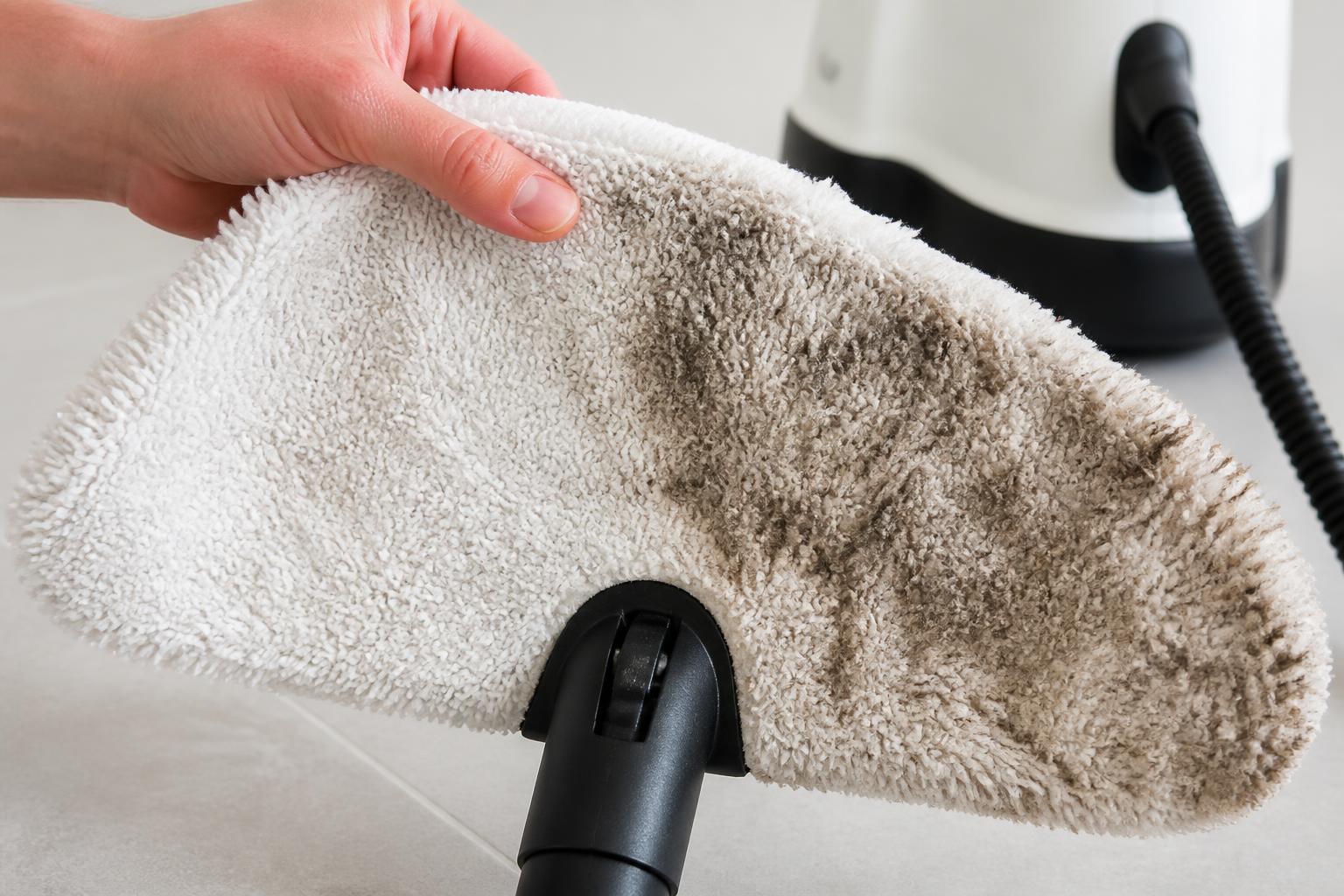
After 30 seconds of steaming, check the mop pad or brush head. If it’s picking up dark residue, the steam is working. If the pad stays clean, increase the contact time before scrubbing.
Working Sequence
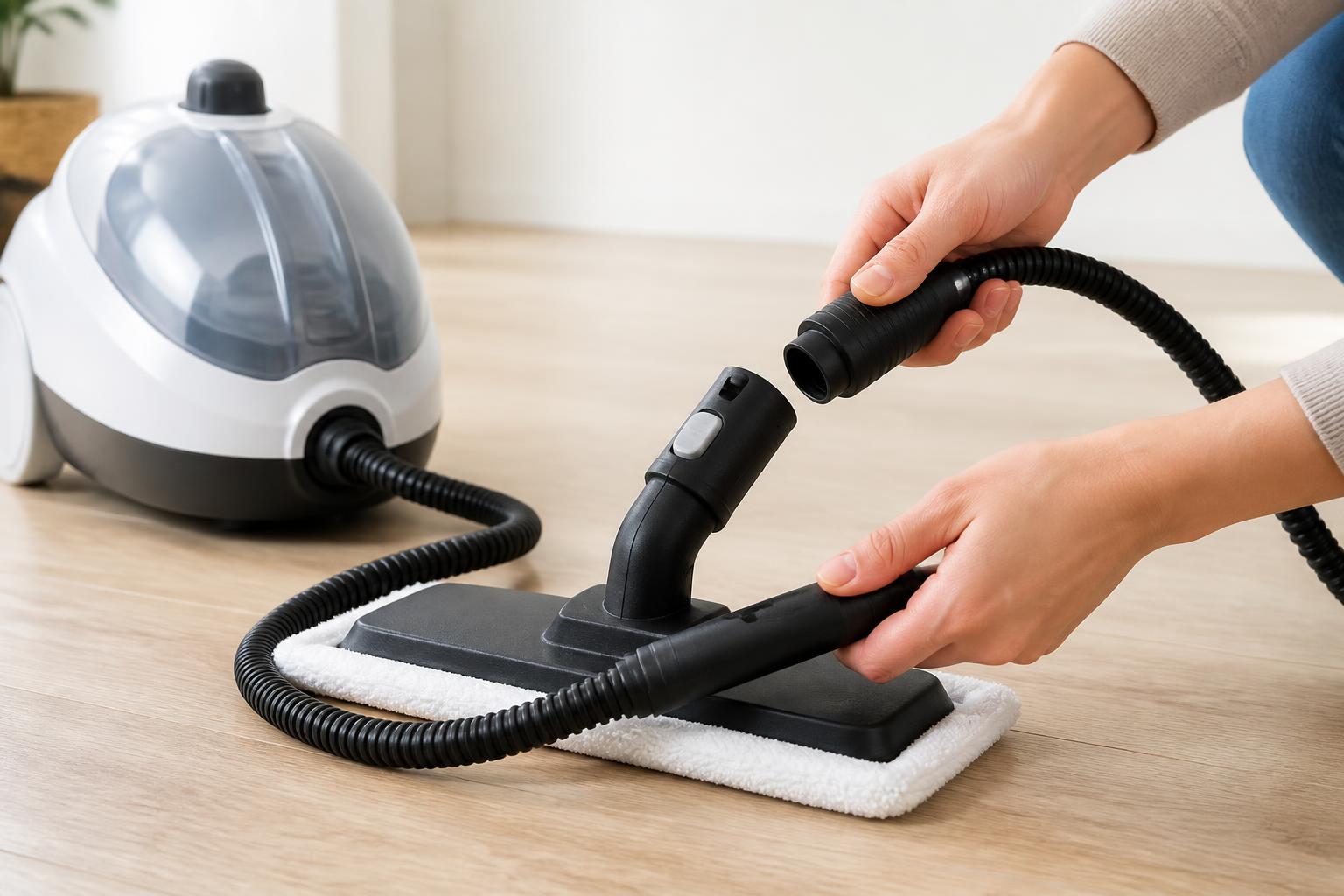
1. Attach the floor mop for large flat areas, moving in overlapping passes.
2. Switch to the angled nozzle and nylon brush for grout lines and edges.
3. For upholstery, use the brush attachment and keep the nozzle moving to avoid saturating the fabric. Steam should pass through quickly, not pool on the surface.
Verifying the Right Setting on Your Machine
Before you start on a new surface, do a 10-second test pass on an inconspicuous corner. For upholstery, point the nozzle at the underside of a cushion and check that the steam is exiting as a fine, dry mist rather than spitting water droplets. If you see moisture accumulating on the fabric surface, the steam is condensing too quickly — either the machine hasn’t fully heated, or you’re holding the nozzle too close. Back off to 2–3 inches and let the unit run for another minute to stabilize. On hard floors, the same test applies: the mop pad should feel warm and slightly damp, not soaked. If water pools on the tile surface, the unit needs more heat-up time.
Likely Causes of Poor Results
- Surface still dirty after steaming: You’re moving too fast. Slow down and let the steam dwell for a few more seconds.
- Fabric feels damp after upholstery cleaning: You’re holding the nozzle in one spot too long. The goal is a quick pass that lifts dirt without soaking the fibers.
- Streaking on floors: The mop pad is saturated. Swap to a dry pad or wring it out.
When to Stop
If you’ve steamed a grout line for 30 seconds with visible steam contact and the dirt isn’t lifting, that stain may be mineral buildup rather than surface soil. In that case, a dedicated grout brush or a best scrub brush tile grout approach is the better tool, and you should switch methods rather than continue steaming.
Success Check
After the surface dries, run a clean finger across the grout or fabric. If no residue transfers, the steam cleaning worked.
Steam Cleaning vs. Chemical Cleaners: Where Each Wins
Steam cleaners aren’t a universal replacement for chemical cleaners — they’re a complement. Steam excels at lifting grease, body oils, and embedded dirt without leaving chemical residue. That’s particularly valuable in homes with pets or small children, where you want to avoid lingering cleaning agents on floors and furniture.
But steam has limits. It won’t remove rust stains, hard water mineral deposits, or set-in protein stains (like blood) — those require chemical treatments. And on unsealed natural stone, steam can drive moisture into the stone and cause damage over time. If you’re working with unsealed travertine or marble, stick to a damp mop and a pH-neutral cleaner instead.
There’s also a practical mismatch buyers often miss: steam cleaners don’t replace a vacuum on upholstery. Loose pet hair and surface dust need to be removed first, or the steam will just mat them into the fabric. If you’re dealing with heavy pet hair, run a vacuum with a brush attachment before steaming. Our guide to the best vacuum pet hair options covers the tools that pair well with a steam cleaner for this exact scenario.
For routine maintenance, steam is the faster, more thorough option. For periodic deep cleaning of specific stains, a chemical approach is sometimes necessary. The practical strategy is to use steam for regular cleaning and reserve chemicals for the outliers. If you’re dealing with heavily soiled tile, you might also want to check our guide on how to clean tile floors grout for a more detailed walkthrough of the process.
Choosing Based on Your Home, Not the Hype
The decision framework is straightforward:
- Choose the MC1385 if you have a larger home, plan to use the steam cleaner for car detailing, or want the longest possible runtime between refills. The 120-minute capacity means you’ll rarely, if ever, hit a mid-job pause.
- Choose the MC1375 if you have a typical home (under 1,500 square feet) and want the best balance of runtime, accessories, and price. The 90-minute runtime covers most cleaning sessions without the premium cost of the MC1385.
- Choose the MC1275 if you’re testing whether a steam cleaner fits your routine, or if your cleaning needs are limited to small spaces and targeted jobs. Just be aware that the 45-minute runtime will feel limiting for larger tasks.
All three models share the same 58 PSI pressure and chemical-free cleaning approach, so the cleaning quality is consistent across the lineup. Your decision should hinge on runtime and accessory count, not cleaning capability.
If you’re also dealing with pet hair on upholstery before steaming, consider pairing your steam cleaner with a best vacuum pet hair recommendation to remove loose fur first — steam works far better on fabric that’s already been vacuumed. And for car interiors specifically, our best car upholstery cleaner guide covers complementary products if steam alone isn’t enough for stubborn automotive stains.
The McCulloch canister line represents the practical sweet spot for home steam cleaning: enough pressure to tackle grout, enough runtime to finish the job, and enough accessories to handle floors, upholstery, and everything in between. Choose based on your home’s size and your cleaning frequency, and you’ll have a tool that earns its storage space.

Sir Cleans a Lot is a professional home cleaning specialist with over 10 years of hands-on experience. He has helped thousands of homeowners tackle stubborn stains, eliminate mold, and keep their homes spotless using practical, science-backed methods. When he’s not testing the latest cleaning products or researching stain removal techniques, he’s sharing his expertise to make cleaning easier for everyone.