
Best Streak-Free Glass Cleaners and DIY Alternatives
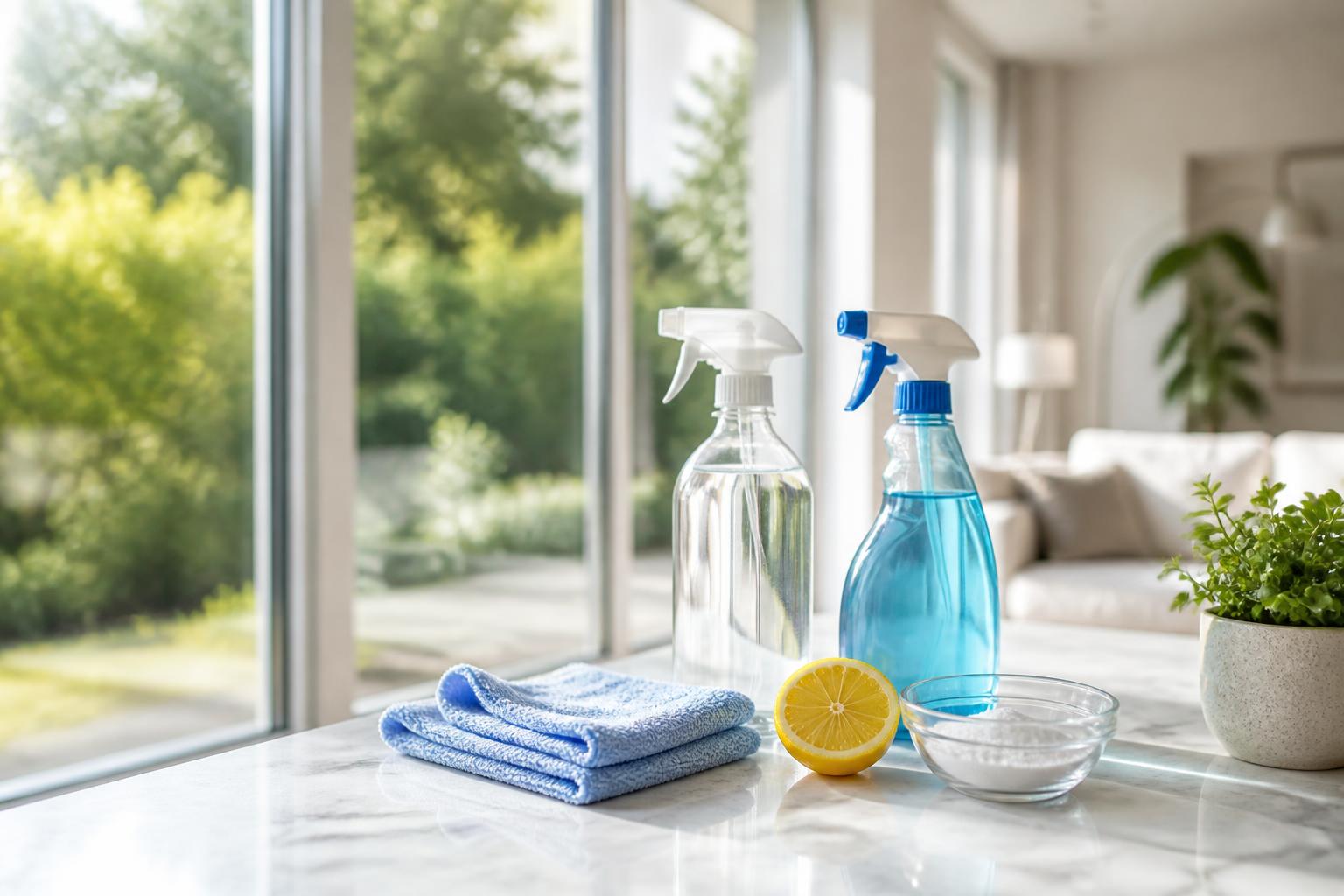
Getting streak-free glass comes down to three things: the right cleaner, the right cloth, and the right technique. The most reliable ready-to-use commercial option is Chemical Guys Total Interior Cleaner & Protectant — it dries clear on glass, won’t fog, and works on tinted windows. For a DIY alternative, mix 1 cup distilled water, 1 cup white vinegar, and 1 drop of blue dish soap in a spray bottle. Both deliver zero streaks when you apply sparingly to a microfiber cloth and buff immediately.
Boundary: These recommendations cover standard glass windows, mirrors, and automotive glass. They do not apply to coated shower doors, anti-reflective display glass, or glass cooktops — those surfaces need different cleaners to avoid damaging coatings.
Quick answer
The best commercial pick for streak-free results on both home and automotive glass is Chemical Guys Total Interior Cleaner & Protectant. It’s ammonia-free, safe on tinted windows, and leaves no residue when paired with a clean microfiber towel. If you prefer a DIY solution, the vinegar-water-soap mix above works equally well — provided you use distilled water and a dedicated glass towel.
What you need to decide: If you clean glass and other interior surfaces (dash, door panels) in the same session, the Chemical Guys multi-surface formula saves time. If you only clean mirrors and windows at home, a dedicated ammonia-free glass cleaner like Sprayway or Invisible Glass costs less per ounce. The DIY route makes sense if you have distilled water and white vinegar on hand, but you must commit to proper cloth care.
Comparison framework
Your choice between commercial and DIY depends on surface type, the number of surfaces you clean, and your willingness to manage cloth maintenance.
Commercial vs. DIY at a glance
| Product | Best For | Key Feature | Practical Trade-off |
|---|---|---|---|
| Chemical Guys Total Interior Cleaner & Protectant (16 oz 2‑pack) | Glass + interior surfaces (car and home) | One formula for glass, leather, vinyl, plastic – streak‑free on all | Multi‑surface feature is wasted if you only clean glass; higher cost per ounce than dedicated glass cleaners |
| Chemical Guys Total Interior Cleaner and Protectant (128 oz) | High‑volume use or shops | Bulk refill, same formula | Large bottle needs storage space; product can separate if stored in extreme temperatures |
| Chemical Guys Total Interior Cleaner and Protectant (16 oz + 3 towels) | First‑time buyers | Includes 3 microfiber towels | Towels work fine for general use, but waffle‑weave glass towels give better streak‑free results |
All three share the same cleaning chemistry. The 2‑pack or gallon gives the best value; the kit is handy if you don’t already own glass‑dedicated towels.
Top Pick: Chemical Guys Total Interior Cleaner & Protectant – Chemical Guys Interior Cleaner, Cleans & Protects Leather, Vinyl, Plastic, Rubber, Glass with a Streak-Free Finish — 16 Fl Oz (Pack of 2) – the 2‑pack lets you keep one bottle in the car and one at home for mirrors, and the formula dries clear on glass without haziness. If you only clean glass and nothing else, save money with a dedicated glass cleaner instead.
Best-fit picks by use case
Commercial product: when to use it
- Automotive glass + interior surfaces: Chemical Guys Total Interior is your best bet because it’s ammonia-free (safe for window tint) and leaves a subtle UV protectant on dashboards without fogging the windshield. Use this if you clean your car interior in one pass — dash, door panels, then windows.
- Home windows and mirrors only: Chemical Guys still performs, but a dedicated ammonia-free glass cleaner like Sprayway or Invisible Glass costs less per ounce if you’re only cleaning glass. No need to pay for multi‑surface features you won’t use.
DIY alternative: when you want a low‑cost option
Mix in a spray bottle:
- 1 cup distilled water
- 1 cup white vinegar
- 1 drop of blue dish soap
Why this works: Vinegar cuts grease and hard‑water deposits. The soap breaks surface tension so the mixture wets evenly. Distilled water prevents mineral streaks that tap water leaves.
How to verify the mix is working: After cleaning a 12‑inch square of glass, hold the glass at a 45‑degree angle under a light source. If you see fine hazy lines or rainbow patches, either the cloth is dirty, the soap ratio is too high (more than one drop), or the water isn’t distilled. If the glass looks uniformly clear with no distortion, the mix and method are correct.
Expert tip 1: Spray onto the cloth, not onto the glass. One spritz per 5‑inch square is enough. Oversaturating creates drips that dry into streaks. Common mistake: spraying the glass directly and using too much liquid — the excess runs down and leaves mineral lines when it dries.
Expert tip 2: Wipe in a zigzag pattern from top to bottom. Flip the cloth to a dry side after each pass. This prevents transferring residue back to the glass. Common mistake: wiping in circles, which redeposits dirt and creates visible swirl marks — especially noticeable on large windows in direct sunlight.
Expert tip 3: Never use paper towels. They lint and often contain binders that leave a dull film. Use a dedicated glass‑cleaning microfiber towel (180–240 GSM) — wash it without fabric softener. Common mistake: using the same cloth for glass and other surfaces — dust, grease, or wax residue from the cloth transfers to the glass and causes streaking every time.
5‑point fit check: Commercial vs. DIY
Use these pass/fail questions to choose the right approach before you start:
- Is the glass tinted, coated, or slightly etched? → If yes, choose commercial (ammonia‑free). If no, DIY is safe.
- Do you have distilled water on hand? → If yes, DIY can work. If not, buy distilled or go commercial — tap water guarantees streaks.
- Are you cleaning non‑glass surfaces in the same session? → If yes, commercial multi‑surface saves time. If no, DIY is fine.
- Can you wait 2 minutes for the cleaner to evaporate before buffing? → If yes, either works. If you need instant shine, commercial formulas flash dry faster.
- Are you willing to clean a microfiber towel after every use? → If yes, both methods work. If no, consider disposable streak‑free wipes (but expect higher long‑term cost and more waste).
Trade-offs to know
Commercial product residue: Even good formulas can leave a faint film if you spray too much or let it dry before wiping. The Chemical Guys formula is forgiving, but if you notice a slight haze on the glass 24 hours later, you’re using too much product per panel. Solution: cut the spray volume in half and buff immediately.
DIY vinegar smell: It dissipates quickly — about 30–60 seconds after wiping. If you’re sensitive to it, add 5 drops of lemon essential oil to the spray bottle. Do not increase the soap — more soap means more streaks. If the smell lingers longer than 2 minutes, you may have used too much soap, which leaves a film that traps the odor.
Cost per use: Commercial multi-surface cleaners generally cost more per use than dedicated glass cleaners, but the difference is small if you only clean glass occasionally. DIY vinegar mix costs less, but the real cost variable is the cloth — a good glass microfiber towel lasts about 50 washes if cared for properly. Replace it when it starts feeling rough or picks up lint.
Shelf life and storage: DIY mix degrades after 2–3 weeks (tap water bacteria develop if you didn’t use distilled). Make small batches. Commercial products last years if stored cool and out of direct sunlight. If you store either in a hot car or other extreme heat, the chemical balance of commercial cleaners can shift and cause streaking — always test a small area first if the bottle has been exposed to high temperatures.
What can go wrong with the DIY mix: If you use tap water, you’ll get hard-water streaks that look like a fine white powder when dry. If you use more than one drop of soap, you’ll get a soapy film that takes multiple wipes to remove. If the cloth is dirty or has fabric softener residue, you’ll get greasy haze regardless of how good the cleaner is. All three failures are fixable — but they waste time and materials.
Frequently asked questions
Can I use rubbing alcohol instead of vinegar?
Yes. Mix 2 parts distilled water to 1 part isopropyl alcohol (70% or higher). It evaporates faster and handles greasy fingerprints well. The alcohol smell is stronger than vinegar but dissipates in about 15 seconds. Test on a small area first if your glass has any coating — alcohol can damage some aftermarket automotive coatings.
What cloth works best for streak‑free glass?
Waffle‑weave microfiber cloth dedicated to glass (no fabric softener in the wash). Cotton flannel or newspaper can work, but microfiber gives the most consistent film‑free result. Avoid any cloth that sheds lint or has been previously used with wax, polish, or ammonia-based cleaners — residues transfer and cause streaks.
Why do I still get streaks with a commercial glass cleaner?
Three most common causes: (1) using a dirty cloth — one swipe with a towel that has dust or grease respreads it. (2) spraying too much — the cleaner should evaporate within 10–15 seconds; if it sits longer, it dries unevenly. (3) cleaning on a hot, sunny day — the liquid evaporates before you can wipe. Work in shade or early morning. If you’ve ruled out all three and still see streaks, the glass may have a wax or silicone coating from a previous product that needs a deeper clean with an alcohol-based glass stripper.
Explore This Topic
– Best Steam Cleaners for Floors, Grout, and Upholstery
– Best Vacuum Cleaners for Pet Hair: Tested on Carpet and Hardwood
– Best All-Purpose Cleaners: Natural vs Conventional Tested

Sir Cleans a Lot is a professional home cleaning specialist with over 10 years of hands-on experience. He has helped thousands of homeowners tackle stubborn stains, eliminate mold, and keep their homes spotless using practical, science-backed methods. When he’s not testing the latest cleaning products or researching stain removal techniques, he’s sharing his expertise to make cleaning easier for everyone.