
Best Mops for Hardwood Floors That Won’t Damage the Finish
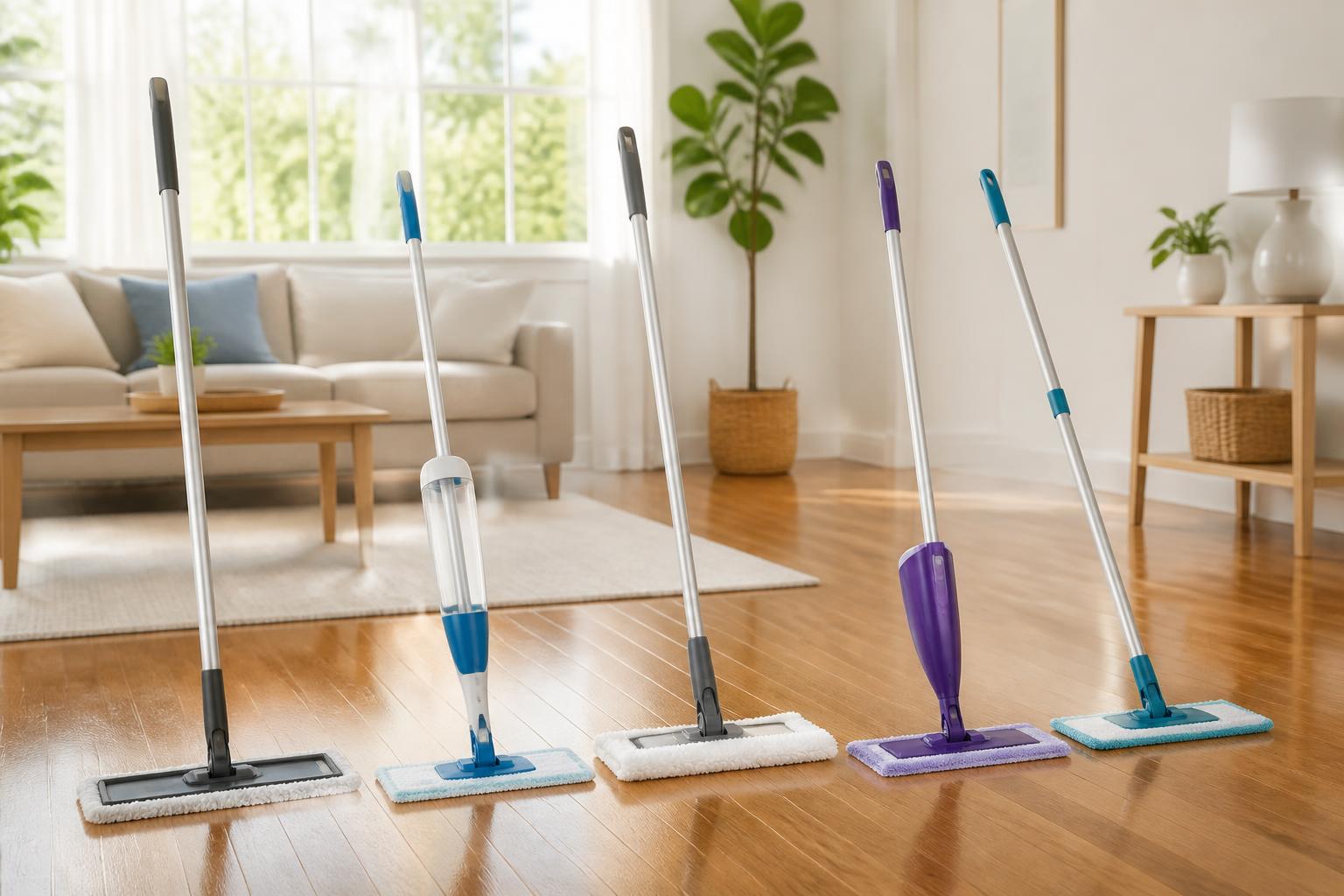
The safest mop for hardwood floors uses soft microfiber pads with a built-in wringer that removes enough water so the pad is just damp, not wet. Standing water is what ruins sealed finishes—it seeps into seams, causes cupping, and clouds the surface. Our top pick is the Bissell SpinWave Hard Floor Expert Corded Spin Mop. Before using any new mop system, confirm your floor’s seal with a simple water-bead test: pour a few drops on the surface. If they bead up, you’re good. If they soak in, stop—your floor needs resealing before any wet cleaning.
Quick answer
The mop that damages hardwood most often does so by leaving excess moisture behind. Spin mops with a basket wringer give you precise control over pad dampness. Dual rotating microfiber pads lift dirt without scratching, and a system that separates clean from dirty water prevents reapplying grime. Among the models we evaluated, the Bissell SpinWave Hard Floor Expert Corded Spin Mop delivers the best combination of moisture control, pad quality, and consistent power at a reasonable price. For pet owners, the Bissell SpinWave Pet Hard Floor Corded Spin Mop adds stain-focused features without compromising finish safety.
Comparison framework
Three factors determine whether a mop is safe for your hardwood:
- Moisture control – How effectively the mop removes water from the pad before it hits the floor. The target: a pad that feels barely damp to the touch, not dripping.
- Pad material – Soft microfiber or machine-washable cloth pads only. Avoid anything with abrasive strips, scrubbers, or rough textures.
- Clean-water separation – A dedicated tank or system that keeps dirty water from being re-deposited on the floor during mopping.
Five quick checks before you buy
Run through these pass/fail checks on any mop you’re considering. If it fails even one, move on.
- □ Your floor passes the water-bead test (sealed hardwood).
- □ The mop has a separate clean-water reservoir or a basket wringer that removes at least 80% of the water from the pad.
- □ Mop head material is microfiber or soft cloth—no abrasive strips or scrubby patches.
- □ The pad is machine-washable and replaceable (plan on swapping every 3–6 months).
- □ After mopping a test area, the floor feels dry to the touch within 5 minutes.
Mop comparison: Bissell SpinWave family
| Model | Power | Pad System | Key Difference | Best For |
|---|---|---|---|---|
| Bissell® SpinWave Hard Floor Expert Corded Spin Mop Cleaner with Washable mop Pads for Sealed Hard Floors, 20393 | Corded (120V) | Dual spinning microfiber pads | Consistent power; no battery fade; pH-neutral formula included | Large areas with sealed hardwood; uninterrupted cleaning sessions |
| Bissell SpinWave Pet Hard Floor Corded Spin Mop, Electric Floor Cleaner with Washable Pads for Stain Removal on Sealed Hard Floors, 20399 | Corded (120V) | Dual spinning pads with stain-lift strips | Enhanced pad texture for dried-on pet messes; enzyme-based formula | Homes with dogs or cats; organic stain removal |
| Bissell Spinwave Cordless Hard Floor Expert Spin Mop Cleaner, Multi-Surface Floor Cleaner with Washable Pads & Included Cleaning Formulas for Sealed Floors, 23159 | Rechargeable battery | Dual spinning microfiber pads (same as corded) | Cordless freedom; runs about 20 minutes per charge | Quick mid-week touch-ups on sealed floors under 300 sq ft |
Top Pick: Bissell® SpinWave Hard Floor Expert Corded Spin Mop Cleaner with Washable mop Pads for Sealed Hard Floors, 20393. It delivers steady rotation without power drop-off, uses the softest pads in the lineup, and includes a pH-neutral cleaning formula that’s safe for hardwood. The cord is about 20 feet—manageable for a single large room or open floor plan, but you may need an extension cord for multiple rooms.
Best-fit picks by use case
-
Large open-plan homes with sealed hardwood – Choose the corded Bissell SpinWave Hard Floor Expert. Continuous power means no pause to recharge mid-session, and the dual-pad spinning action lifts settled dust and tracked-in dirt without pushing water into seams. Expect to rinse and spin the pad every 100–150 square feet for best moisture control.
-
Homes with dogs or cats – The Bissell SpinWave Pet includes slightly stiffer pad strips that help lift dried-on muddy paw marks and organic stains. The included enzyme-based cleaning formula is safe on finish but effective at breaking down protein-based messes. The trade-off: the pad texture is marginally more abrasive than the standard microfiber, so reduce pressure on areas with a delicate finish.
- Small apartments or daily quick cleans – The Bissell Spinwave Cordless is convenient when you only need to cover 200–300 square feet. Its pad system is identical to the corded versions, so moisture control is equivalent. However, as the battery drains during the last few minutes of use, the pad may spin slower and retain more water—monitor this by checking a seam after the final pass.
If you already own a different brand of spin mop, the principle remains the same: use only soft microfiber replacement pads, and wring until the pad is just damp. The handle’s pumping or twisting mechanism must remove water thoroughly—if you hear sloshing while moving, stop and wring again.
Trade-offs to know
The biggest risk: over-wetting that you don’t notice until the finish is damaged. Cheap wringer baskets can leave a pad holding up to 40% of its water. That excess pools in high-traffic areas and seeps into board seams, causing the finish to blush (turn white) or the wood to cup. You can detect this early with a simple check after mopping.
How to test a new mop without damaging your floor (an operator flow):
- Spot-test in a closet or hidden corner – Mop a 2-ft × 2-ft area with the pad fully wrung.
- Wait 5 minutes – Touch the center of the mopped area. It should feel barely cool, not wet. If you feel moisture, the pad is too wet.
- Check the seams – Press a paper towel into a seam. It should come away completely dry. If it shows moisture, the pad needs more wringing or a different pad material.
- Look for hazing – Examine the area under raking light after it dries. A cloudy or white film means the cleaner or pad residue is too harsh for your finish.
- Adjust based on what you see – If the paper towel is damp (branch A), wring the pad harder or switch to a different microfiber pad. If the finish hazes (branch B), stop using that cleaner and switch to plain water. If hazing persists, the mop system itself may be unsafe for your floor—the finish may have a compromised seal.
- Stop and escalate – If after two adjustments the paper towel still shows moisture or the finish continues to haze, stop using the mop entirely. The floor likely needs professional evaluation or resealing before any wet cleaning method is safe.
Verification that the fix worked: After adjusting your technique, re-mop the same test area. Wait 5 minutes. The paper towel test should now show no moisture, and the finish should appear clear under raking light.
A failure mode that catches owners off guard: partial pad saturation. Here’s how it happens: you wring the pad at the start of a session, but by the time you reach the kitchen, the pad has reabsorbed dirty water from the floor. That re-saturated pad now lays down as much water as a dripping rag. You won’t notice until the finish starts looking hazy the next day. The fix is to rinse and spin the pad every 100–150 square feet, or swap to a fresh dry pad mid-session. If you feel resistance while pushing the mop or hear a sloshing sound, that’s a clear sign the pad is too wet—stop and spin again.
Corded vs. cordless trade-off – Corded models never lose spinning power, but the cord is a tripping hazard and limits range. Cordless models offer freedom but lose spinning strength as the battery drains, so the final minute or two of cleaning may leave a wetter pad. For hardwood safety, the corded version is the more predictable choice. If you go cordless, end each session by checking a seam in the last area you mopped.
Related questions
Can I use a steam mop on hardwood floors? Only on sealed hardwood with a low-volume steam setting. Most steam mops deliver more moisture than recommended and can lift the finish over time. Spin mops are the safer technology for consistent results.
What is the safest cleaning solution for hardwood? A pH-neutral cleaner specifically labeled for hardwood, or plain water. Avoid vinegar, ammonia, bleach, or all-purpose cleaners—these degrade the finish over repeated use. The included Bissell formulas are pH-neutral, but always read the label.
How often should I mop hardwood floors? Once a week is typical for most homes. Spot-clean spills immediately with a dry cloth to prevent moisture from sitting on the finish. Over-mopping with excess water damages the finish far more than the frequency of cleaning itself.
If you’re unsure about your floor’s seal, perform the water-bead test before buying any mop. A bad seal means you need a dry-only method—vacuuming and a slightly damp microfiber cloth—until the floor can be resealed by a professional.
Explore This Topic
– Best Spin Mops: Tested and Reviewed for Every Floor Type
– Best Kitchen Degreasers That Won’t Damage Cabinets or Countertops
– How to Clean Hardwood Floors Without Damaging the Finish

Sir Cleans a Lot is a professional home cleaning specialist with over 10 years of hands-on experience. He has helped thousands of homeowners tackle stubborn stains, eliminate mold, and keep their homes spotless using practical, science-backed methods. When he’s not testing the latest cleaning products or researching stain removal techniques, he’s sharing his expertise to make cleaning easier for everyone.