
How to Remove Pet Hair from Furniture, Clothes, and Carpets
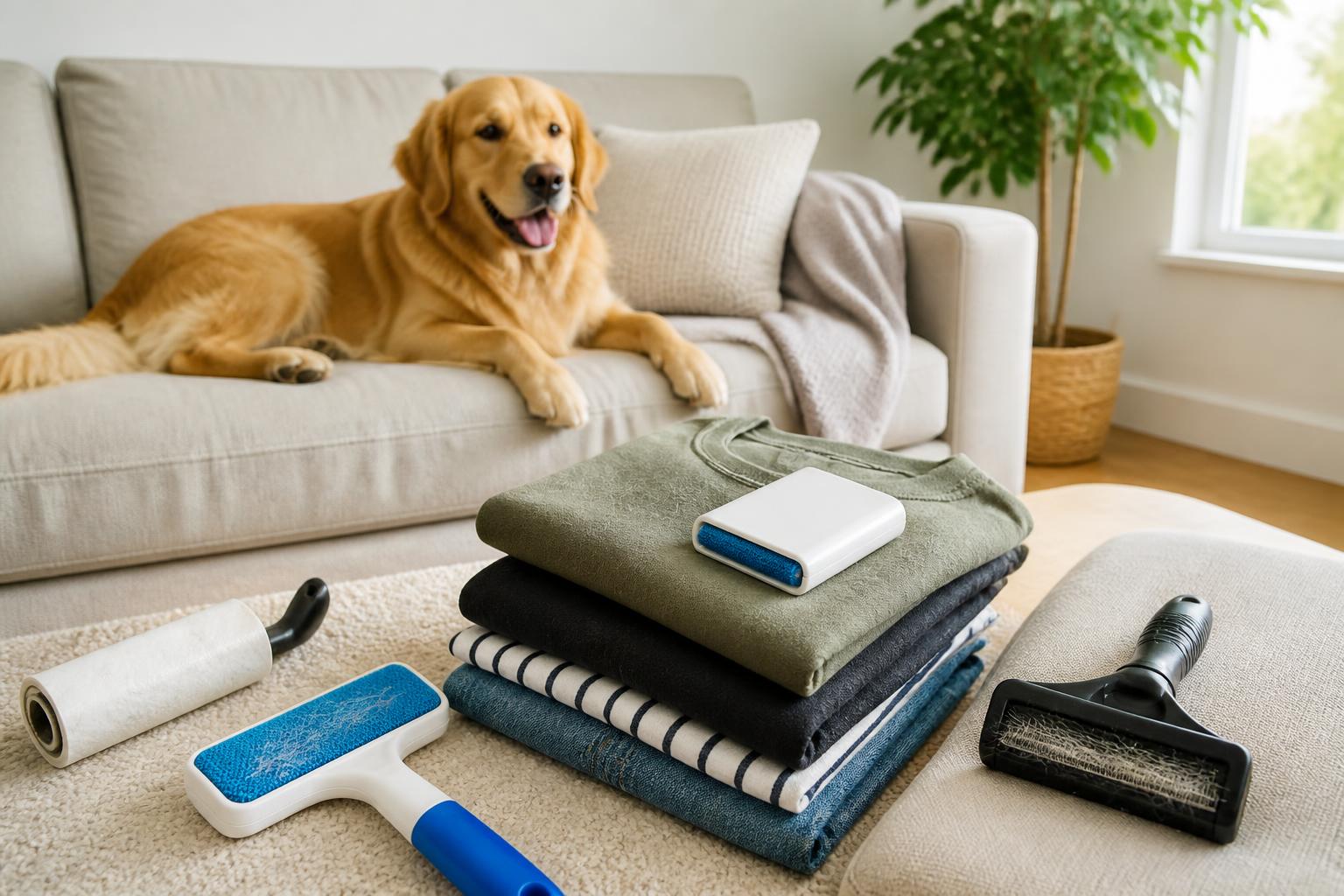
You do not need a dozen specialty tools. The fastest route to a hair-free couch, sweater, or carpet is: vacuum first with a rubber brush attachment, then match your follow-up tool to the fabric type. A lint roller handles smooth surfaces. A rubber glove grabs upholstery hair in clumps. A fabric shaver cuts deeply embedded hair from knits and carpets. A carpet rake pulls hair from deep in the pile before you vacuum. Here is the exact sequence for each surface, plus when to stop DIY and call for backup.
Pick the Right Tool for Each Fabric Type
Every fabric traps hair differently. Using the wrong tool wastes time, spreads hair deeper, or damages the material. Use this table to pick the correct first tool for your surface.
| Fabric Type | Best First Tool | How It Works | When to Switch Tools |
|---|---|---|---|
| Smooth fabrics (denim, cotton, polyester clothes, car seats) | Lint roller or rubber glove | Adhesive sheets grab surface hair; rubber creates static that pulls hair into clumps | Replace sticky sheets when they stop picking up after 10–15 passes; dampen a rubber glove slightly if synthetic fabric reattaches hair |
| Medium-to-heavy upholstery (couch cushions, microfiber, wool, fleece) | Fabric shaver or carpet rake | Rotary blade cuts embedded hair and pills; rake bristles pull hair from deep in the weave | Skip shaver on silk or thin knits; always test on an inconspicuous spot first. |
Use a rake before vacuuming on high-pile items |
| Wall-to-wall carpet, rugs, floor mats | Carpet rake or window squeegee | Rubber bristles or a rubber edge drags hair to the surface without kicking dust into the air | Follow with a vacuum. Low-pile carpet may only need the vacuum; high-pile carpet needs the rake first |
| Pet beds, cat trees, thick rugs | Copper-head fabric remover (e.g., SOCCSO copper-head tool) | Copper bristles reach deeper into thick pile where plastic combs slip | Use before vacuuming. The copper head grabs embedded hair that standard tools miss |
For heavy jobs on carpet or rugs, a carpet rake with a rounded metal head gathers hair without scattering dust. Copper-head versions like the SOCCSO models dig into thick rugs, cat trees, and winter coats where plastic teeth slide off.
Clean the Room in the Right Order
The sequence matters more than the tool you pick. Cleaning in the wrong order spreads hair deeper and doubles your work.
Step 1: Vacuum with a rubber brush attachment
Start with the upholstery tool that has rubber or silicone bristles. Hit every cloth surface: couches, chairs, drapes, carpet edges, and pet beds. Rubber bristles create static that lifts hair better than standard bristles. If your vacuum lacks a rubber brush attachment, move to Step 2 first and come back to vacuum.
Checkpoint after Step 1: Run your hand over the fabric. If you still see hair or feel embedded clumps, move to Step 2. If the surface feels clean, you are done for that item. Move to the next surface.
Step 2: Wipe upholstery with a rubber glove
Put on a clean rubber dish glove and wipe the fabric in one direction. Hair will ball up into clumps. Collect the clumps with your other hand and toss them.
Likely cause of failure: Static cling on synthetic fabrics. If hair sticks back immediately after wiping, spray the glove with a light mist of water and try again. The moisture breaks the static charge. Do not soak the glove—one or two spritzes is enough.
Friction point: On large couches or sectionals, work one cushion at a time. Wipe the entire cushion in one direction, then gather the hair before moving to the next cushion. If you wipe in circles, you embed hair deeper into the fabric.
Step 3: Drag a squeegee or carpet rake over carpet
For wall-to-wall carpet or large area rugs, a window squeegee or dedicated carpet rake works faster than a vacuum on deeply embedded hair. Pull the tool across the carpet in one direction. Hair collects at the edge of each pass. Pick up the clumps with a dustpan.
Which tool to pick based on carpet type:
- Low-pile carpet (berber, commercial loop): A window squeegee with a rubber edge works well. Drag it in straight rows. Vacuum afterward to catch loosened hair.
- High-pile carpet (shag, frieze, plush): A carpet rake with long rubber bristles or a copper head (like the SOCCSO 60-inch model) reaches the base of the fibers where hair mats. Pull the rake in one direction only. Back-and-forth motion tangles hair deeper.
Success check: After raking, run the vacuum over the carpet. If the vacuum picks up visible hair clumps, the rake did its job. If the carpet still shows hair, rake again in the opposite direction and vacuum once more.
Step 4: Roll clothes and delicate items with a lint roller
For clothing, blankets, and throw pillows that cannot handle a shaver, roll the lint roller firmly over the surface. Replace the sheet as soon as it stops picking up hair after 10–15 passes. A single sheet can often clean one side of a t-shirt or a small throw pillow.
When the roller fails: If the lint roller leaves hair behind, the fabric is too textured or the hair is embedded. Switch to a fabric shaver or rubber glove depending on the fabric weight.
Step 5: Use a fabric shaver for stubborn embedded hair
If you still see hair after steps 1–3, it is likely matted into the fabric from static or friction. A fabric shaver uses a rotary blade to cut and lift embedded hair. Use it only on medium-to-heavy fabrics: carpet, sofa cushions, pet beds, winter coats, denim, fleece, and wool blankets.
How to use a fabric shaver correctly:
- Move the shaver in slow, overlapping passes. Fast passes miss hair.
- Empty the lint cup every 30–60 seconds. A full cup reduces suction and misses hair.
- Apply light pressure. Pressing too hard frays the fabric or cuts into the weave.
- Test on an inconspicuous spot first—under a cushion or inside a seam. If the test spot shows fraying or pilling holes, do not use the shaver on that item.
Safety checkpoint: Stop immediately if you see pulled threads, fraying, or holes. The fabric is too delicate for the shaver. Take the item to a dry cleaner or upholstery specialist.
Final success check after all steps: The surface should be smooth and hair-free. Run your vacuum over it one last time to pick up loose clippings from the shaver or rake.
Quick Decision Guide: Which Tool to Use First
Run through these five checks before you start. Each pass/fail decision saves you wasted effort.
- Is the fabric smooth (denim, cotton, polyester)? → Start with a lint roller or rubber glove. Skip the fabric shaver.
- Is the fabric textured, wool, or fleece? → Skip the roller. Use a fabric shaver or carpet rake first.
- Is the surface a carpet or rug? → Use a carpet rake or squeegee before vacuuming. Do not vacuum first on high-pile carpet.
- Is the item small (pillow, shirt) or large (couch, carpet)? → Small items: lint roller or fabric shaver. Large items: vacuum plus rubber glove or rake.
- Has the hair been embedded for more than two days? → Start with a fabric shaver or carpet rake. Skip the lint roller—it will not reach embedded hair.
If you answer “yes” to question 5, the hair has likely matted into the fabric from static and pressure. A lint roller or vacuum alone will not remove it. You need a shaver or rake.
When DIY Stops and You Need a Professional
Know when to stop scrubbing and call for backup or replace the item.
- Fabric damage: If you see fraying, pilling holes, or pulled threads after using a shaver or rake, stop immediately. The fabric is too delicate for aggressive tools. Take the item to a dry cleaner or upholstery specialist. Do not try to repair frayed fabric with glue or tape—it worsens the damage.
- Persistent smell: If pet odor remains after the hair is gone, the fabric has absorbed oils or urine. DIY shampooing with a home spray or handheld cleaner may not fix it. A professional steam cleaning or enzyme treatment is needed to break down the organic residue.
- Allergic reaction: If you or a family member experiences sneezing, itchy eyes, or skin rash during cleaning, stop. Wear gloves and a mask. Better yet, hire a service with HEPA-filtered equipment that captures dander instead of redistributing it.
- Warranty risk: Check the care tag on furniture or electronics (like TV screens, speaker grilles, or gaming chairs) before using a shaver or damp glove. Using the wrong tool can void the warranty. If the tag says “Do not wet clean” or “Professional clean only,” stop and call a pro.
Frequently Asked Questions
Can I use a regular vacuum cleaner to remove pet hair?
Yes, but only if it has a rubber brush attachment. Standard bristle brushes push hair deeper into carpet fibers instead of lifting it. If your vacuum lacks a rubber tool, use a squeegee or carpet rake first to loosen the hair, then vacuum with the bare floor or upholstery setting.
Will a fabric shaver damage my clothes?
It can damage delicate fabrics like silk, thin knits, or items with loose weaves. Use it only on medium-to-heavy fabrics: cotton, wool, fleece, denim, and carpet. Always test on an inconspicuous spot first—check under a collar, inside a seam, or under a cushion. If the test spot shows fraying, do not use the shaver on that item.
How do I remove pet hair from car upholstery?
Follow the same sequence: vacuum with the rubber brush attachment first, then use a rubber glove or damp microfiber cloth to gather leftover hair. A carpet rake works well on floor mats. Avoid fabric shavers on car seats unless the owner’s manual specifies a compatible fabric. Most car upholstery is synthetic and can melt or fray under a rotary blade.
Explore This Topic
– How to Repair Pet Scratches on Wood Furniture, Doors, and Trim
– How to Remove Coffee and Tea Stains from Mugs, Clothes, and Carpets
– How to Remove Slime, Playdough, and Silly Putty from Clothes and Carpets

Sir Cleans a Lot is a professional home cleaning specialist with over 10 years of hands-on experience. He has helped thousands of homeowners tackle stubborn stains, eliminate mold, and keep their homes spotless using practical, science-backed methods. When he’s not testing the latest cleaning products or researching stain removal techniques, he’s sharing his expertise to make cleaning easier for everyone.