
Mold-Resistant Paint, Primer, and Sealants: Do They Really Work?
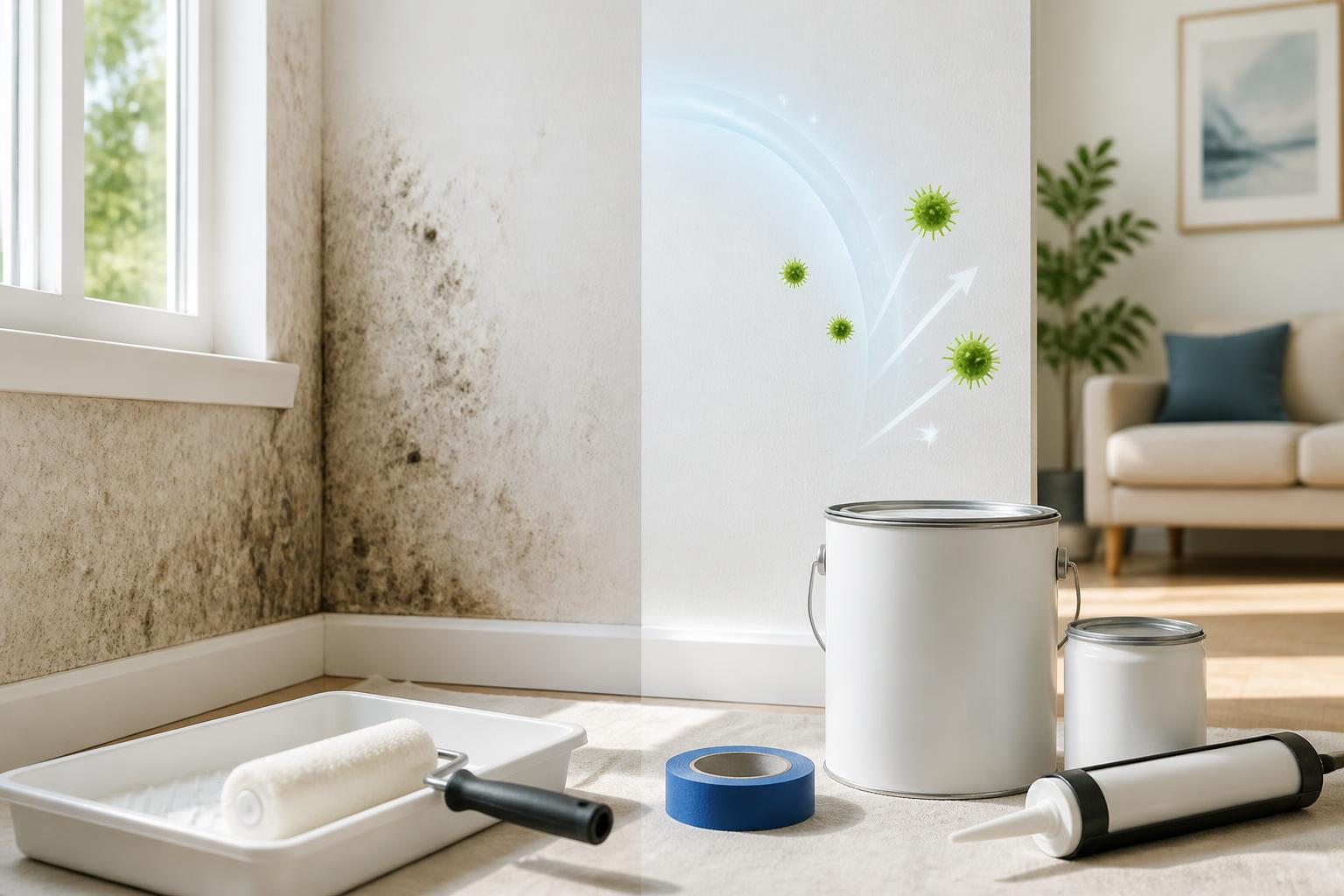
Yes, mold-resistant products can help prevent mold growth on painted surfaces when applied correctly and paired with realistic expectations. These coatings work through antimicrobial additives or moisture-barrier films that make it harder for mold to establish itself. But they will not kill existing mold, seal over a contaminated surface, or fix the underlying moisture problem that attracted mold in the first place. Apply them over active mold or skip proper surface prep, and you are simply wasting money—and potentially trapping moisture behind the coating where it can cause worse damage.
How These Coatings Block Mold Growth
Mold-resistant paints, primers, and sealants rely on two distinct mechanisms, often used together depending on the product formulation.
Antimicrobial additives – Compounds such as zinc pyrithione, silver ions, or copper-based agents are mixed directly into the paint. When mold spores land on the dried film, these additives interfere with the spores’ ability to germinate and grow. This is the same technology used in hospital-grade paints and food-processing facility coatings, and it is the primary reason these products work better than standard paint in damp environments.
Moisture-barrier films – Waterproofing paints and high-build primers create a dense, low-porosity layer that drastically reduces the amount of moisture that reaches the wall or substrate below. Mold needs consistent moisture to feed, so cutting off that supply starves it of a key growth requirement. Products like Zinsser WaterTite LX are designed for this purpose, forming a thick coating that resists hydrostatic pressure in basement applications.
Neither mechanism can overcome a wall that already has mold feeding on organic material behind the surface. If your drywall paper is saturated or the studs remain wet from a persistent leak, that paint layer is merely a bandage hiding a structural problem that will only get worse.
When They Deliver – and When They Fall Short
Real-world effectiveness depends on three factors: surface preparation, application thickness, and the moisture source. One decision criterion that changes the recommendation significantly is substrate porosity. On non-porous surfaces like tile, glass, glossy metal, or sealed plastic, mold-resistant paint alone often fails because the coating cannot bond properly, and the antimicrobial agents cannot penetrate enough to create an effective barrier. You must use a dedicated bonding primer first, or choose a product specifically labeled for non-porous applications, such as a ceramic refinishing kit.
A quick comparison clarifies the boundaries:
| Works well | Doesn’t work |
|---|---|
| On clean, dry, porous surfaces (new drywall, bare wood) applied as at least two coats | Over active mold colonies – mold will push through the coating or grow undetected behind it |
| In rooms with occasional humidity spikes, such as bathrooms where a fan runs for 30 minutes after showers | In spaces with continuous leaks, flooding, or condensation that keeps walls wet 24/7 |
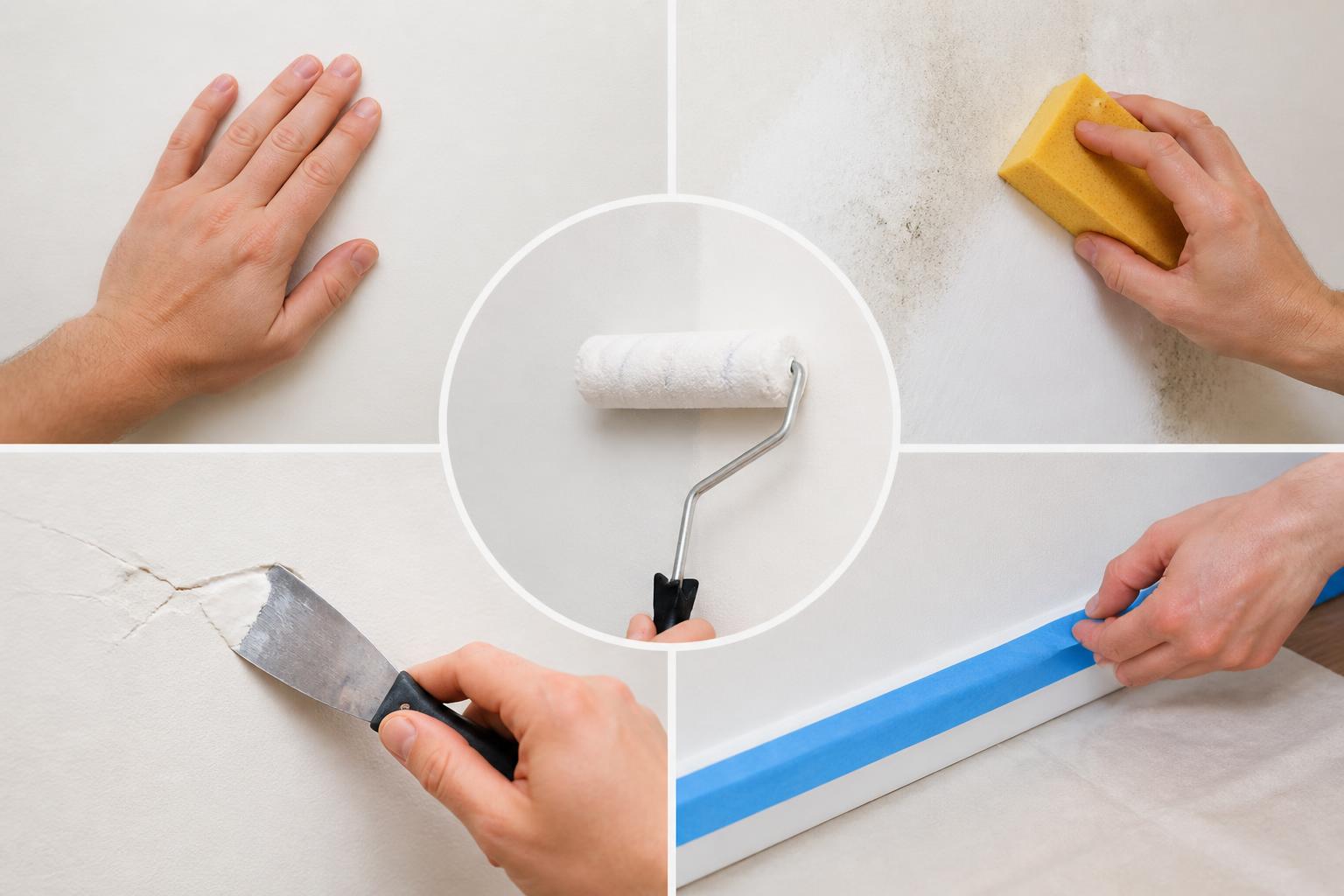
| After scrubbing visible mold with a fungicidal cleaner and allowing the surface to dry completely | Over surfaces with organic residue (dust, soap scum, dirt) – that residue becomes food for new mold |
| On properly primed non-porous surfaces using a bonding primer | On unprimed glossy tile or glass – the coating will peel and fail within months |
Common mistake: Many people scrub visible mold with bleach, let it dry, then paint. Bleach only whitens the surface; it does not penetrate porous materials to kill mold roots. For porous surfaces like drywall or wood, you need a proper fungicidal cleaner or a diluted hydrogen peroxide solution, followed by thorough drying for at least 48 hours.
Five Checks Before You Paint
Run through these criteria before spending money on specialty coatings. If you answer “no” to any point, address the root cause first.
- Have you identified and fixed the moisture source? Leaks, poor ventilation, condensation, or rising damp will cause any coating to fail eventually. If you paint without stopping the water source, you are delaying a bigger problem.
- Is the surface clean, dry, and free of all visible mold? Scrub with a mold-killing cleaner, let it dry 48 hours, and test with a moisture meter. Readings below 15 percent are acceptable for painting.
- Is the substrate porous enough to accept a coating? Sealed or glossy surfaces need sanding, etching, or a bonding primer. Non-porous materials require specific preparation steps that most standard paints cannot handle.
- Can you apply at least two coats at the recommended dry-film thickness? One thin coat will not create an effective barrier. Most manufacturers specify a minimum of 4 to 6 mils, roughly the thickness of a credit card.
- Will the area stay dry most of the time? If the wall gets wet daily—such as a shower enclosure without a fan or a window that collects condensation—even mold-resistant paint will eventually fail.
If you passed all five checks, you can proceed with confidence. If not, your money is better spent on a dehumidifier, exhaust fan, or leak repair before you touch a paintbrush.
Three Products for Three Different Scenarios
| Product | Price | Brand | Rating | Feature 1 | Feature 2 | Feature 3 | Best For | Score |
|---|---|---|---|---|---|---|---|---|
| Paint-Guard Mold and Mildew Defense Paint Additive (5 Gallon Treatment) | BTG PRODUCTS | |||||||
| Zinsser 270268 WaterTite LX Ultra Mold & Mildew-Proof Waterproofing Paint, 3 Gallon, White | Zinsser | |||||||
| White Ceramic Tub and Tile Refinishing Kit – Bathtub, Bathroom Wall, Countertop, Sink Paint – Easy to Use, Waterproof, Low Odor, No Toxic (White 16.0 FL Oz, 25-30 sq.ft) | STF ShangTianFeng |
Top Pick: Paint-Guard Mold and Mildew Defense Paint Additive (5 Gallon Treatment) is the most flexible option because it lets you add mold resistance to any paint brand you already trust. This is especially useful when you need a specific color or sheen that pre-mixed mold-resistant paints may not offer in stock.
Three Expert Tips for Maximum Results
1. Always use a mold-killing primer first
Applying a dedicated mold-killing primer—such as Zinsser Mold Killing Primer—before your topcoat gives you two independent layers of protection. These primers typically contain higher concentrations of antimicrobials than standard topcoats and also seal in any remaining spores your cleaning may have missed.
Common mistake to avoid: Skipping the primer and relying only on the topcoat. On porous surfaces, spores can survive in the substrate and regrow through the paint film within months.
2. Respect the full cure time before exposing the surface to moisture
Most paints claim they are dry to the touch in one hour, but mold-resistant coatings need 24 to 48 hours to fully cure before the antimicrobial film becomes effective. Exposing the surface to moisture before that window weakens the barrier and reduces the product’s lifespan.
Common mistake to avoid: Taking a shower or running a humidifier within 24 hours of painting. That early moisture can wash out unbound antimicrobial additives, leaving the coating functionally inert.
3. Apply thin, even coats instead of one thick application
Heavy application can trap moisture between the paint and the substrate, creating a perfect environment for mold in the layers beneath the visible surface. Follow the manufacturer’s recommended dry-film thickness, typically 4 to 6 mils.
Common mistake to avoid: Using an overloaded roller that leaves ridges. Those ridges dry unevenly and create weak spots where the coating is too thin, allowing moisture and spores to penetrate.
Frequently Asked Questions
Can I just paint over mold with mold-resistant paint?
No. Mold-resistant paint is not a cleaner or a kill treatment. Painting over active mold traps moisture and organic material behind the coating, allowing mold to spread undetected. You must clean, treat, and dry the surface completely before painting.
How long does the antimicrobial effect last?
The additives degrade over time, especially with repeated cleaning or UV exposure. On a properly prepared interior wall, you can expect 3 to 5 years of reduced mold risk. After that, the paint behaves like ordinary paint and no longer actively resists growth. Reapplication is the only way to restore the effect.
Is mold-resistant paint safe for bedrooms?
Most formulations are low-VOC and safe once dry. Look for “zero VOC” or “low odor” labels to minimize fume exposure during application. Oil-based versions emit stronger fumes during curing and are best avoided in occupied spaces. Latex-based mold-resistant paints are generally the safest choice for bedrooms and living areas.
Do I need a special primer if the topcoat is already mold-resistant?
Not always, but it is strongly recommended. A mold-killing primer adds an additional chemical barrier and improves topcoat adhesion. On non-porous surfaces such as glossy tile or metal, a bonding primer is required regardless of whether the topcoat contains antimicrobials.
Explore This Topic
– Best Dehumidifier for Mold Prevention: Sizing, Placement, and Settings
– How to Remove Mold from Walls and Ceilings Without Damaging Paint
– 7 Natural Mold and Mildew Killers That Actually Work

Sir Cleans a Lot is a professional home cleaning specialist with over 10 years of hands-on experience. He has helped thousands of homeowners tackle stubborn stains, eliminate mold, and keep their homes spotless using practical, science-backed methods. When he’s not testing the latest cleaning products or researching stain removal techniques, he’s sharing his expertise to make cleaning easier for everyone.