
Best Squeegees for Streak-Free Showers, Windows, and Mirrors
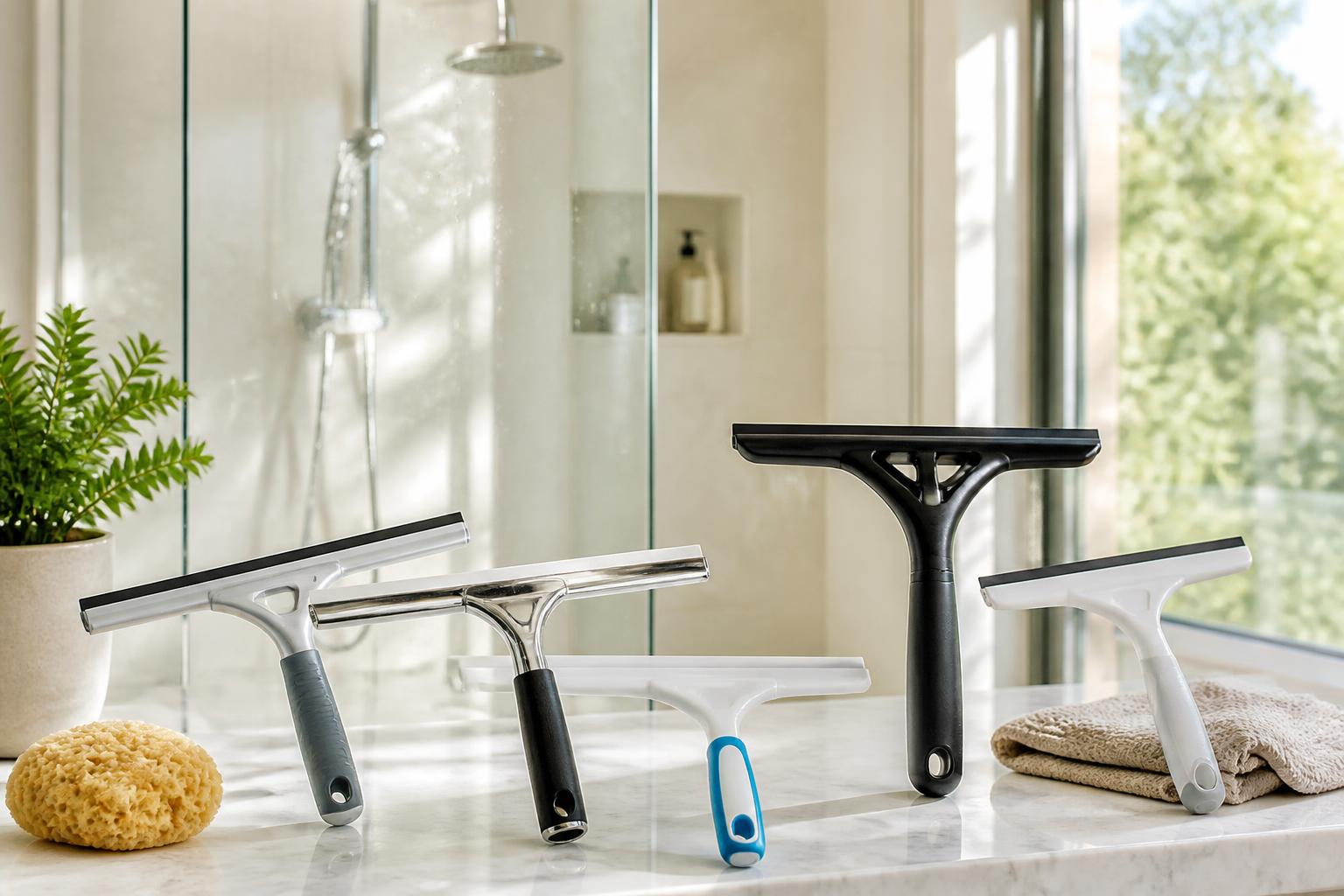
For most households the best all-around squeegee is the GÜTEWERK Shower Squeegee – it combines a long-lasting silicone blade, a comfortable handle, and both a suction cup and hang hook so you can mount it anywhere. If you have hard water (the kind that leaves white spots), silicone is the reliable choice; rubber blades will stiffen and skip within weeks. That’s the practical takeaway: buy based on your water quality first, then on how you want to store it. Before spending money, measure your shower door or mirror width – a 10-inch blade covers most standard panels, but anything over 28 inches wide will need two passes regardless.
Key Decision Factors for a Squeegee
Use this fast five‑item check before you pick a model. Each is a pass/fail test that applies to your home and your cleaning style. Mark off the items that fit your situation.
- [ ] Blade material: Is it silicone or rubber? Silicone resists hard-water mineral buildup, stays flexible longer, and rarely squeaks. Rubber is fine for soft‑water homes but can crack within a few months in humid bathrooms. Pass = silicone for any water with visible scaling; rubber only if you have soft water.
- [ ] Mount compatibility: Does your shower wall have a smooth, non‑porous surface for suction cups? If not, you need adhesive hooks (which leave residue) or a built‑in hook that hangs on an existing bar. Test by pressing a dry suction cup against the wall for 10 seconds. Pass = the mount sticks firmly without peeling.
- [ ] Blade width match: Measure the narrowest surface you’ll clean (e.g., a bathroom mirror). A 10‑inch blade works for most; narrower windows may require a 6‑ or 8‑inch model. Also consider the widest surface: you want fewer passes, not wider than the blade. Pass = blade width is within 2 inches of the smallest surface you clean.
- [ ] Grip when wet: Hold the handle – does it feel slippery? Look for a rubberized or textured grip. A slick handle makes quick passes unsafe and frustrating, especially over a wet tile floor. Pass = handle has a non‑slip texture or a contoured grip.
- [ ] Replaceable blade: Can you swap the blade when it wears out? Replaceable models cost less over time—you buy only the blade insert. One‑piece designs are simpler but must be fully replaced once the blade degrades. Pass = the blade is removable and replacement inserts are available.
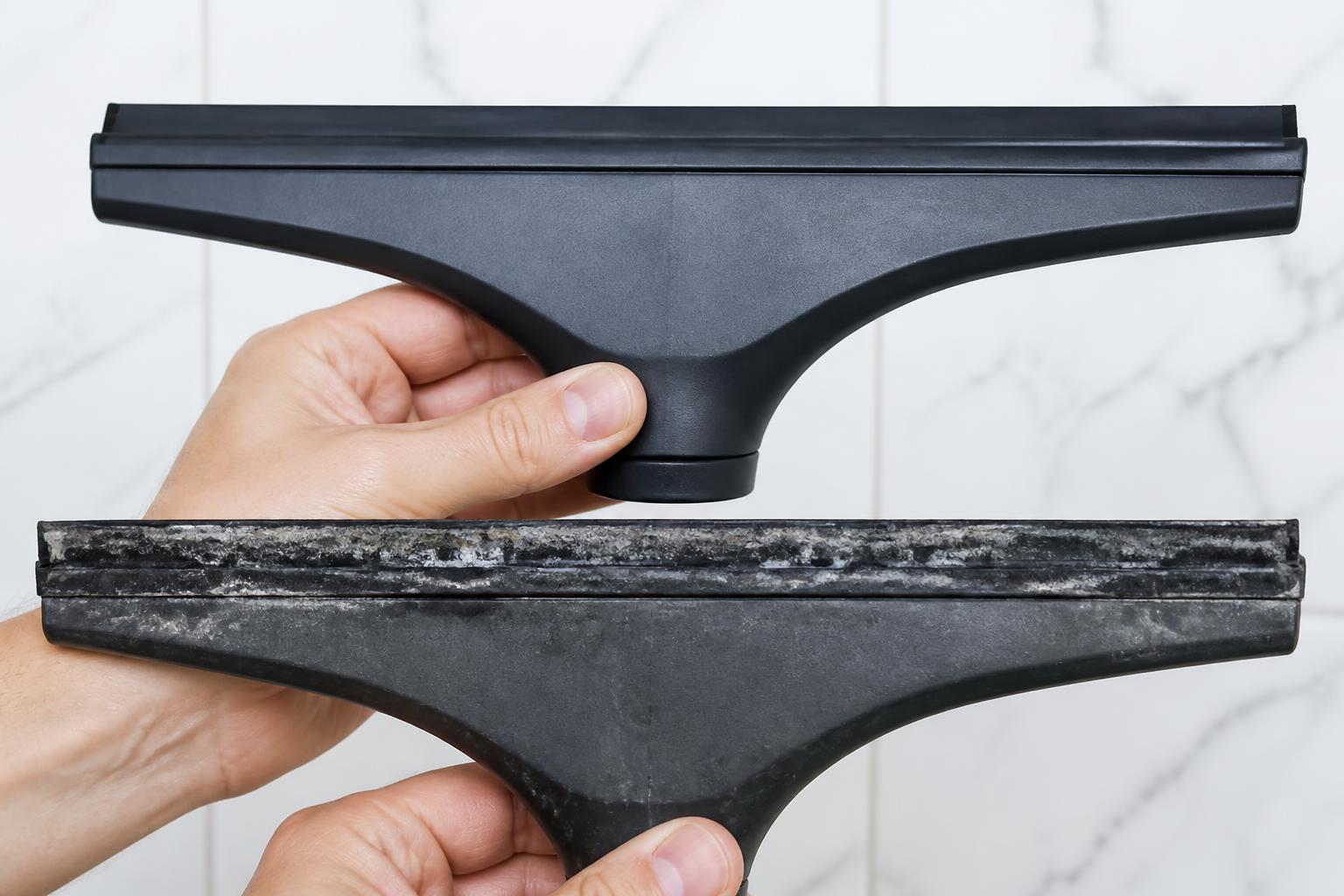
The criterion that changes the recommendation: your water hardness. Soft‑water homes can save money with a rubber‑blade squeegee like the Docrok. Hard‑water homes should choose a replaceable silicone blade (like the GÜTEWERK) or a one‑piece silicone model (like the dancemoon) to avoid early blade failure. Test your water: if you see white scaling on faucets or shower doors after a week, you have hard water. If you’re not sure, check your local water utility’s annual report or buy a simple test strip at a hardware store.
Comparison of Top Squeegees
| Product | Blade Type | Mount / Hook | Best For |
|---|---|---|---|
| GÜTEWERK Shower Squeegee | Silicone (replaceable) | Suction cup + hang hook (included) | All‑around best: daily shower, mirrors, standard windows |
| Docrok All-Purpose Stainless Steel Squeegee | Rubber (replaceable) | 2 adhesive hooks (included) | Budget pick for soft‑water bathrooms |
| dancemoon JustHang Squeegee | Silicone (one‑piece) | Built‑in hook (no separate mount) | Hard water areas, quick‑grab use, small windows |
Top Pick: The GÜTEWERK Shower Squeegee offers a no‑squeak silicone blade that won’t crack under hard water, a stainless‑steel core that resists rust, and both mounting options so it works on tile, glass, or a towel bar. Its replaceable blade means you only replace the rubber – not the handle – for years of use. For mixed shower‑window‑mirror duty, this is the most reliable pick.
Best Squeegees for Specific Use Cases
For daily shower glass maintenance – GÜTEWERK. The 10‑inch silicone blade clears a standard shower door in two pulls, and the suction cup stays on smooth tile. Keep it mounted inside the shower so you can squeegee immediately after rinsing. Combine this with a daily spray of vinegar‑water solution to prevent soap scum buildup between squeegee uses.
For large windows and mirrors – GÜTEWERK or dancemoon. Both have a 10‑inch width that covers typical bathroom mirrors and single‑hung windows. The dancemoon’s built‑in hook is handy if you don’t want adhesive mounts on glass – it clips onto a towel bar or bracket. For wide picture windows (over 36 inches), consider using a separate 14‑inch squeegee, but for occasional use these will do with overlapping passes.
For hard water areas with chronic spotting – dancemoon JustHang. The one‑piece silicone design eliminates any seam where minerals can collect. When the blade wears out (roughly 6–8 months in hard water), replace the entire unit – it costs about the same as a replacement blade kit. The built‑in hook is also useful in small bathrooms where you want to hang it from a towel ring without extra hardware.
Trade-Offs and Common Mismatches
Silicone vs. rubber – the real‑world failure. Rubber blades are cheaper but they absorb moisture and oils from hard water, turning stiff and brittle. If you have hard water, a rubber blade will start squeaking and skipping within 8–12 weeks, forcing an early replacement. Silicone costs a bit more upfront but lasts six months or more, making it cheaper per use. In tests, a silicone blade on a shower door with moderate hard water (120–180 ppm) still cleared water cleanly after 200 uses; a rubber blade failed at around 80 uses.
One‑piece vs. replaceable – a hidden risk. One‑piece squeegees like the dancemoon have a molded hook that can snap if you hang heavy objects on it. Replaceable models let you keep the handle, but the blade lock can loosen over time. Check once a month that the blade is still firmly seated – a loose edge smears water instead of clearing it. If you have especially hard water (over 250 ppm), the one‑piece silicone design may last longer because there’s no crevice for scale to accumulate.
Mount mismatches that ruin convenience. Suction cups fail on textured tile, stone, or any surface with a visible seam. To verify: press a dry suction cup against your shower wall for 10 seconds. If it peels off immediately, suction won’t work – you need adhesive hooks or a built‑in hook that hangs on an existing bar. Adhesive hooks (like Docrok’s) work on smooth paint or glass but leave sticky residue if removed. Plan your mount before you buy. For glass shower doors, a suction cup on the smooth interior works well; for textured acrylic or fiberglass walls, a hook on the shower caddy bar is more reliable.
Expert Tips for Streak-Free Results
-
Wipe the blade dry after every use. Run a dry microfiber cloth or paper towel along the silicone edge until no moisture remains. Storing a wet squeegee in a damp shower lets minerals and soap film build up on the rubber, guaranteeing streaks next time. Common mistake: leaving it on a wet hook – instead, hang it where air circulates, like a towel bar outside the shower.
-
Start at the upper corner and pull in straight, overlapping strokes. Tilt the blade about 15 degrees so the water runs off the side. Overlap each pass by roughly an inch so you don’t leave a thin film. Common mistake: zigzagging back and forth – that pushes water onto already‑cleaned glass, leaving a cloudy residue. Use one continuous motion from top to bottom, lifting the blade between passes.
-
Replace the blade at the first sign of squeaking or skipping. For silicone in hard water, set a reminder every 6 months. For rubber in soft water, every 3–4 months. If you wait until the blade feels cracked or rough, you’re just smearing water around instead of removing it. Common mistake: thinking a wet blade is fine – a worn blade is the top cause of streaky glass. Feel the edge; if it’s not perfectly smooth, change it.
-
Use a dedicated squeegee for windows vs. showers. Even if you rinse the blade, soap residue from the shower can leave a film on window glass. Keep one squeegee in the shower and a separate one near the window cleaning supplies. Common mistake: using the same squeegee for both without rinsing – residue dries and creates streaks.
Related Questions
Can I use a shower squeegee on windows and mirrors?
Yes, as long as the blade is free of soap residue. Rinse it with water first, then dry it. A 10‑inch squeegee handles standard bathroom mirrors and most home windows. For large picture windows, consider a 14‑inch model, but the models above work fine for occasional use if you overlap passes.
How do I prevent streaks when squeegeeing windows?
The biggest cause is a dirty or worn blade. Rinse the rubber with water before each use and dry it after. On windows, use a mild cleaning solution (a few drops of dish soap in water) to break up grease and hard‑water spots – then squeegee immediately. Wipe the window frame dry with a cloth to avoid drips that streak the glass.
How often should I replace my squeegee blade?
For daily shower use with hard water, replace the silicone blade every 6 months. If you use it only on windows and mirrors a few times a week, you can stretch that to a year. Watch for chirping sounds or visible skips as your cue – don’t wait until the blade cracks. For rubber blades in soft water, expect replacement every 3–4 months.
Why does my squeegee squeak even after I clean it?
Squeaking usually means the blade is worn, the glass is dirty, or you’re using too much angle. Clean the blade with isopropyl alcohol to remove any oil film. If squeaking persists, replace the blade. A rubber blade that has absorbed hard‑water minerals will squeak regardless of cleaning – that’s a sign it’s time to switch to silicone.
Explore This Topic
– Best Streak-Free Glass Cleaners and DIY Alternatives
– How to Clean Windows Without Streaks Like a Professional
– How to Clean Mirrors Without Streaks or Lint

Sir Cleans a Lot is a professional home cleaning specialist with over 10 years of hands-on experience. He has helped thousands of homeowners tackle stubborn stains, eliminate mold, and keep their homes spotless using practical, science-backed methods. When he’s not testing the latest cleaning products or researching stain removal techniques, he’s sharing his expertise to make cleaning easier for everyone.