
Best Laundry Detergents for Hard Water, Soft Water, and Everything In Between
If your laundry comes out stiff, gray, or smells musty even after a full wash cycle, your water type is likely the culprit. Hard water (high in calcium and magnesium) binds with standard detergents to form a chalky film that traps dirt and dulls colors. Soft water, in contrast, makes it easy to over‑sud and leave residue on dark fabrics. The best solution is a detergent with builders—natural chelators like sodium carbonate or citric acid—that bind minerals before they deposit on fabric. Molly’s Suds powders use exactly these ingredients and work across most water hardness levels, but the right choice depends on your specific water, washer type, and stain load.
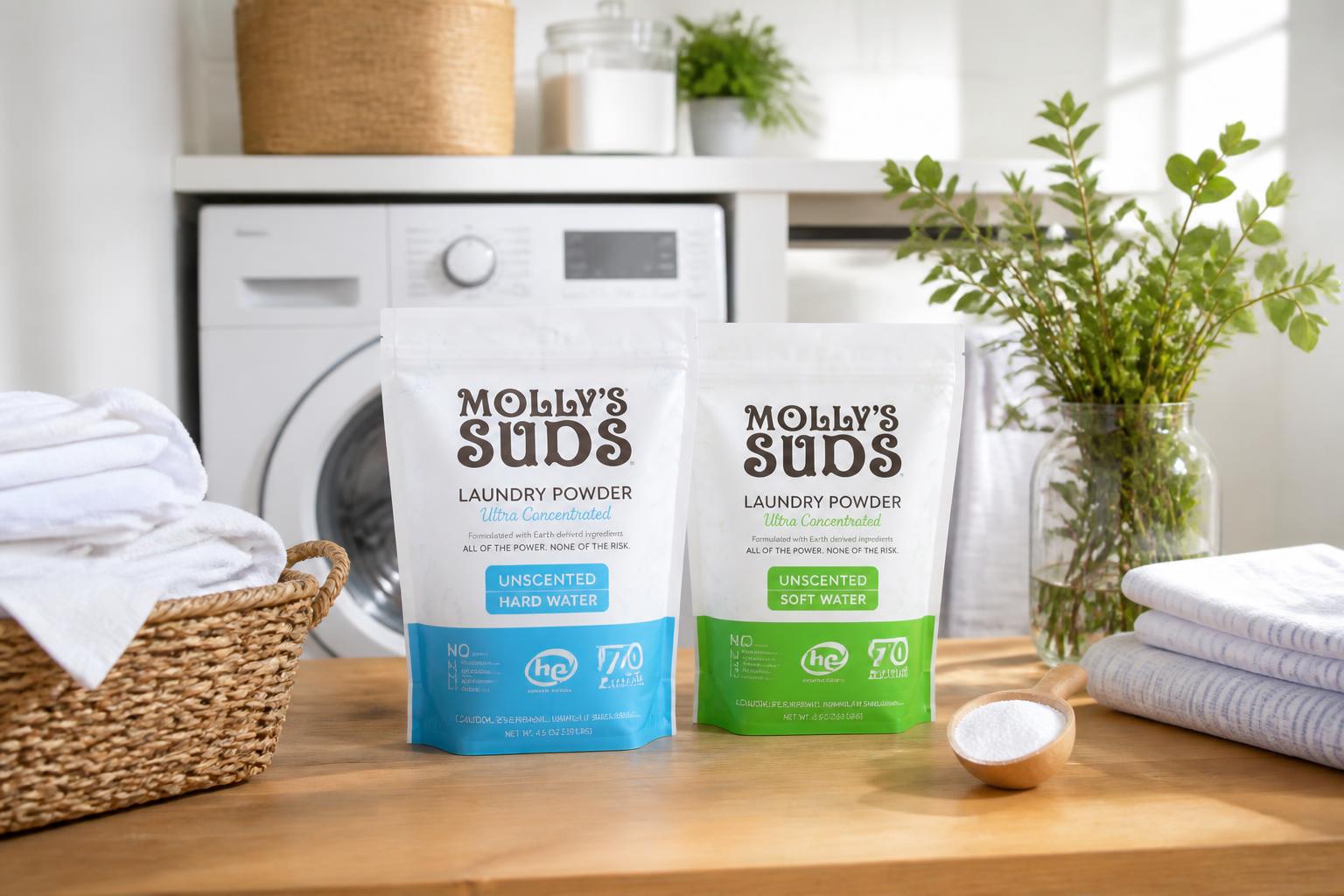
Comparison: Molly’s Suds Options for Hard and Soft Water
All three Molly’s Suds powders rely on sodium carbonate and citric acid as their primary builders. They handle moderate hardness (up to about 10–12 grains per gallon) effectively and rinse clean in soft water when dosed correctly. The main differences are fragrance and stain‑fighting enzyme content.
| Product | Best For | Key Feature | Price (Approx.) |
|---|---|---|---|
| Molly’s Suds Original (Unscented) | Sensitive skin, fragrance‑free homes, mixed water hardness | 120 loads; no synthetic perfumes, simple ingredient list | $0.30–$0.35/load |
| Molly’s Suds Original (Lavender) | Light natural scent, daily loads | Same base with lavender essential oil | $0.32–$0.37/load |
| Molly’s Suds Super Powder (Ocean Mist) | Stubborn stains, extra cleaning power | 60 loads; added enzymes for protein and grease stains | $0.45–$0.50/load |
Top Pick: Molly’s Suds Original Unscented offers the best balance for most homes. It works across hard and soft water without added fragrance, reducing skin irritation risk. The natural builders bind minerals effectively up to about 12 grains per gallon.
What this means for your next purchase: If your water hardness is under 12 grains, the Unscented original is all you need. For very hard water (15+ grains) or heavy stains, step up to the Super Powder. In soft water, use the original at a reduced dose—start with 1 tablespoon per load—to prevent white residue on dark clothes. If you still see gray film on whites after washing, your detergent’s builder content may be too low for your water. Consider adding ½ cup of washing soda per load or switching to a detergent with synthetic builders (e.g., EDTA) for hardness above 15 grains.
Quick Decision Aid: Matching Detergent to Your Water Type
Use these five checks before buying. Each is a pass/fail test for your situation.
- Know your hardness level. Test with a $10 strip from a hardware store or request a free report from your local water utility. Hard water = >7 grains per gallon (120 ppm). Soft water = <1 grain per gallon. Anything in between is moderate.
- Check the ingredient list for “builders.” Look for sodium citrate, sodium carbonate, zeolites, or EDTA. Avoid detergents that list only “surfactants” and “fragrance”—those leave soap scum in hard water.
- For soft water, avoid high‑suds formulas. Skip products with heavy sodium lauryl sulfate (SLS) or high‑foaming surfactants. Excess suds trap soil and cause musty smells in HE machines.
- Match dose to load size and water type. Hard water needs about 20% more detergent than the label’s medium‑hardness recommendation. Soft water needs 30–50% less. If you see white residue on dark clothes, you’re using too much.
- Verify HE compatibility. If you have a high‑efficiency washer, use only detergents labeled “HE.” Over‑sudsing can damage the machine and breed mold.
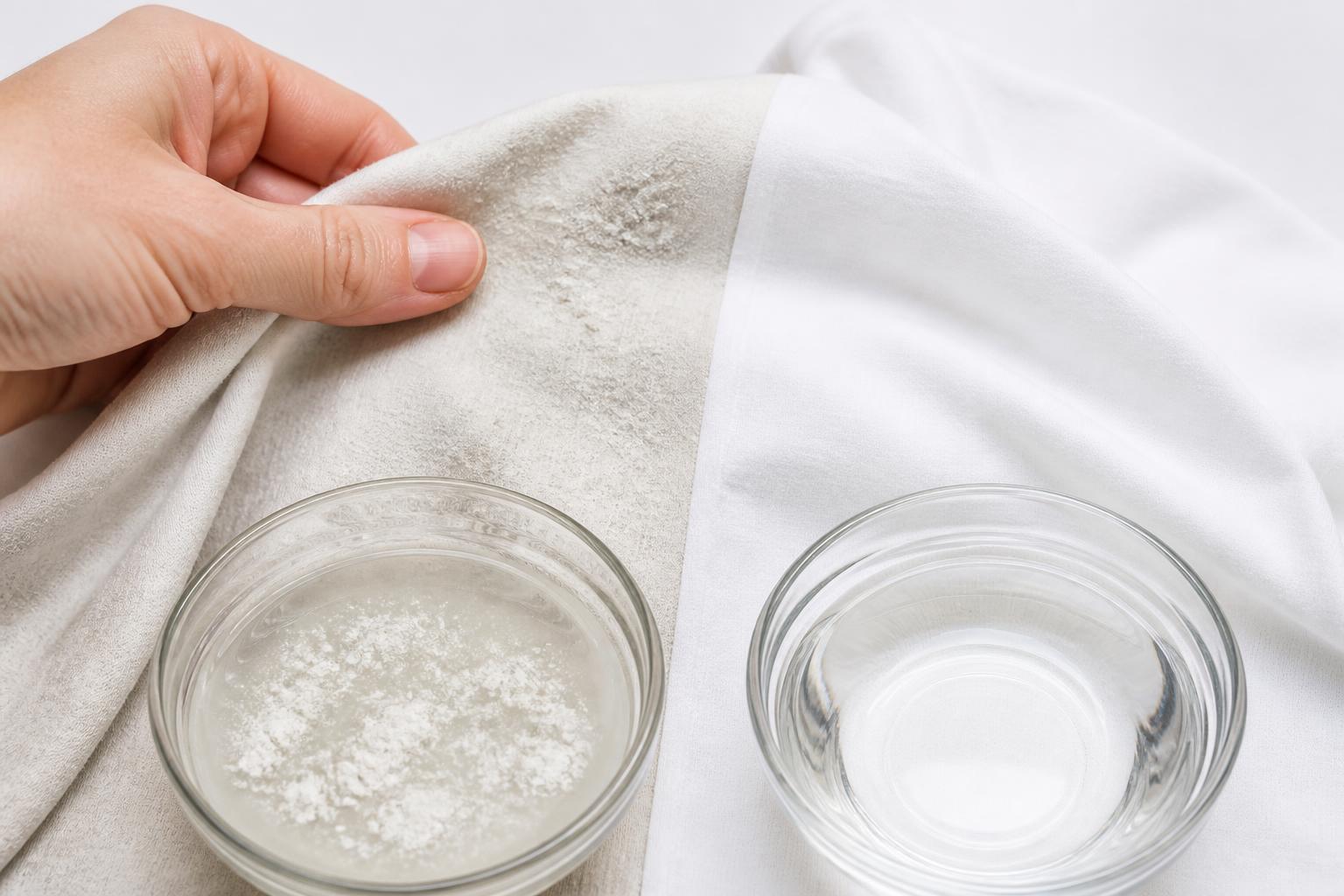
Verification step: After one wash with your chosen detergent, inspect a damp white towel under natural light. A gray or chalky film means either your water hardness exceeds the detergent’s capacity or you’re over‑dosing. Run another load with ½ cup of washing soda added to the drum and cut detergent by half. If the film disappears, the natural builders were insufficient—that’s your cue to switch to a detergent with synthetic builders or add a separate water softener.
Why Hard Water Ruins Laundry (and How Builders Fix It)
The mechanism is straightforward: calcium and magnesium ions in hard water react with the fatty acids in soap and detergent to form an insoluble curd—essentially [soap scum](https://thecleantips.com/best-bathroom-cleaner/). This scum adheres to fibers, trapping dirt and causing graying, stiffness, and odor. Builders like sodium carbonate (washing soda) and citric acid bind those metal ions first, preventing the reaction. Natural builders work well up to about 12 grains of hardness. Beyond that, you need stronger synthetic chelators (like EDTA or phosphonates) that can hold onto more mineral ions per molecule.
Molly’s Suds uses only natural builders, which is a strength for eco‑conscious consumers but a limitation if your water is very hard. If you’re in the 15+ grain range and don’t want to switch detergents, adding an external water softener (a resin‑based unit or a simple inline filter for the washer supply) is the most effective fix.
Trade‑offs to Know
Powder vs. Liquid
Powders (like Molly’s Suds) typically pack more builders per load because they aren’t diluted with water. That makes them superior for hard water—provided they dissolve fully. The downside: powder can clump in humid climates or leave undissolved grit in cold water (below 60 °F). Liquid dissolves instantly in any temperature but carries less builder per ounce, so you may need a larger dose to achieve the same mineral‑binding effect.
Natural vs. Synthetic Chelators
Natural options are gentler on skin and the environment, but their capacity is limited. Synthetic chelators like EDTA are far more effective at high hardness levels—but they’re non‑biodegradable and can irritate sensitive skin. If your water is very hard (15+ grains) and you have sensitive skin, consider a two‑step approach: use a natural detergent at a lower dose and add a separate water softener (washing soda or a resin filter) to handle the minerals.
Cost per Load
Molly’s Suds Original runs roughly $0.30–$0.35 per load (120 loads per box) and the Super Powder about $0.45–$0.50 per load. That’s higher than generic liquid detergents (often $0.15–$0.25/load), but you often use less product because the builders are concentrated. Cheap detergents with low builder content force you to double‑dose in hard water, which erases any upfront savings. Over a year, a mid‑priced builder‑rich powder can actually be cheaper per effective wash.
Common Failure Modes
- Using a natural powder in very hard water (15+ grains): Expect lingering dinginess and a chalky feel on towels. The chelators simply can’t bind all the minerals. Solution: add ½ cup of washing soda per load or switch to a detergent with EDTA.
- Using a high‑sudsing liquid in soft water: Excess foam traps soil, leading to gray whites and musty smells in HE machines. Cut detergent dose to 1 tablespoon or switch to a low‑foam formula.
- Cold‑water washing with powder: If your water temperature is below 60 °F, powder may not fully dissolve, leaving gritty specks on dark fabrics. Pre‑dissolve the powder in a cup of warm water before adding to the washer.
Related Questions
Can I use regular liquid detergent in hard water?
Yes, but you’ll likely need to use 1.5x to 2x the recommended amount, and the laundry will still come out duller than with a builder‑fortified detergent. The mineral curd that forms also builds up inside the washer, leading to mold and mechanical issues over time.
Will adding vinegar or washing soda help?
Vinegar (½ cup in the rinse cycle) helps remove soap residue but does not soften the wash water because it’s added too late. Washing soda (½ cup in the drum with detergent) directly boosts mineral binding and is a cheap fix for moderately hard water. Never mix washing soda with chlorine bleach—toxic gas can form.
Does fabric softener compensate for hard water?
No. Fabric softeners coat fibers with waxy ammonium compounds to make them feel softer, but they don’t remove mineral deposits. Over time they can actually trap minerals and cause yellowing. The only reliable fix is a detergent with builders or an external water softener.
Explore This Topic
– Best Stain Removers for Clothes: Spray, Stick, and Soak Tested and Compared
– How to Remove Hard Water Stains and Limescale from Glass, Tiles, and Fixtures
– Best Bathroom Cleaners for Soap Scum, Hard Water, and Mold

Sir Cleans a Lot is a professional home cleaning specialist with over 10 years of hands-on experience. He has helped thousands of homeowners tackle stubborn stains, eliminate mold, and keep their homes spotless using practical, science-backed methods. When he’s not testing the latest cleaning products or researching stain removal techniques, he’s sharing his expertise to make cleaning easier for everyone.