
Best Vacuum Cleaners for Pet Hair: Tested on Carpet and Hardwood
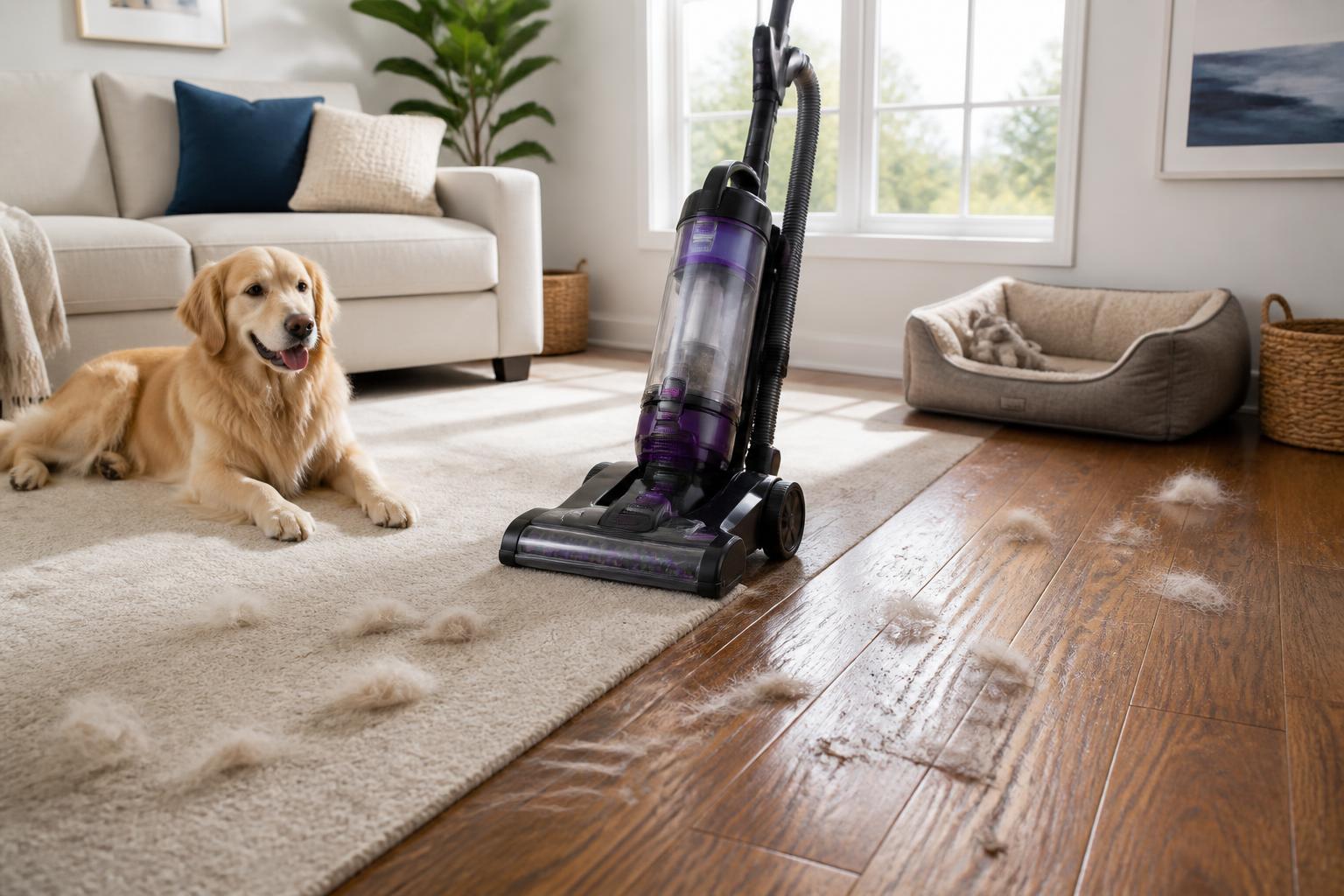
Pet hair behaves differently depending on the surface it lands on, and that single fact explains why so many vacuums fail in pet households. On carpet, hair embeds deep into fibers and resists standard suction. On hardwood, it clings through static and scatters in every direction when pushed. The best vacuum cleaner for pet hair isn’t just about raw power—it’s about brush roll design, filtration quality, and how the machine handles the transition between surfaces.
The three models below represent different approaches to this problem. One is a cordless stick vacuum built for maximum suction and versatility; the other two are uprights designed for different home sizes. All three handle pet hair, but they fail in different ways—and understanding those failure modes matters more than comparing spec sheets.
Why Pet Hair Vacuums Fail on Mixed Flooring
Most pet hair vacuums fail for one predictable reason: they’re optimized for one surface type and merely tolerate the other.
On carpet, the brush roll needs aggressive agitation to pull hair loose from deep fibers. But that same aggressive brush roll on hardwood can scatter debris, scratch finishes, or fling hair into baseboards. On hardwood, you actually want less agitation and more suction—the opposite of what carpet cleaning demands.
The second failure point is tangling. Pet hair wraps around brush rolls, and once that happens, suction drops dramatically. A vacuum that performs well on day one can lose 40–50% of its effectiveness within weeks if the brush roll tangles easily.
The third failure point is filtration. Pet hair carries dander, and dander particles are small enough to pass through weak filters and recirculate into the air. If you’re allergic to pets, a vacuum with poor sealing can make symptoms worse even as it removes visible hair.
Early detection test: After two weeks of regular use, inspect the brush roll. If you see hair wrapped tightly around the bristles, the anti-tangle design is failing. Also listen for a higher-pitched motor sound—that indicates the filter is clogging and the cyclone separation isn’t working properly.
Comparison: Three Approaches to Pet Hair Removal
| Product | Type | Key Feature | Best For | Potential Drawback |
|---|---|---|---|---|
| Uosogi Cordless Stick Vacuum | Cordless stick | 55KPa suction, 70-min runtime, V-shaped anti-tangle brush | Large homes, mixed flooring, deep carpet cleaning | Higher price point; requires wall-mounted charging dock |
| Bissell CleanView Compact 3508 | Compact upright | Under 8 lbs, scatter-free tech, removable wand | Apartments, small spaces, quick cleanups | Smaller dirt tank; less suitable for large carpeted areas |
| Bissell CleanView Swivel Pet 2252 | Full-size upright | Swivel steering, triple-action brush roll, edge-to-edge cleaning | Homes with mostly carpet, furniture-heavy layouts | Heavier than stick models; less portable |
Top Pick: Uosogi Cordless Stick Vacuum
The Uosogi cordless stick vacuum earns the top spot because it directly addresses the two most common pet hair failure modes. Its V-shaped brush roll with integrated comb-teeth actively prevents hair wrap—the leading cause of suction loss in pet households. The 55KPa suction (with a 60KPa Hurricane Mode for deep carpet grime) provides enough power for embedded hair on carpets while remaining controllable on hardwood. The 70-minute runtime covers large spaces in a single charge, and the 1.8L dust cup means fewer emptying stops.
Matching the Vacuum to Your Flooring Mix
Mostly Carpet: Prioritize Brush Roll Aggression
Carpet demands brush roll aggression. The Bissell CleanView Swivel Pet 2252 uses a triple-action brush roll specifically designed to loosen, lift, and remove embedded hair. Its swivel steering helps navigate around furniture—useful when hair accumulates under sofas and chairs. The edge-to-edge cleaning capability addresses hair that collects along baseboards, which is where pet hair tends to drift and settle.
The trade-off: this is a full-size upright, so it’s heavier and less convenient for quick pickups. If you have stairs, check whether you can comfortably carry it between levels before committing.
Mostly Hardwood or Mixed Flooring: Prioritize Scatter Control
Hardwood requires scatter-free technology—otherwise, you’re just pushing hair into piles. The Bissell CleanView Compact 3508 includes scatter-free tech that captures debris instead of pushing it around. It’s also under 8 pounds, making it easy to carry between rooms. The removable wand extends reach for above-floor cleaning, which matters because pet hair accumulates on curtains, upholstery, and baseboards—not just floors.
The trade-off: the compact size means a smaller dirt tank. With multiple pets or a large home, you’ll empty it more frequently.
One Machine for Everything: Prioritize Versatility
The Uosogi cordless stick is the most versatile option. It handles carpet with the Hurricane Mode, transitions to hardwood without scattering debris, and includes LED lights on the brush head to illuminate hair under furniture. The freestanding design means you can set it down mid-clean without leaning it against a wall. The touchscreen display shows battery status and maintenance alerts, which helps you catch filter clogs before they affect performance.
The 5-Point Fit Check Before You Buy
Use this quick pass/fail checklist when evaluating any vacuum for pet hair:
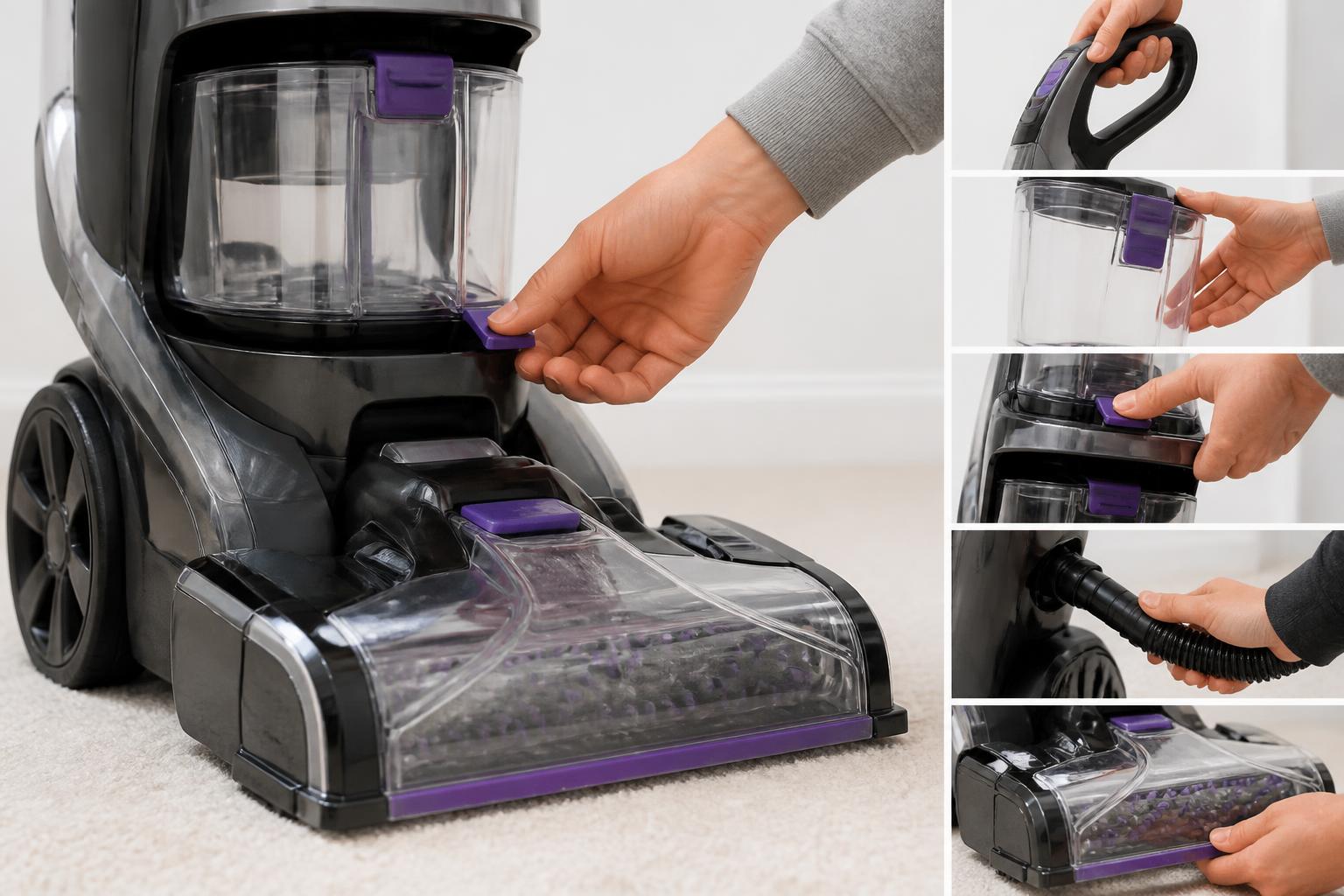
1. Brush roll access: Can you remove the brush roll without tools? If hair tangles, you’ll need to clean it regularly. Pass = tool-free removal.
2. Filter type and cost: Is it HEPA or multi-stage? What does a replacement filter cost? Pass = filters under $25 and available from multiple retailers.

3. Cordless runtime vs. corded reliability: If cordless, does the runtime cover your largest room? If corded, is the cord long enough to avoid switching outlets mid-room? Pass = no outlet change needed for your largest cleaning area.
4. Emptying mechanism: Does the dust cup empty without touching debris? Pass = one-touch or hands-free emptying.
5. Warranty and parts availability: Can you buy replacement brush rolls and filters? Pass = parts available for at least 3 years after purchase.
If a vacuum fails two or more of these checks, it will likely become frustrating within six months of regular pet hair cleaning.
Setting Up Your Pet Hair Vacuum for Success
Step 1: Prepare the space. Pick up toys, cables, and small objects before vacuuming. Pet hair hides under things, and you’ll get a better clean if the floor is clear.
Step 2: Check the brush roll before first use. Confirm it spins freely and there’s no shipping debris or protective wrapping stuck around it. This is the most common issue with new vacuums—a blocked brush roll makes the vacuum seem broken when it’s not.
Step 3: Start on the surface with the most hair. For carpet, use the highest suction setting and move slowly. For hardwood, use a lower setting and check that the vacuum isn’t scattering debris. If it is, adjust the height setting or switch to the hard floor mode.
Early checkpoint (after 2 weeks): Inspect the brush roll for hair wrap. If you see tangles, the anti-tangle design isn’t working for your pet’s hair type. Some long-haired breeds wrap more easily than others.
Step 4: Empty the dust cup before it’s full. Pet hair compresses, so the cup fills faster than you’d expect. Emptying at 50–70% capacity maintains consistent suction.
Step 5: Clean the filter monthly. Tap it out over a trash can and rinse if the manufacturer allows it. A clogged filter is the #1 cause of sudden suction loss.
Success check: After vacuuming, run your hand across the carpet or hardwood. If you feel no hair residue and the vacuum’s suction sounds consistent from start to finish, the setup is working.
Escalation signal: If you notice a burning smell, unusual noise, or suction that drops mid-clean, stop immediately and check for blockages. Running a vacuum with a clogged hose or tangled brush roll can damage the motor.
Filtration: The Overlooked Factor for Pet Households
Pet hair itself is visible and easy to remove. Pet dander—the microscopic skin flakes that trigger allergies—is the real problem. Standard vacuum filters capture large particles but allow fine dander to recirculate through the exhaust.
The Uosogi uses 8-layer filtration with multi-vortex cyclonic separation, which captures 99.99% of fine dust particles. The Bissell models rely on cyclonic action and standard filters. If you have allergies, prioritize a vacuum with sealed filtration and a HEPA or multi-stage filter system. Check whether the filter is washable or replaceable—and factor the replacement cost into your decision.
When a Vacuum Isn’t the Right Tool
Vacuums handle surface hair well, but they struggle with hair embedded in upholstery, car seats, or laundry. For those situations, a dedicated best pet hair remover laundry tool works better because it uses a different mechanism—often a rubber or silicone surface that grabs hair through friction rather than suction.
Similarly, if pet hair has accumulated on surfaces a vacuum can’t reach—like curtains, lampshades, or fabric headboards—a broader approach to remove pet hair everything may be more practical than buying a more expensive vacuum.
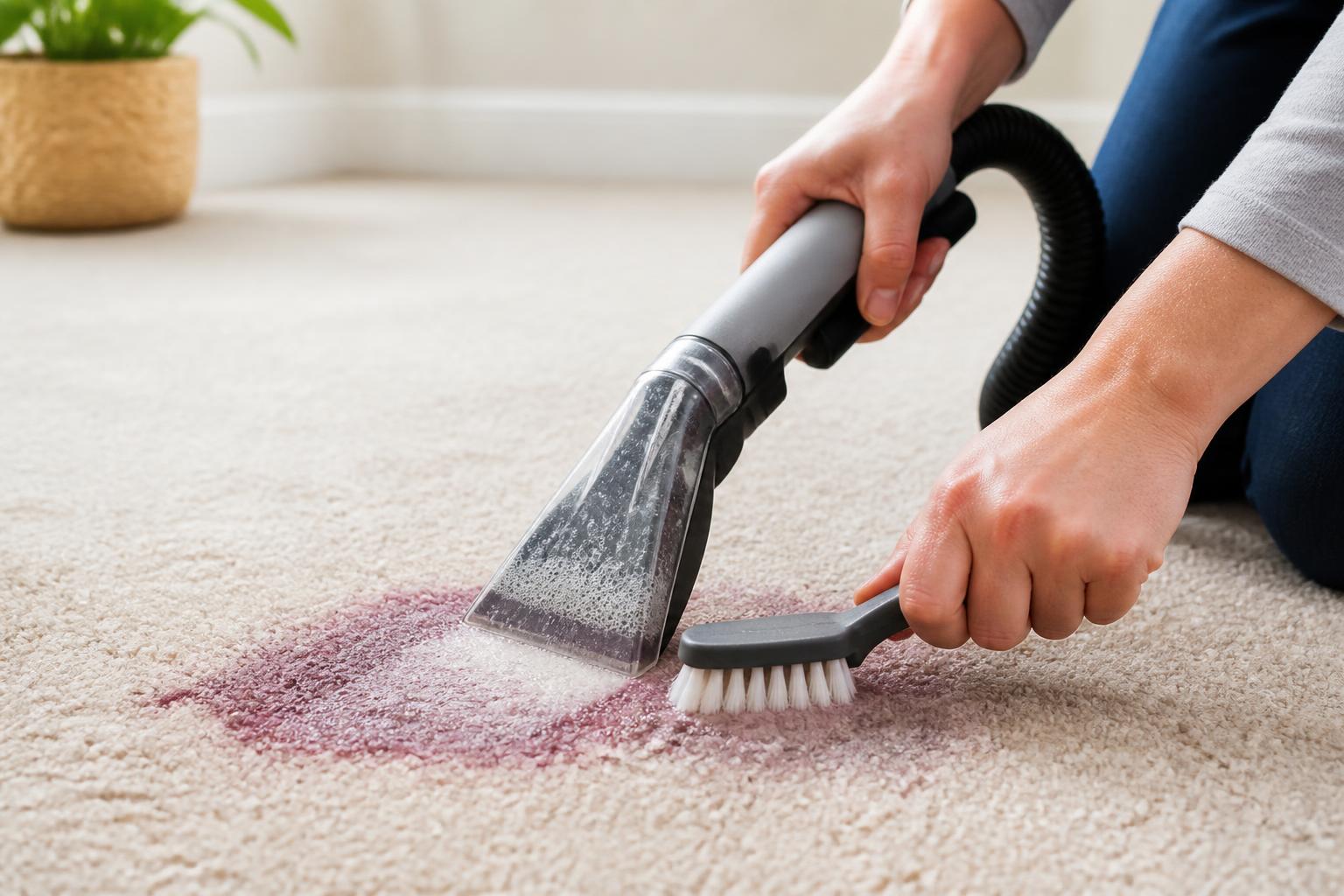
And if your issue extends beyond hair—if you’re dealing with pet odors or stains alongside the hair—a vacuum alone won’t solve it. You’ll need an best enzymatic cleaner pet to break down the proteins in urine or vomit, followed by a best pet odor neutralizer to address lingering smells.
Making the Final Call
For most pet households with mixed flooring, the Uosogi cordless stick vacuum offers the best balance of suction power, anti-tangle design, and runtime. If you live in a small space or want a lightweight secondary vacuum, the Bissell CleanView Compact 3508 is a solid budget-friendly option. And if your home is mostly carpet with heavy furniture, the Bissell CleanView Swivel Pet 2252 provides the brush roll aggression that embedded hair requires.
Whichever you choose, the maintenance routine matters more than the initial purchase. A brush roll that tangles, a filter that clogs, or a dust cup that’s never emptied on time will turn any vacuum into a mediocre one within months. Check the brush roll after two weeks, clean the filter monthly, and empty the cup before it’s full—and your vacuum will perform at its rated level for years.

Sir Cleans a Lot is a professional home cleaning specialist with over 10 years of hands-on experience. He has helped thousands of homeowners tackle stubborn stains, eliminate mold, and keep their homes spotless using practical, science-backed methods. When he’s not testing the latest cleaning products or researching stain removal techniques, he’s sharing his expertise to make cleaning easier for everyone.