
Best Melamine Sponges and Magic Eraser Alternatives Compared
If you’re shopping for the best magic eraser alternatives, the core question isn’t really about brand names—it’s about how melamine foam works and which format suits the jobs you actually do. Melamine sponges clean by acting like ultra-fine sandpaper: when wet, the foam’s open-cell structure creates friction that lifts stains from surfaces without needing chemical cleaners. That mechanism is consistent across every product in this category. What differs is durability, shape, price per pad, and whether the design adds anything useful beyond the raw foam block.
Below, we compare three leading options—including the original Mr. Clean Magic Eraser—and give you a decision framework so you can match the product to your cleaning habits rather than just picking the most popular listing.
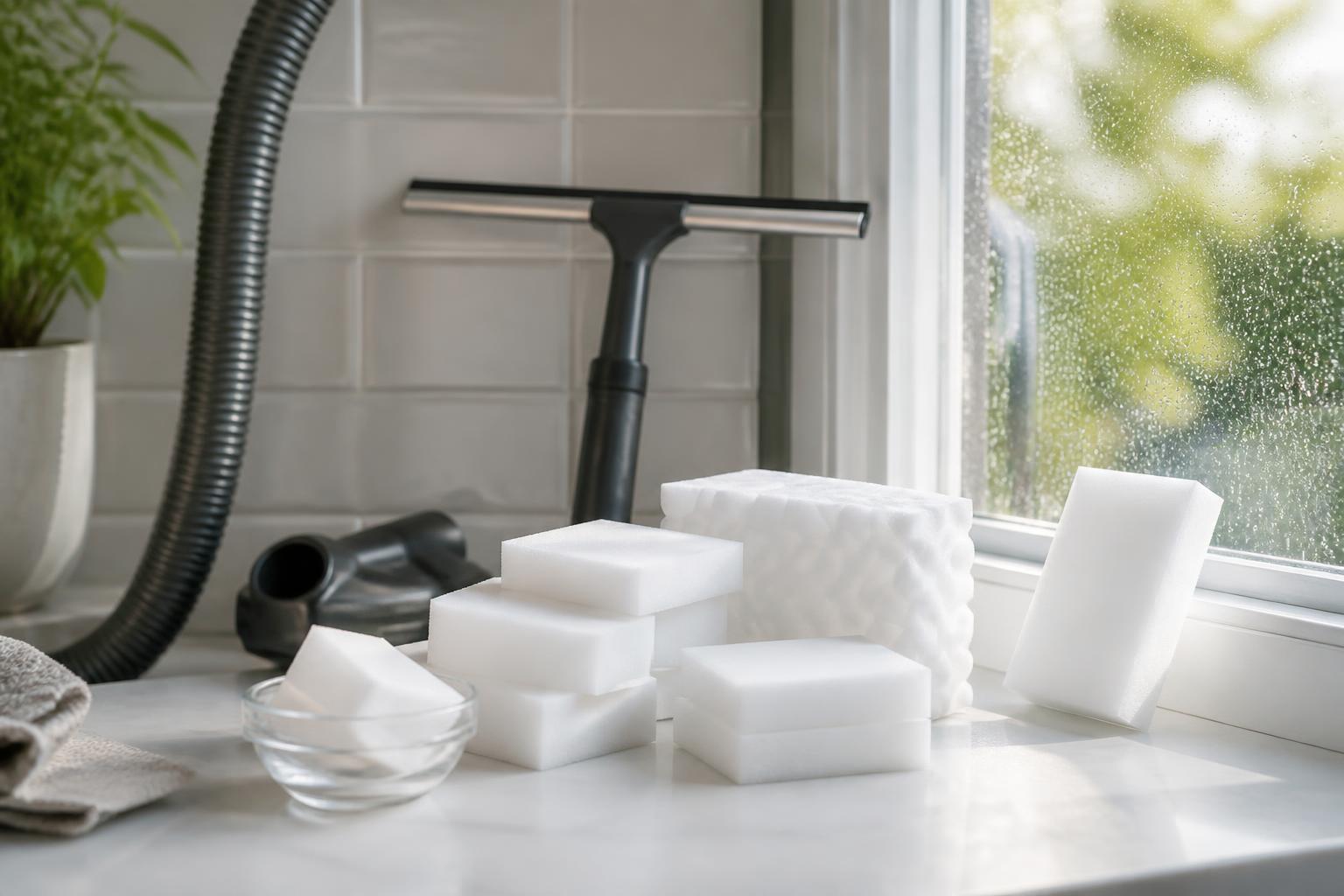
The Mechanism Behind the Foam (and Its Built-In Limits)
Before comparing products, it’s worth understanding the trade-off built into every melamine sponge. Because the foam abrades surfaces, it will also abrade finishes if you press too hard. Glossy paint, stainless steel brushed finishes, and sealed countertops can develop a dull haze if you scrub aggressively. The sponges also crumble as they work—that’s normal, not a defect. What looks like the sponge “falling apart” is the foam wearing down as it removes scum and marks.
This means the real performance variables are:
- Density: Denser foam lasts longer and scrubs harder, but it’s also more likely to leave micro-scratches on delicate surfaces.
- Shape and thickness: Thicker blocks handle large flat areas; thinner pads reach into grout lines and corners.
- Add-ons: Handles, built-in squeegees, or scrubber attachments change how the sponge interacts with the surface—and whether you can apply consistent pressure.
Keep those three variables in mind as you read the comparison. They matter more than the brand name on the box.
There’s also an applicability boundary worth naming upfront: melamine foam is not a universal cleaner. It’s designed for hard, non-porous surfaces. On untreated wood, unsealed stone, or any surface with a soft matte finish, the abrasive action can leave visible marks that no amount of rinsing will fix. If your home has a lot of those surfaces, you’ll want to pair any melamine sponge with a gentler option like the best reusable cleaning cloths for daily maintenance and reserve the foam for the tough spots.
Three Approaches to the Same Foam
| Product | Price | Brand | Rating | Best For | Key Specs |
|---|---|---|---|---|---|
| Mr. Clean Magic Eraser Sponge, Extra Durable, 10ct | Check price | Mr. Clean | Not listed | General household marks, walls, scuffs, and oven doors | 10-count pack; extra-durable formula; works with water alone; also available in Ultra Thick, Ultra Foamy, and Original forms |
| Mr. Clean Magic Eraser Shower & Tub Scrubber, Lemon Starter Kit | Check price | Mr. |
| Clean | Not listed | Bathroom soap scum, tubs, showers, hard-to-reach corners | 1 scrubber handle + 2 lemon-scented foaming erasers; 360-degree rotating head; built-in squeegee; hook for storage | ||
|---|---|---|---|---|---|
| ISDGER GRS Certified Magic Melamine Sponge Eraser, 12 Pack | Check price | ISDGER | Not listed | Budget bulk cleaning, multiple rooms, stain removal without detergent | 12-count pack; GRS-certified (recycled content); absorbent; cut-to-size for small areas |
Top Pick: Mr. Clean Magic Eraser Sponge, Extra Durable, 10ct
The Extra Durable 10-count pack is the most balanced choice for most households. It gives you the familiar Mr. Clean formulation—which has a proven track record for removing scuffs, marker, and kitchen grime—at a reasonable per-pad cost. The extra-durable variant is denser than the original, so it lasts longer before crumbling, and it still activates with plain water. If you’re replacing a worn-out Magic Eraser habit, this is the direct upgrade path.
When the Handle Actually Matters: The Shower & Tub Scrubber
The Mr. Clean Shower & Tub Scrubber Starter Kit is not just a sponge—it’s a different tool category. The handle and 360-degree rotating head solve a problem that raw foam blocks can’t: reaching the back of a tub or the upper corner of a shower stall without contorting your arm. The built-in squeegee also adds a finishing step that plain melamine can’t do—it wipes away the residue the foam lifts, leaving a streak-free surface.
The trade-off is cost and replacement logistics. You get only two foaming erasers in the starter kit, and the refills are Mr. Clean-specific. If you lose the handle or decide you don’t like the lemon scent, you’re stuck with a proprietary system. For bathroom-focused cleaning, though, the ergonomics are genuinely better than any bare sponge.
One caution: the marketing claim that it “cuts through 100% of soap scum” is a promotional statement, not a lab finding. In practice, the scrubber’s advantage comes from consistent pressure and the squeegee finish—not from a chemical breakthrough. The squeegee also adds a second function that pairs well with a dedicated best squeegee shower windows routine if you’re trying to cut down on water spots between deep cleans.
There’s also a failure mode to watch for: the rotating head relies on a plastic joint that can wear out with heavy use. If you’re the type to lean your full weight into the scrubber, the handle may flex or the head may lock up within a few months. This kit is best for regular light-to-moderate bathroom maintenance, not for tackling years of neglect in one session.
The Bulk Option: ISDGER 12-Pack and the Density Trade-Off
The ISDGER GRS Certified 12-pack is the value play. At 12 pads for roughly the price of 10 Mr. Clean erasers, the per-pad cost is lower, and the GRS certification means the foam uses recycled content—a meaningful consideration if you’re trying to reduce waste from a disposable cleaning product.
The trade-off is consistency. Generic melamine sponges vary in density from batch to batch, and the ISDGER pads are softer than Mr. Clean’s extra-durable formula. That makes them safer on delicate surfaces but less effective on deep-set stains like baked-on grease or permanent marker. The manufacturer’s own note—”cut small pieces to test on the surface before use”—is worth heeding, especially on painted walls or appliances.
Here’s a concrete verification step: before committing to a full clean, cut a small corner off one pad, wet it, and test it on a hidden area of the surface you plan to clean—the back of a cabinet door, the inside edge of a tub, or the bottom of a sneaker sole. Wait a few minutes and check for haze, dulling, or color transfer. If the test spot looks unchanged, you’re clear to proceed. If you see any sheen change, switch to a chemical cleaner or a non-abrasive cloth for that surface.
If your cleaning load is mostly light maintenance (countertops, sinks, baseboards, shoe scuffs), the 12-pack is the smarter buy. If you regularly tackle heavy scum or stubborn marks, the extra density of Mr. Clean’s extra-durable line will save you time even though you’ll pay more per pad.

A Quick Fit Check Before You Buy
Run through these five checks before adding any melamine sponge to your cart. Each one takes less than a minute and will prevent the most common purchase mistakes.
1. Surface check: Will you use this on painted walls or glossy appliances? If yes, choose a softer sponge (like the ISDGER pack) and test on an inconspicuous spot first. Hard surfaces like tile, porcelain, and sneaker soles are safe for any option here.
2. Reach check: Do you need to clean the back of a tub or high shower walls? If yes, the handle-based Shower & Tub Scrubber is worth the premium. If you only clean flat, accessible surfaces, skip the handle and save money.
3. Volume check: How many pads will you realistically use in a month? Heavy users (cleaning multiple rooms weekly) should buy the 12-pack. Light users should buy the 10-count Mr. Clean pack—it’ll last months, and the foam won’t dry out or degrade on the shelf.
4. Scent check: Do you have sensitivities to fragrance? The Shower & Tub kit is lemon-scented. The standard Mr. Clean erasers and the ISDGER pack are unscented. If fragrance is a concern, avoid the bathroom kit.
5. Disposal check: Are you comfortable with a single-use product? Melamine sponges are not recyclable in most curbside programs. If that bothers you, the GRS-certified ISDGER pack at least uses recycled content, and you can extend pad life by cutting them into smaller pieces for detail work.
Pro Tips Worth Knowing
Cut pads before first use, not after. A full-size sponge is unwieldy for grout lines, light switches, and shoe edges. Cut the dry pad into quarters or eighths with scissors before wetting it. Wet foam is harder to cut cleanly, and ragged edges shed faster. This one habit doubles or triples the usable surface area of every pad you buy. The common mistake is trying to work with a full pad and then struggling to control pressure on small areas, which leads to over-scrubbing and premature crumbling.
Wring, don’t squeeze. Melamine foam holds a lot of water, and a dripping sponge reduces friction—which means you scrub longer and wear the pad down faster. After wetting, wring the pad firmly so it’s damp but not saturated. The foam needs moisture to activate, but excess water just dilutes the abrasive action. The common mistake is using a sopping-wet sponge and then pressing harder to compensate, which accelerates crumbling. A good test: after wringing, the pad should feel cool and damp but shouldn’t drip when you hold it over a sink for five seconds.
Match pressure to surface, not to stain. The instinct when facing a stubborn mark is to press down harder. With melamine, that’s backwards. The foam’s abrasive action comes from surface friction, not downward force. Press lightly and let the foam do the work. If a stain doesn’t lift within a few passes, switch to a chemical cleaner or a different tool—pressing harder only risks dulling the finish and shredding the pad. This is especially important on painted surfaces and stainless steel. A useful rule of thumb: if you can see the foam compressing more than halfway, you’re pressing too hard.
Which One Should You Actually Buy?
The decision comes down to your dominant cleaning scenario.
- If you want a drop-in replacement for your current Magic Eraser habit—same brand, same feel, just more durable—buy the Mr. Clean Extra Durable 10-count. It’s the safest choice with no learning curve.
- If bathroom cleaning is your main pain point and you struggle with reach or streaking, the Shower & Tub Scrubber kit is worth the higher cost—but only if you’ll actually use the handle and squeegee features.
- If you’re stocking up for general household maintenance and want the lowest cost per pad, the ISDGER 12-pack is the pragmatic pick. Just accept that it’s softer and less durable than the Mr. Clean extra-durable line.
For most households, the balanced recommendation is the Mr. Clean Extra Durable pack for heavy-duty jobs, supplemented by a bulk pack of softer sponges for everyday light cleaning. That combination covers both ends of the melamine spectrum without locking you into a proprietary system.
One more consideration: if you find yourself reaching for melamine sponges constantly, it may be worth examining whether a different tool would handle the recurring job more efficiently. For scrubbing textured surfaces like grout or stove grates, a dedicated best cleaning brushes set often outperforms foam because the bristles reach into crevices that flat pads can’t. And for routine countertop and sink maintenance, a microfiber cloth with your existing best all purpose cleaner will handle most daily messes without any abrasion risk.
Melamine sponges are a tool, not a magic wand. Choose based on your surfaces, your reach constraints, and how much you’re willing to spend per pad—then test on an inconspicuous spot before committing to a full clean. The right choice will save you time on the jobs it’s built for and stay out of the way on everything else.

Sir Cleans a Lot is a professional home cleaning specialist with over 10 years of hands-on experience. He has helped thousands of homeowners tackle stubborn stains, eliminate mold, and keep their homes spotless using practical, science-backed methods. When he’s not testing the latest cleaning products or researching stain removal techniques, he’s sharing his expertise to make cleaning easier for everyone.